13 Kitchen Wood Flooring Ideas for a Warm Stylish Space
Want to make your kitchen feel more inviting? Wood flooring is a beautiful way to add natural texture and character to the heart of your home. These inspiring ideas will show you how wood floors can completely transform your kitchen style.
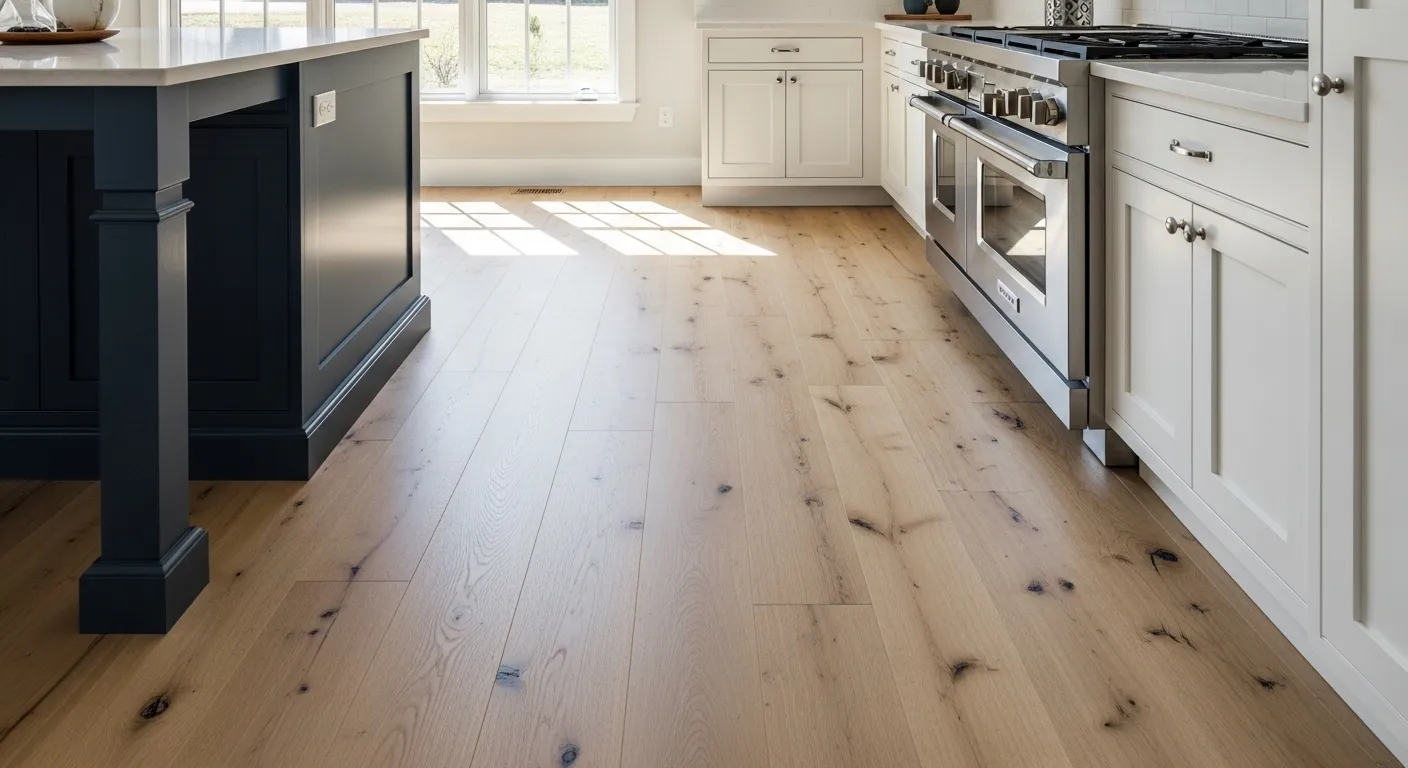
The first time I realized how much flooring mattered was on a cold morning when I stepped barefoot onto my old kitchen tile.
No matter how nice the cabinets looked, the space always felt cold and uninviting. That was when I began exploring kitchen wood flooring and discovered how much it could change the feel of a room.
At first, I worried wood would not handle spills or daily messes. But modern kitchen wood flooring offers both warmth and durability, making it a practical choice for busy homes. Once installed, my kitchen instantly felt warmer, softer, and far more welcoming.
How wood tone influences the atmosphere of your kitchen
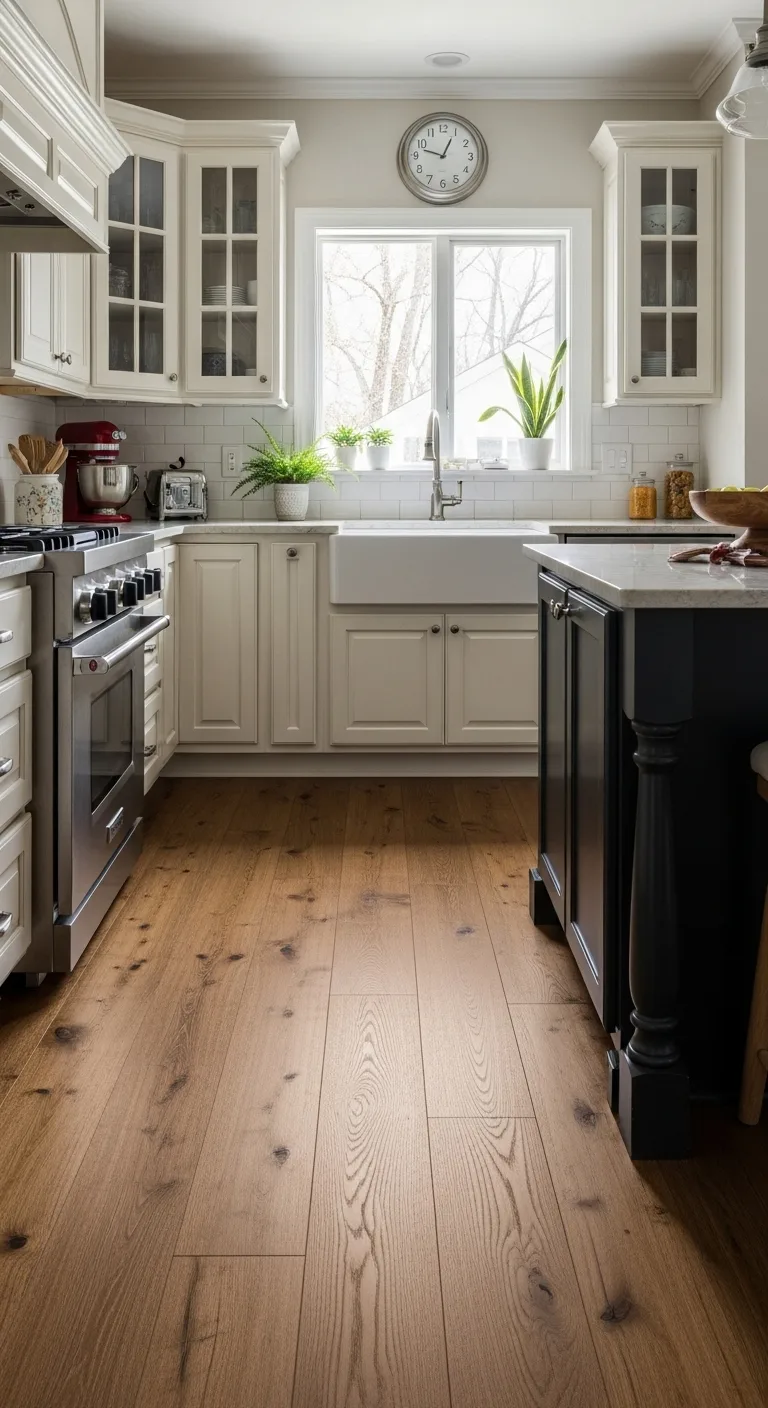
Wood tone changes how people experience the kitchen long before they notice cabinets or decorative accessories.
Lighter flooring often makes a small kitchen feel brighter and more open throughout the entire day. Darker flooring can create a grounded appearance that feels richer and more dramatic in larger spaces.
Medium wood tones usually provide balance because they work well with both warm and cool kitchen finishes. Choosing the right tone helps your flooring support the mood you want your kitchen to create.
Why finish matters before you install kitchen wood flooring
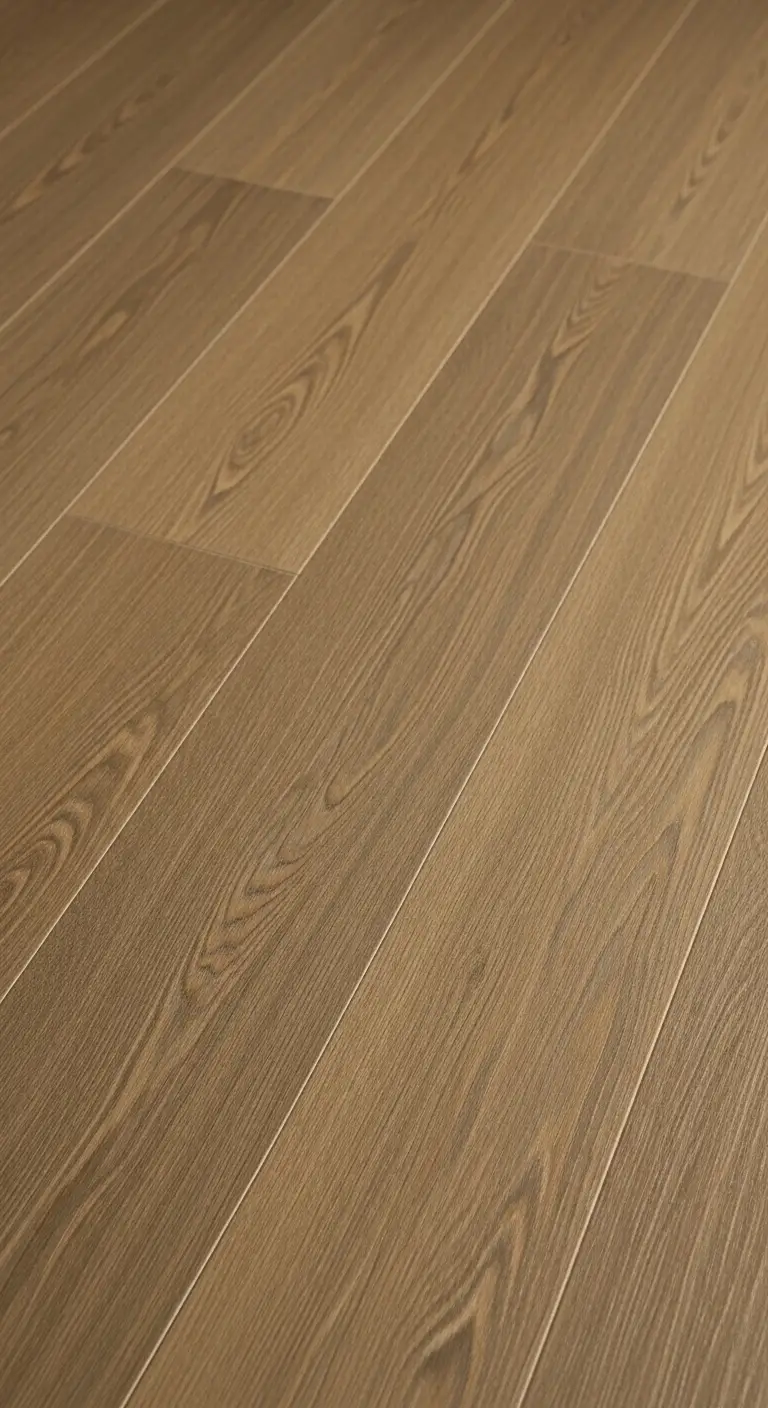
The finish on wood flooring protects the surface while shaping the final style of your kitchen. Matte finishes create a softer appearance that feels relaxed and modern in everyday spaces.
Satin finishes reflect a little more light while still hiding dust and minor scratches well. Textured finishes add grip and make natural grain patterns more noticeable under changing light. A thoughtful finish can help your kitchen wood flooring stay beautiful for many years.
13 Kitchen Wood Flooring Ideas
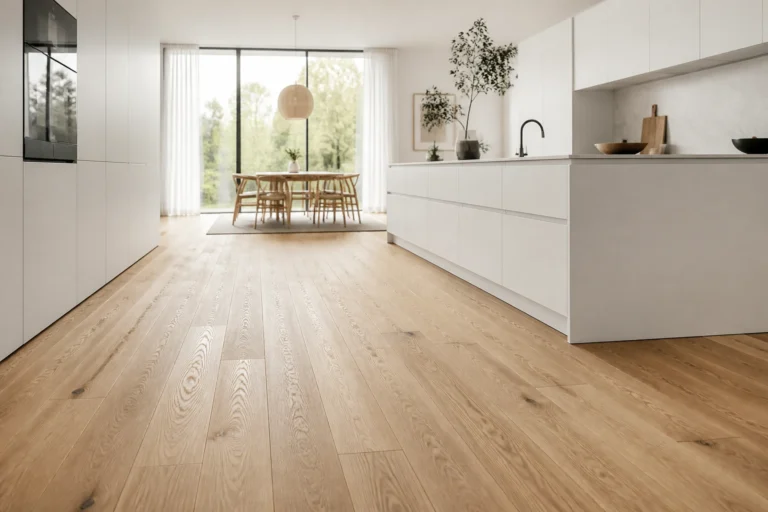
Light oak kitchen wood flooring for bright family spaces
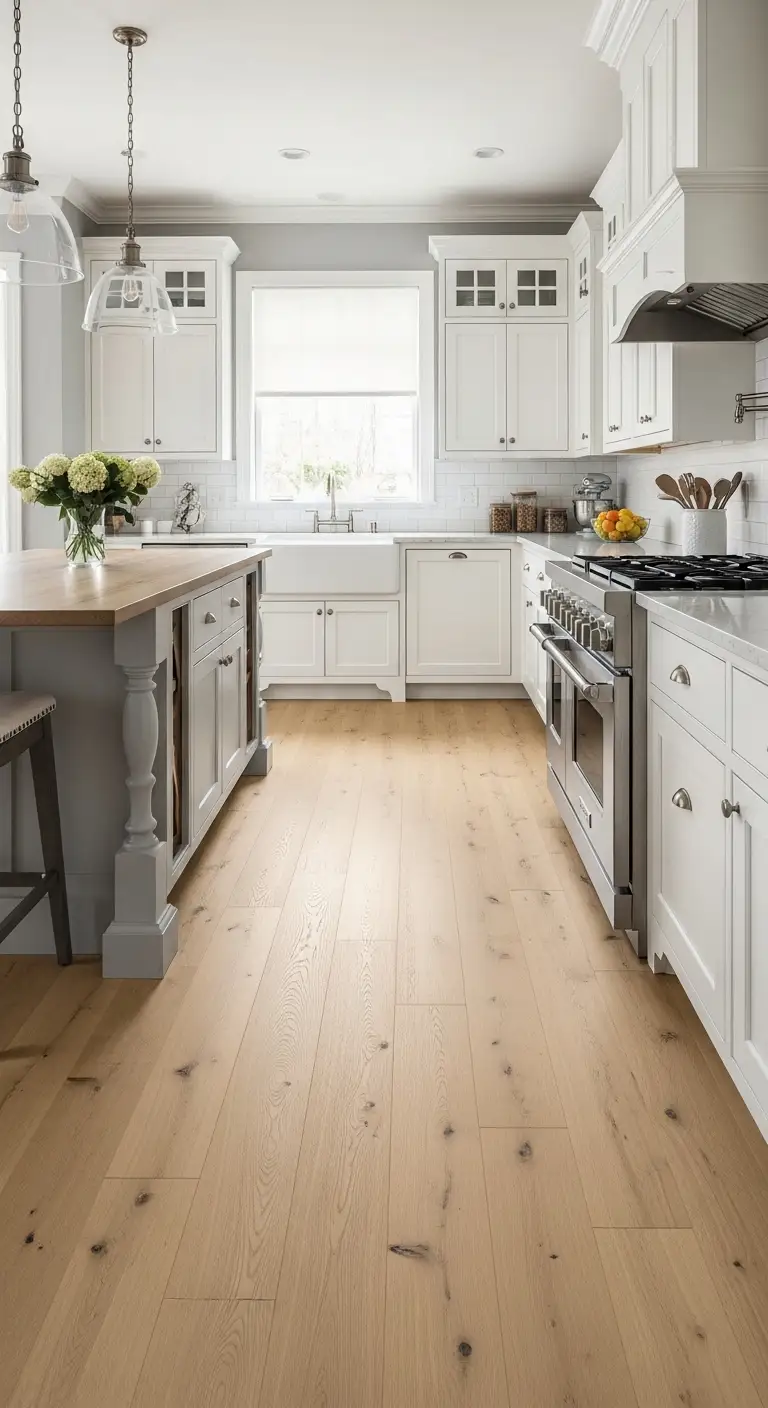
Light oak remains one of the most popular choices for homeowners who want a bright and welcoming kitchen.
Its soft color reflects natural light and helps compact kitchens feel more spacious than they really are.
The subtle grain pattern adds texture without competing with bold countertops or decorative backsplash materials.
Many people choose light oak because it blends easily with white cabinets and natural stone surfaces. It also works beautifully with soft gray walls that create a calm and balanced atmosphere.
Because the color feels neutral, homeowners can update furniture or accessories without replacing the flooring later.
Light oak can also hide small crumbs better than very dark flooring in busy cooking areas. This flooring style creates comfort while keeping the kitchen visually clean and effortlessly timeless.
Dark walnut kitchen wood flooring for elegant contrast
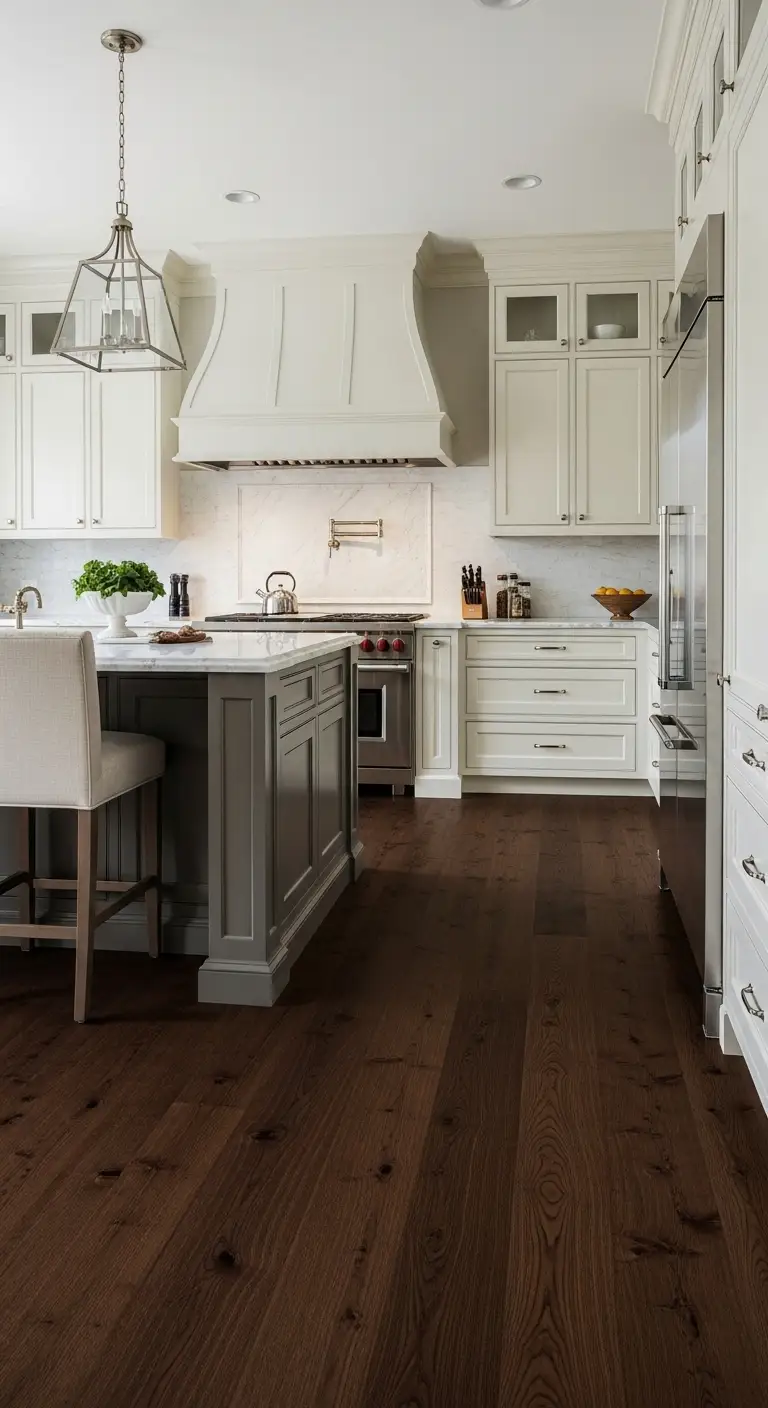
Dark walnut flooring creates a luxurious look that instantly gives a kitchen stronger visual character. Its rich color creates contrast that makes pale cabinets stand out with greater clarity.
Many designers use walnut flooring to create depth in open kitchens with large islands. The deeper shade can make metal fixtures look warmer and more refined in evening lighting.
Walnut also pairs beautifully with marble surfaces that need a darker element for balance. Homeowners often choose this flooring when they want a kitchen that feels polished and sophisticated.
Good lighting remains important because dark floors can make a small kitchen feel slightly enclosed. When balanced correctly, dark walnut turns ordinary kitchens into spaces that feel intentionally designed.
Wide plank kitchen wood flooring for modern simplicity
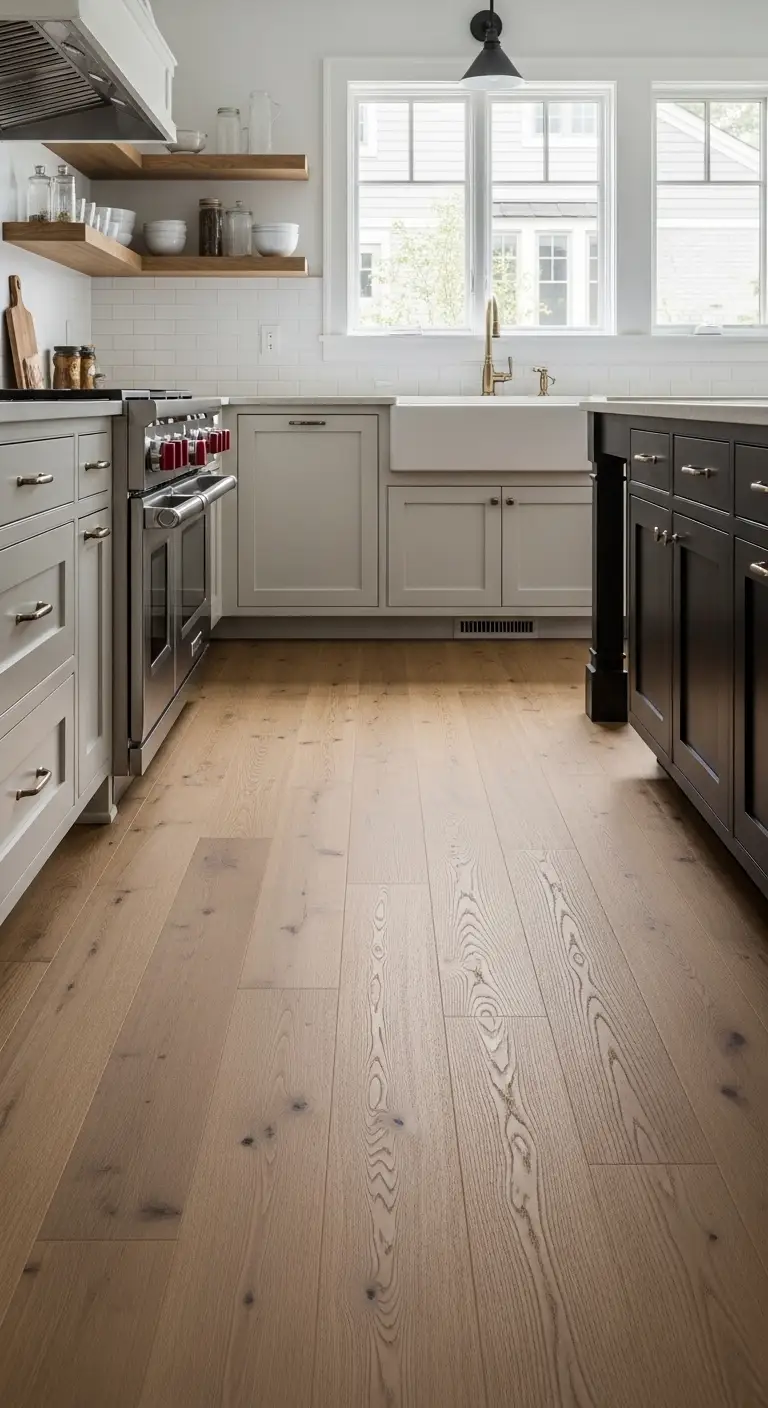
Wide plank flooring creates a cleaner look because fewer seams appear across the kitchen surface. That simple detail helps the entire room feel calmer and less visually crowded.
Many modern homes use wider boards because they create a seamless appearance in open layouts.
The larger planks also highlight natural wood grain in a more noticeable way. This makes the flooring itself feel like part of the kitchen design rather than background material.
Wide planks often work especially well with flat cabinet fronts and minimal hardware choices. Lighter stains can make the room feel airy, while darker stains feel more dramatic.
Homeowners who want simplicity often choose this style because it feels refined without trying too hard.
Reclaimed kitchen wood flooring for rustic character
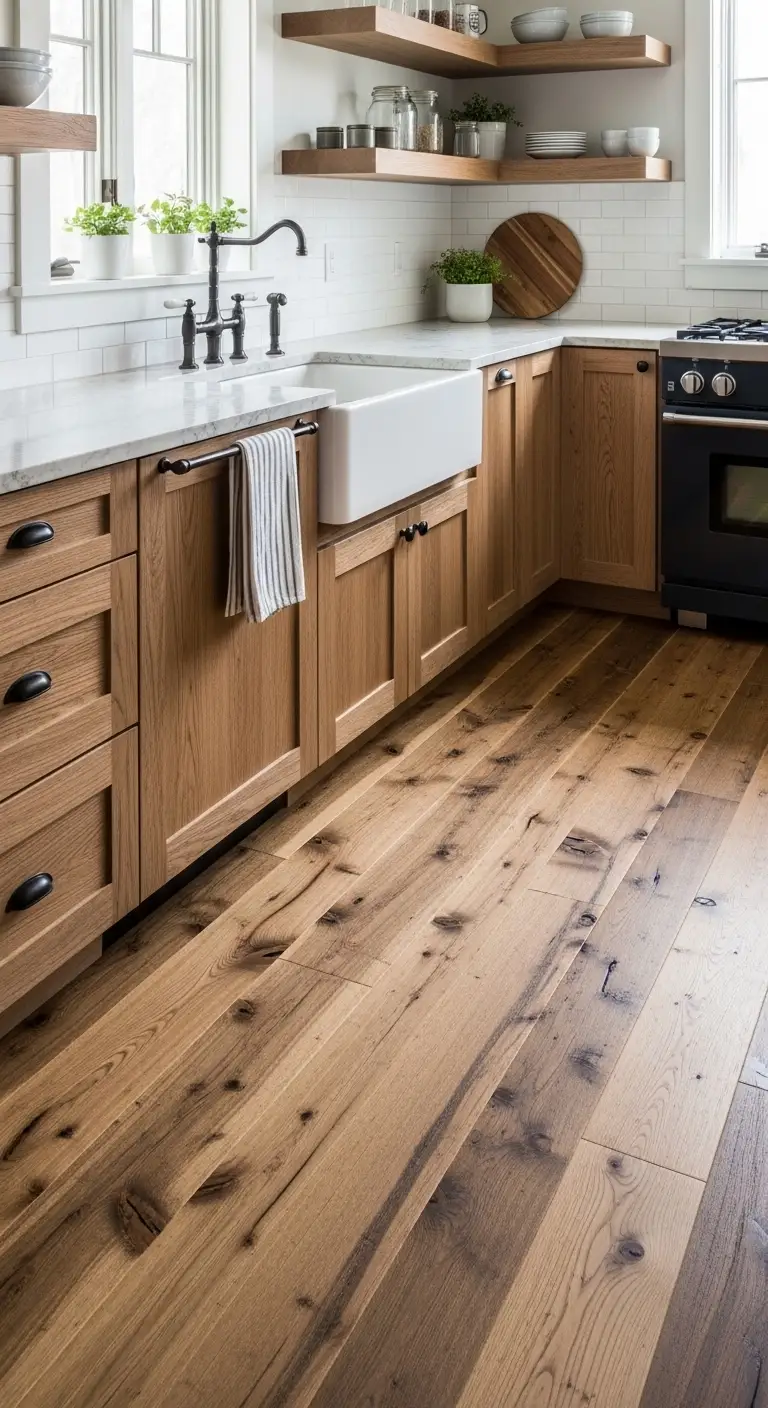
Reclaimed wood flooring adds history that newly manufactured boards often cannot recreate naturally.
Each plank usually contains knots, markings, and texture formed through years of previous use. Those details give the kitchen a sense of authenticity that feels warm and personal.
Many homeowners choose reclaimed wood because it supports environmentally thoughtful renovation choices.
Using existing materials can reduce waste while bringing unique visual charm into the home. This flooring pairs especially well with farmhouse sinks and natural wood shelving.
It also works beautifully beside black fixtures that create contrast against aged surfaces. No two reclaimed floors look exactly the same, which makes every kitchen feel distinctive. This style works best for people who value character more than perfectly uniform surfaces.
Gray toned kitchen wood flooring for a soft contemporary style
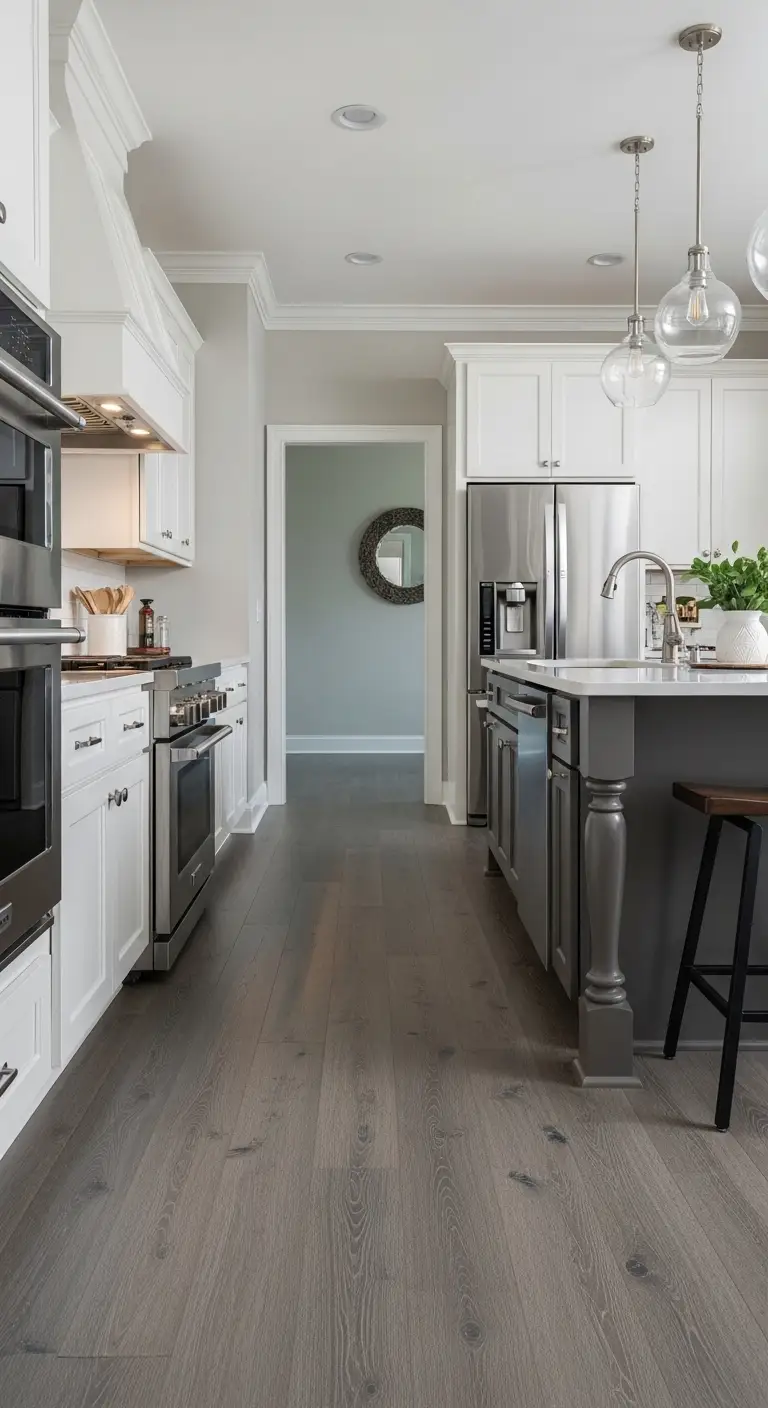
Gray toned flooring has become popular because it creates a calm and updated kitchen atmosphere. The muted color works well in homes that mix modern details with traditional architecture.
Many homeowners choose gray because it balances warm cabinets with cooler metal finishes beautifully. This color can soften a kitchen that contains stainless appliances and bright white surfaces.
It also creates a subtle background that allows decorative lighting to stand out more clearly. Unlike very dark flooring, gray often hides everyday dust between regular cleaning sessions.
Lighter gray shades can make compact kitchens feel open without appearing too plain. Medium gray planks often create the best balance between warmth and contemporary style.
This type of kitchen wood flooring works especially well in homes with open floor plans.
Herringbone kitchen wood flooring for timeless movement
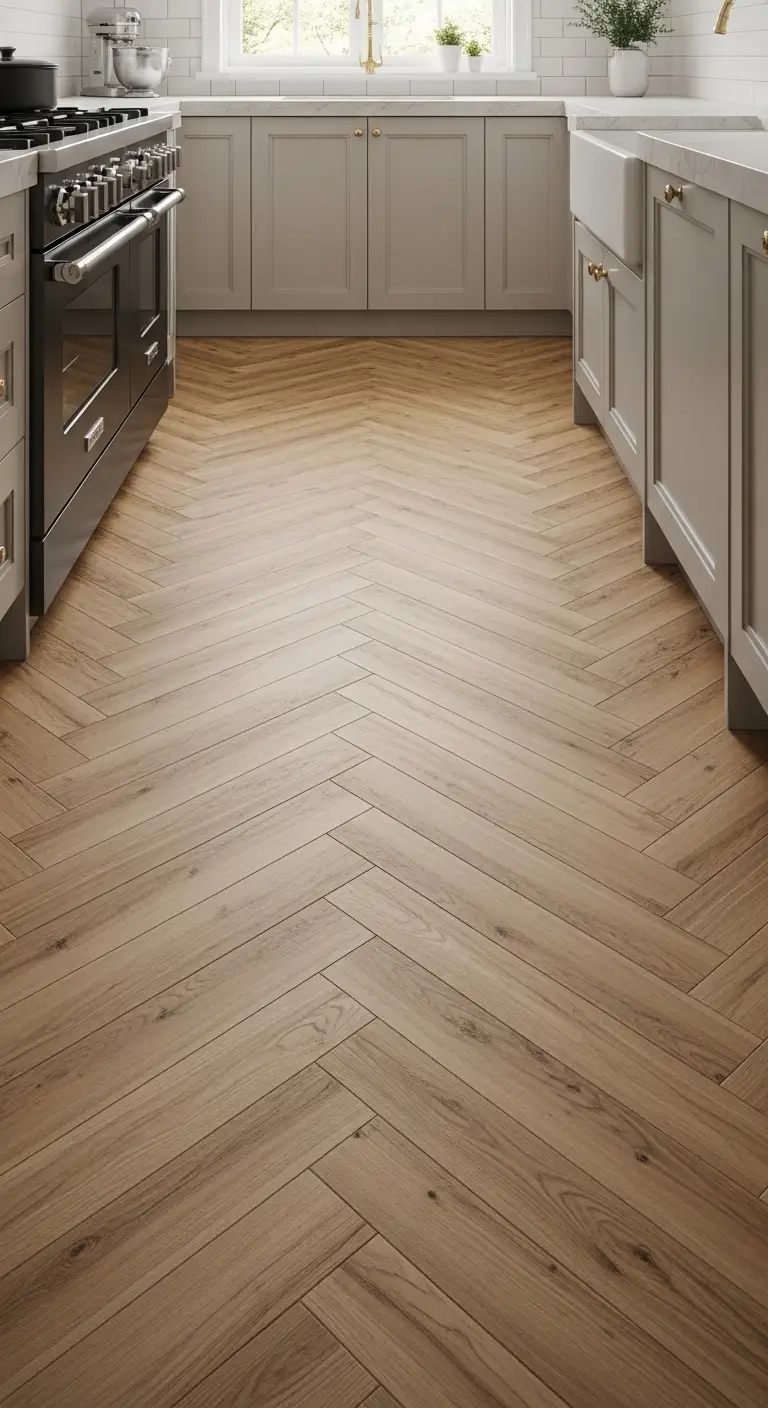
Herringbone flooring introduces pattern while still preserving the natural beauty of real wood. The angled layout creates movement that draws attention across the entire kitchen floor.
Many designers use this style to make simple kitchens feel more custom and memorable. It adds visual interest without relying on bold colors or dramatic decorative pieces.
Medium wood tones often show the pattern more clearly than extremely light finishes. The design can also help narrow kitchens appear wider than they actually are. Because the pattern feels classic, it rarely looks outdated after only a few years.
Herringbone works beautifully in kitchens that need personality without overwhelming the space. It gives ordinary wood flooring a more intentional and carefully crafted appearance.
Distressed kitchen wood flooring for relaxed warmth
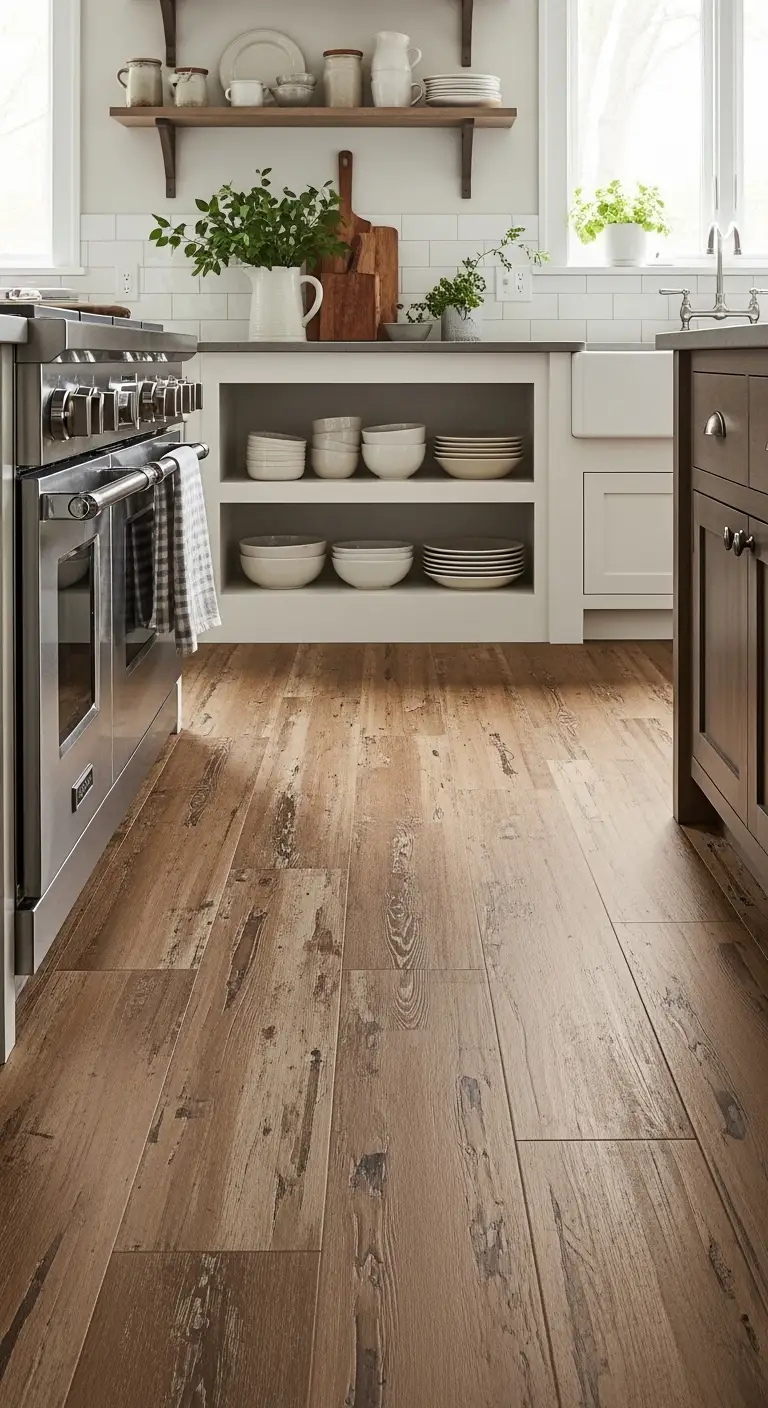
Distressed wood flooring creates a kitchen that feels comfortable from the moment someone enters. The worn texture gives the surface a relaxed appearance that feels welcoming every day.
Many families prefer distressed flooring because small marks blend into the existing character. That makes this option practical for homes with constant foot traffic and active cooking.
Scratches become less noticeable because the surface already embraces natural imperfections. This style works especially well in farmhouse and cottage inspired kitchens.
Soft brown tones often enhance the aged texture without making the room feel dark. Distressed planks also pair nicely with open shelving and handmade ceramic accents. Homeowners who value comfort often choose this flooring over polished formal surfaces.
Honey maple kitchen wood flooring for natural warmth
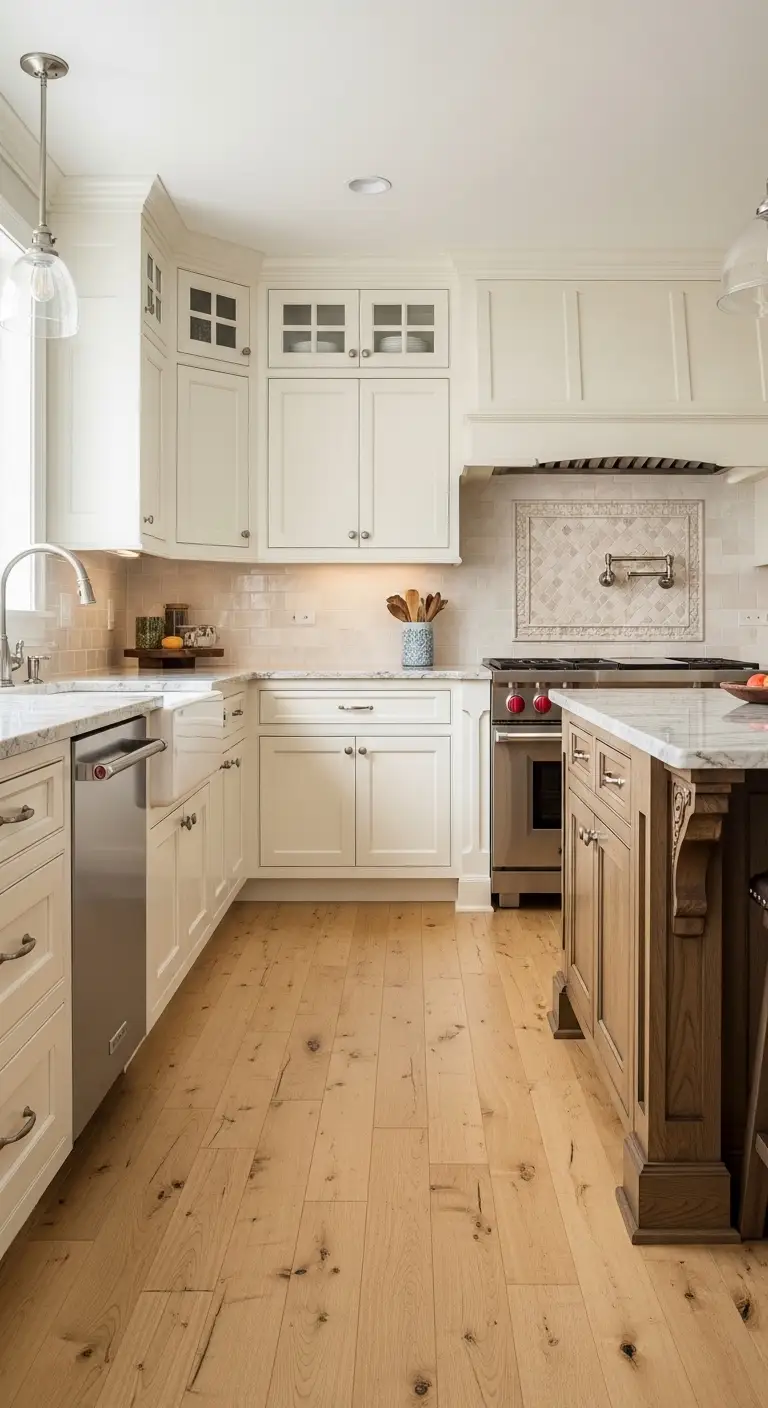
Honey maple flooring brings gentle warmth into kitchens that need a brighter natural look. Its golden color can make a kitchen feel cheerful without becoming visually overpowering.
Many homeowners choose maple because it works with cream cabinets and stone counters. The subtle grain creates texture while maintaining a clean and balanced appearance.
Honey tones can also make north facing kitchens feel less cold during darker months. This flooring reflects light softly and helps smaller kitchens feel more welcoming.
Maple works well in both traditional and modern spaces because the tone feels versatile. It can support changing design trends without looking dated too quickly. That flexibility makes honey maple a practical and beautiful long term flooring choice.
Engineered kitchen wood flooring for moisture conscious homes
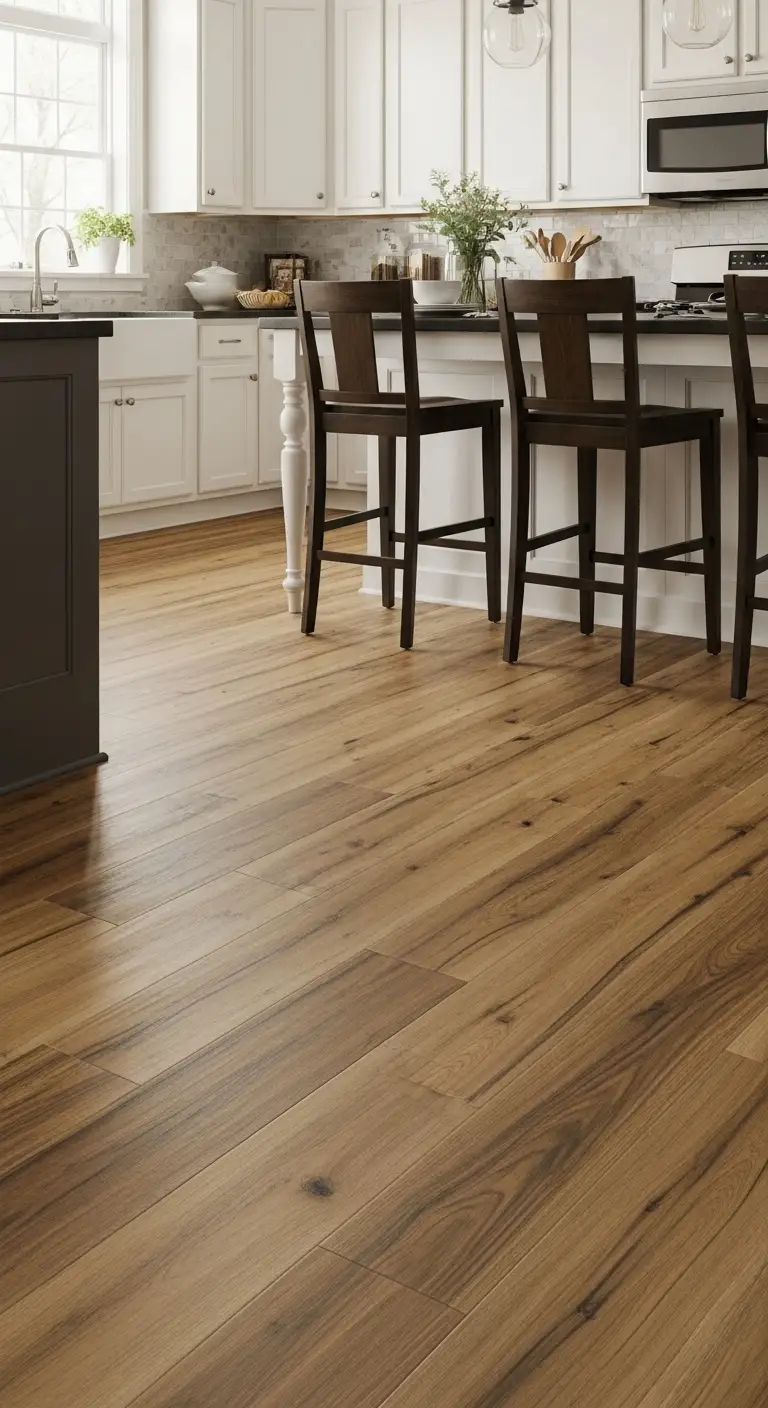
Many homeowners choose engineered wood kitchen flooring because it handles humidity more effectively than some solid wood surfaces.
Its layered construction helps the boards remain stable during seasonal temperature changes.
That stability makes it a smart option for kitchens that experience steam and daily spills. Engineered flooring still offers the beauty of genuine wood on the visible surface.
This allows homeowners to enjoy natural texture without sacrificing practical performance. It can also be installed in homes where traditional hardwood may not perform as well.
Many styles now mimic premium wood species with impressive realism. Modern finishes also improve resistance against scratches from chairs and heavy kitchen use. For busy households, engineered boards offer a strong balance between style and durability.
Mixed width kitchen wood flooring for custom appeal
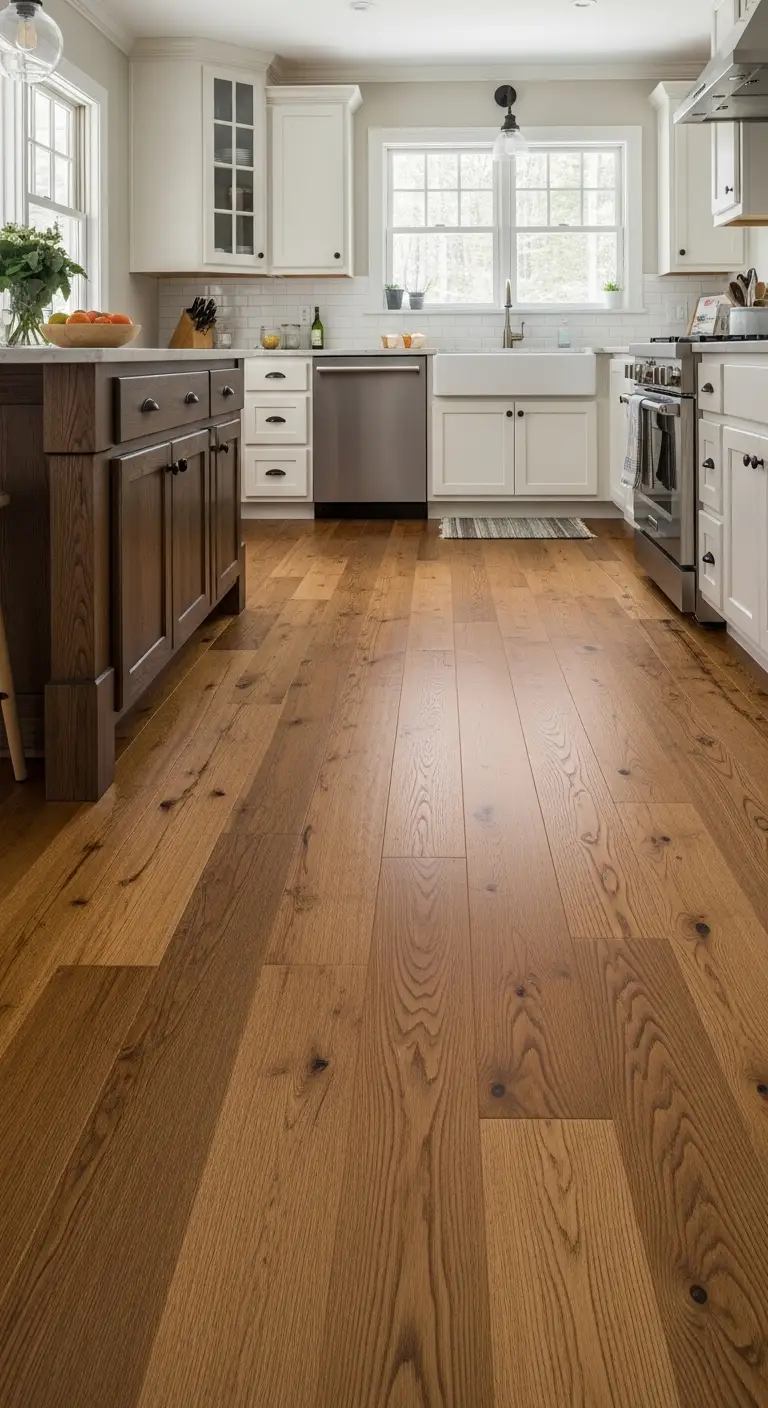
Mixed width flooring creates a kitchen floor that feels handcrafted and visually more interesting. Instead of using identical boards, this style combines planks with different widths for subtle variation. That small design choice can make a kitchen feel more personal and thoughtfully planned.
Many homeowners choose this style when they want character without dramatic flooring patterns. Natural stains usually make the changing plank sizes easier to notice across the room. The variation can also help larger kitchens feel less empty and more balanced.
Mixed width boards work well in both rustic and transitional kitchen spaces. They pair especially nicely with simple cabinets that allow the flooring to stand out. This flooring idea offers individuality while still preserving a timeless and practical appearance.
Whitewashed kitchen wood flooring for airy interiors
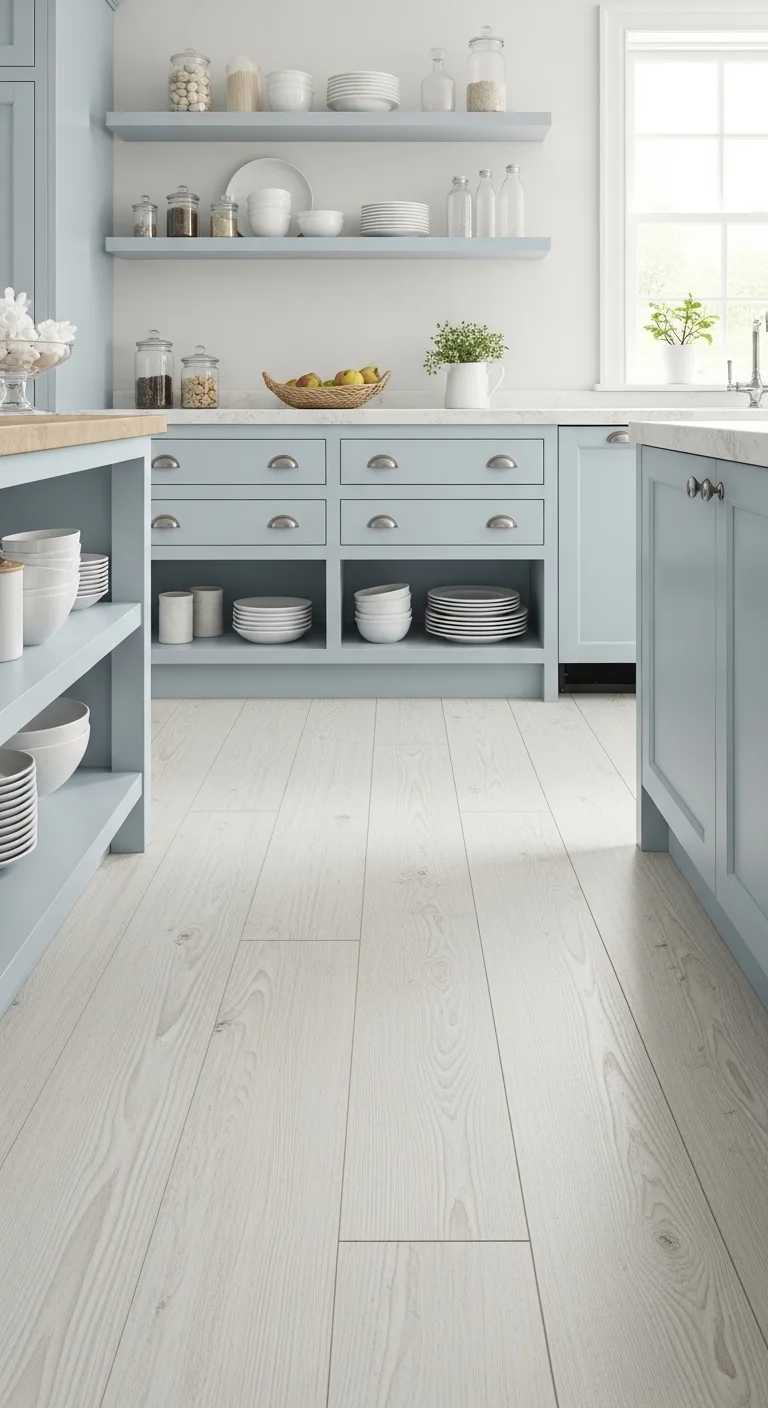
Whitewashed wood flooring creates a soft and breezy atmosphere that feels clean and peaceful. The finish lightens the surface while allowing the natural wood grain to remain visible.
Many homeowners use this flooring to brighten kitchens with limited natural sunlight. It can make a small kitchen feel larger without using stark white materials everywhere.
Whitewashed boards pair beautifully with open shelves and neutral decorative details. They also work well with pale blue accents that create a gentle coastal feeling.
The softened finish keeps the kitchen from feeling too formal or overly polished. This style suits people who want warmth without using darker traditional wood tones. It creates a relaxed kitchen that still feels refined and intentionally designed.
Espresso kitchen wood flooring for bold contrast
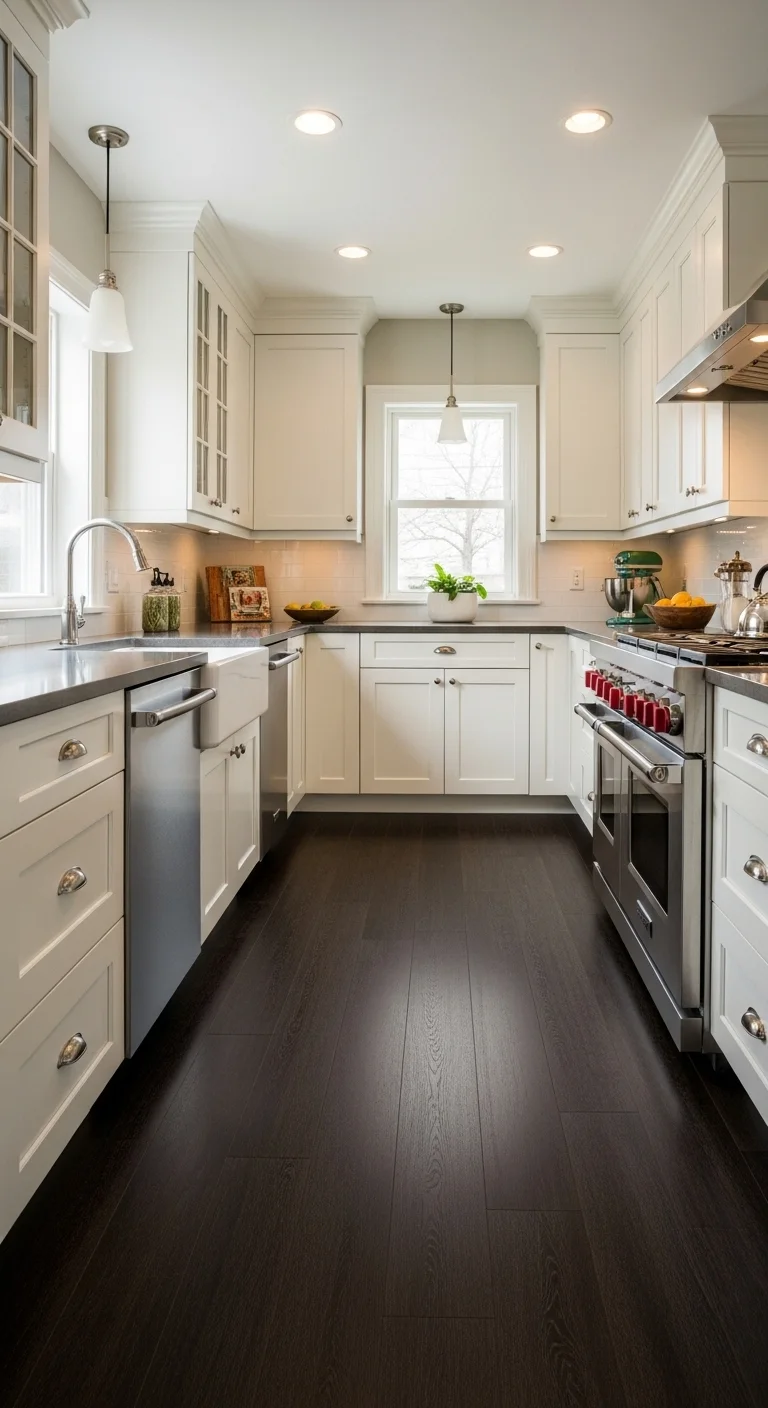
Espresso flooring creates strong contrast that can completely transform a simple kitchen design. The deep color gives pale cabinets a sharper and more sophisticated appearance.
Many designers use this flooring to anchor kitchens with bright walls and light countertops. The darker tone adds visual depth that can make the room feel more luxurious.
It also creates a dramatic foundation for kitchens with brushed metal hardware. Proper lighting remains important because dark flooring can absorb natural brightness quickly.
Warm overhead lighting can prevent the room from feeling too heavy. Espresso floors work best in kitchens with enough space to handle bold contrast. When balanced carefully, this flooring can create a striking and memorable interior.
Patterned kitchen wood flooring borders for custom detail
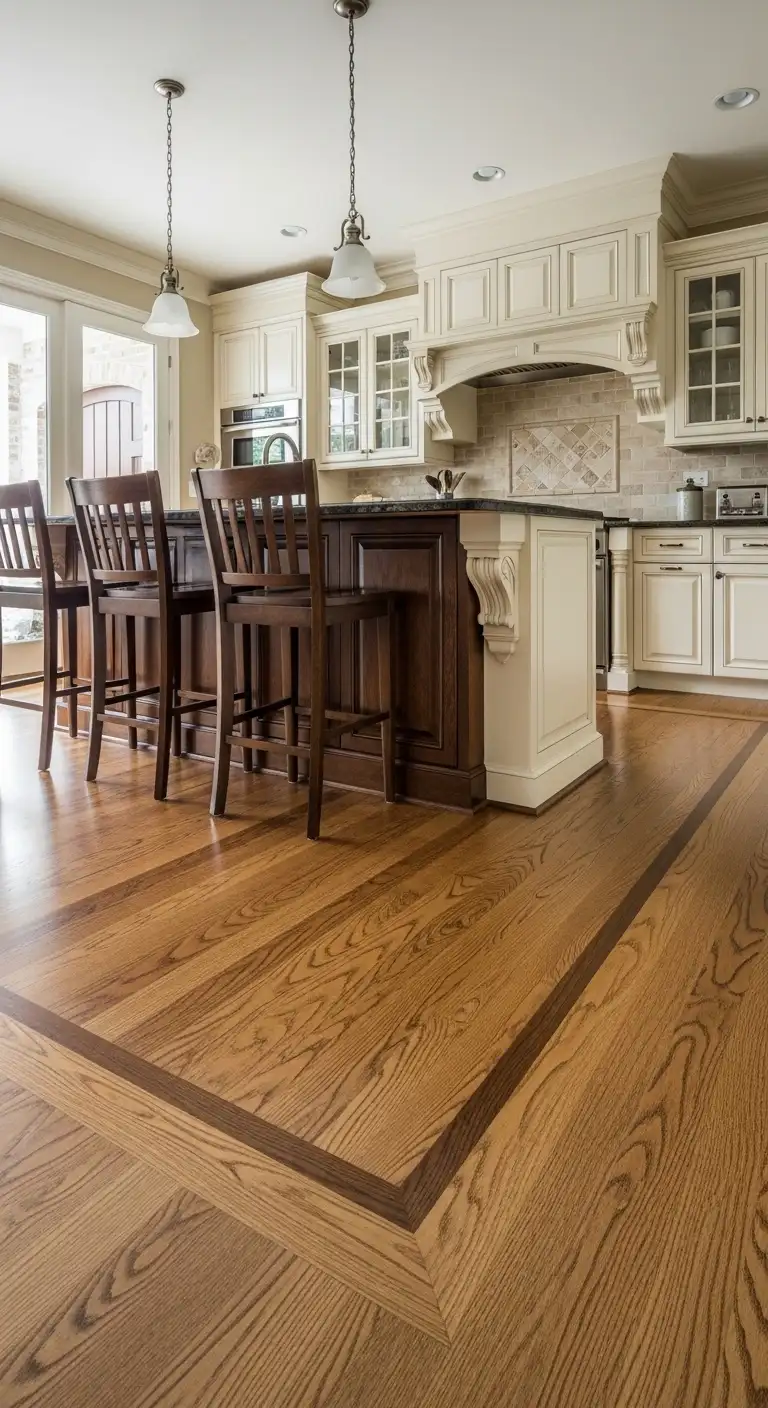
Patterned wood borders add subtle detail that makes a kitchen feel custom built. Instead of changing the entire floor, homeowners can frame certain areas with decorative wood inlays.
This technique often works beautifully around islands or breakfast seating spaces. The border helps define functional zones without using walls or different flooring materials.
Simple patterns usually remain stylish longer than complicated decorative designs. Many people choose contrasting wood tones to make the border gently stand out.
This design can make an ordinary kitchen feel more refined and expensive. It also adds craftsmanship that guests often notice immediately.
For homeowners who love unique details, bordered kitchen wood flooring creates lasting visual interest.
Simple maintenance habits that protect kitchen wood flooring
Regular care can help wood flooring stay attractive long after the installation process ends. Wiping spills quickly prevents moisture from soaking into vulnerable seams between boards.
Using a soft microfiber mop can remove dirt without scratching the protective finish. Furniture pads under chairs can also reduce surface damage from daily movement.
Avoid harsh cleaning products because they can slowly dull the natural beauty of wood. Gentle maintenance often makes the biggest difference in preserving a beautiful kitchen floor.
Common mistakes homeowners should avoid before installation
Some homeowners choose flooring based only on appearance and ignore daily kitchen demands.
That decision can create problems when moisture and heavy traffic affect the wood later. Others select very dark floors without considering available natural light in the room.
Poor installation can also shorten the lifespan of even premium wood materials. Taking time before installation can help avoid expensive changes after the project ends.
Final Thoughts
The best kitchen wood flooring should feel beautiful while supporting your daily routine. Color, texture, plank size, and finish all shape how the kitchen feels over time.
Some homeowners prefer bright and airy floors, while others prefer richer dramatic surfaces. The right flooring can make the kitchen feel more comfortable and visually connected. Choosing carefully now can create a kitchen that feels timeless for many years.