Small Kitchen Flooring Ideas on a Budget: 11 Options
Looking to upgrade your small kitchen from the ground up? The right flooring can completely transform your space. In this post, we’ve gathered stylish small kitchen flooring ideas that make tight spaces feel bigger, brighter, and more inviting.
When I first started thinking about updating my small kitchen, flooring wasn’t even at the top of my list. I was more focused on cabinets, storage, and trying to make the space feel less cramped.
But every time I stepped inside, the worn-out floor reminded me that no design choice really works until the base of the room feels right.
The old tiles were cracked in a few corners and had this dull color that made the kitchen feel even smaller than it already was.
I tried ignoring it for a while, but in a compact space like mine, every detail matters more than you expect. Even the lighting felt different once I started paying attention to the floor.
That’s when I began exploring small kitchen flooring ideas that could make the space feel brighter and more open.
I didn’t want anything too complicated or expensive, just something practical that could quietly transform the whole mood of the room. Sometimes, the biggest change starts from the ground up.
How Flooring Influences Perceived Kitchen Space
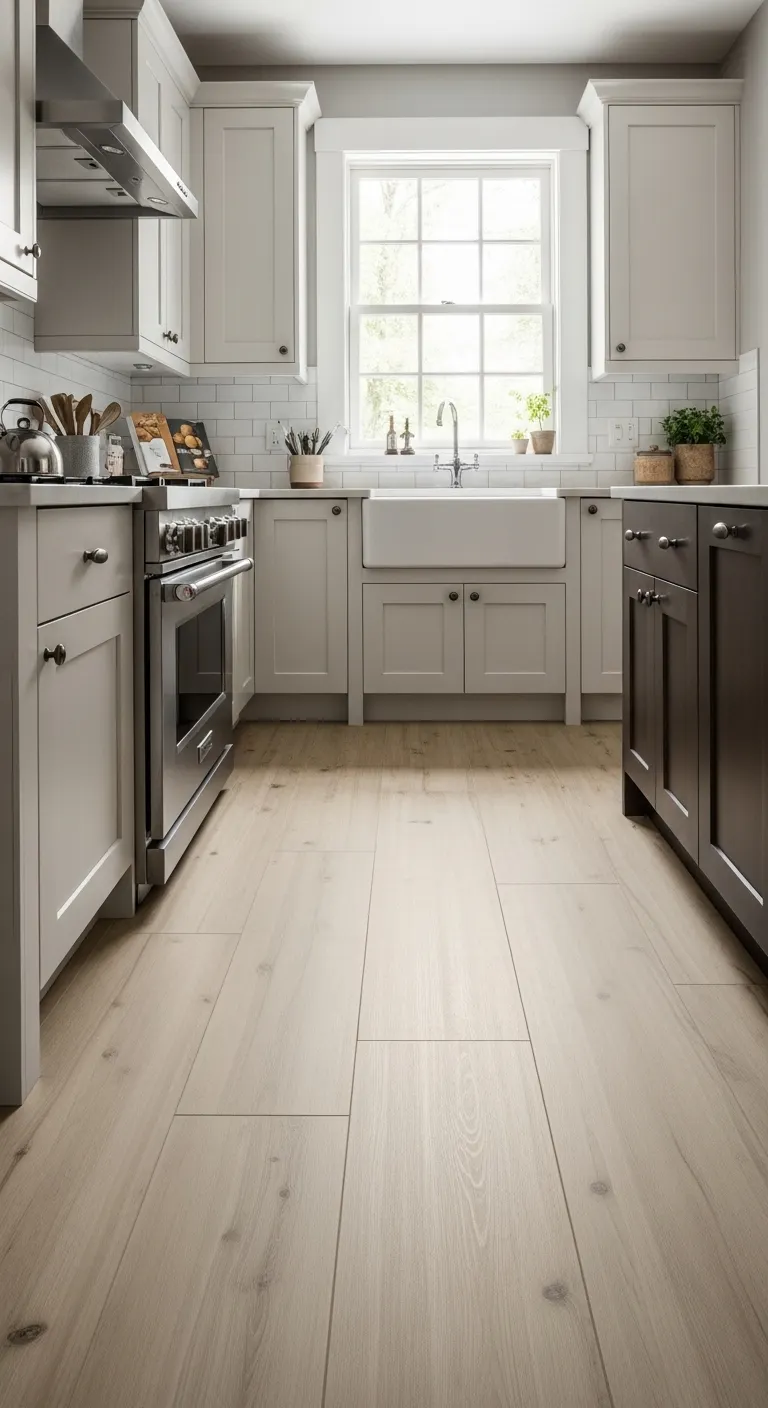
Flooring significantly affects how people perceive space, especially when working with compact kitchens that lack natural openness.
Light colored floors reflect both artificial and natural lighting, which helps visually expand tight cooking areas effectively.
Long plank designs guide the eye across the room, creating an impression of extended width or depth.
Minimal grout lines and continuous textures reduce visual interruptions that often make small kitchens feel cluttered and closed.
Designers often combine neutral tones with subtle patterns to maintain balance between personality and spaciousness in kitchens.
Understanding these principles helps homeowners select flooring that enhances comfort without sacrificing style or practicality.
Choosing Materials Based on Lifestyle Needs
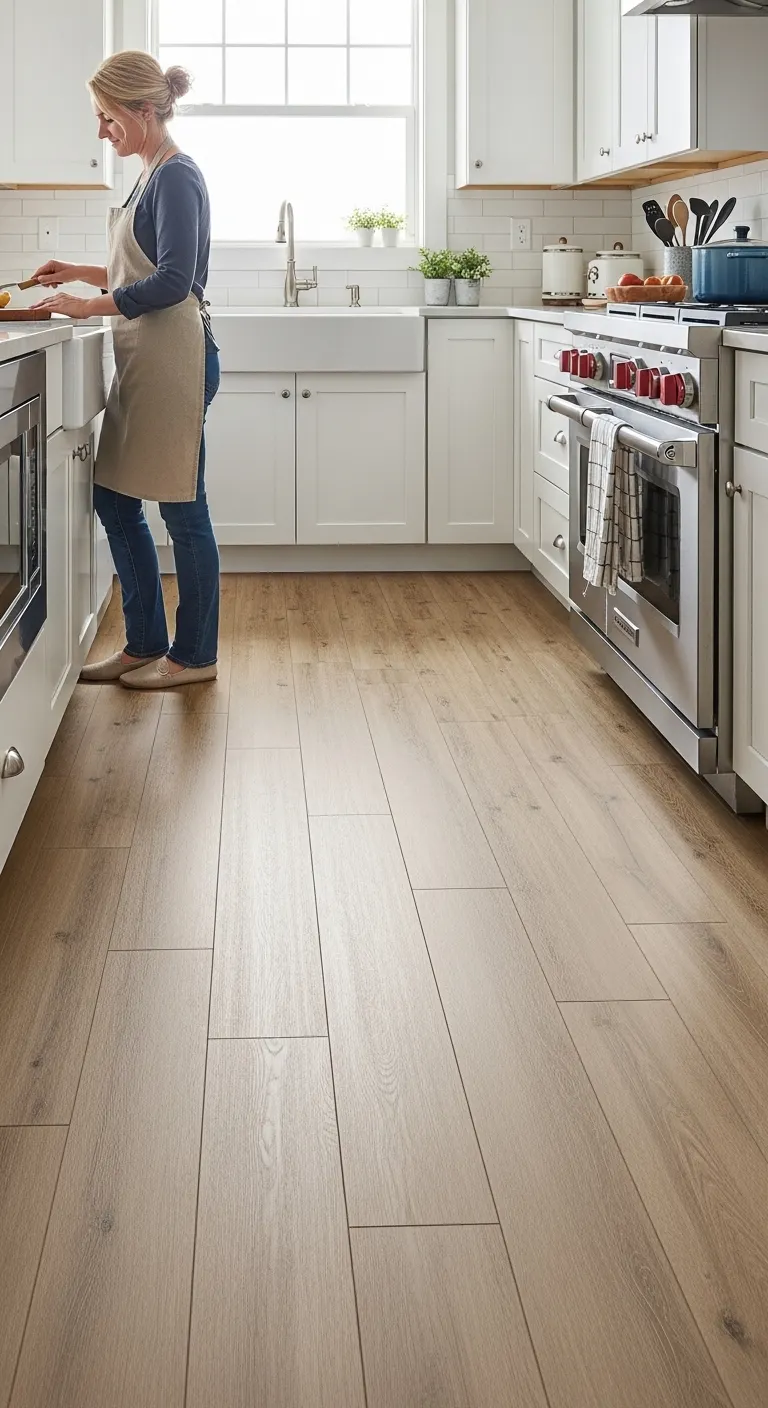
Every household has different cooking habits, cleaning routines, and durability expectations that influence flooring material selection decisions.
Busy kitchens benefit from scratch resistant surfaces that handle frequent movement, spills, and heavy appliance usage effectively.
Families often prefer low maintenance materials that require simple cleaning routines without specialized products or treatments.
Comfort also matters because people spend long periods standing while preparing meals or cleaning kitchen spaces.
Balancing aesthetics with practicality ensures flooring remains visually appealing and functional throughout years of daily use.
Smart material selection reduces long term replacement costs while improving overall kitchen experience and long term usability.
11 Small Kitchen Flooring Ideas
Light Wood Small Kitchen Flooring for a Spacious Look
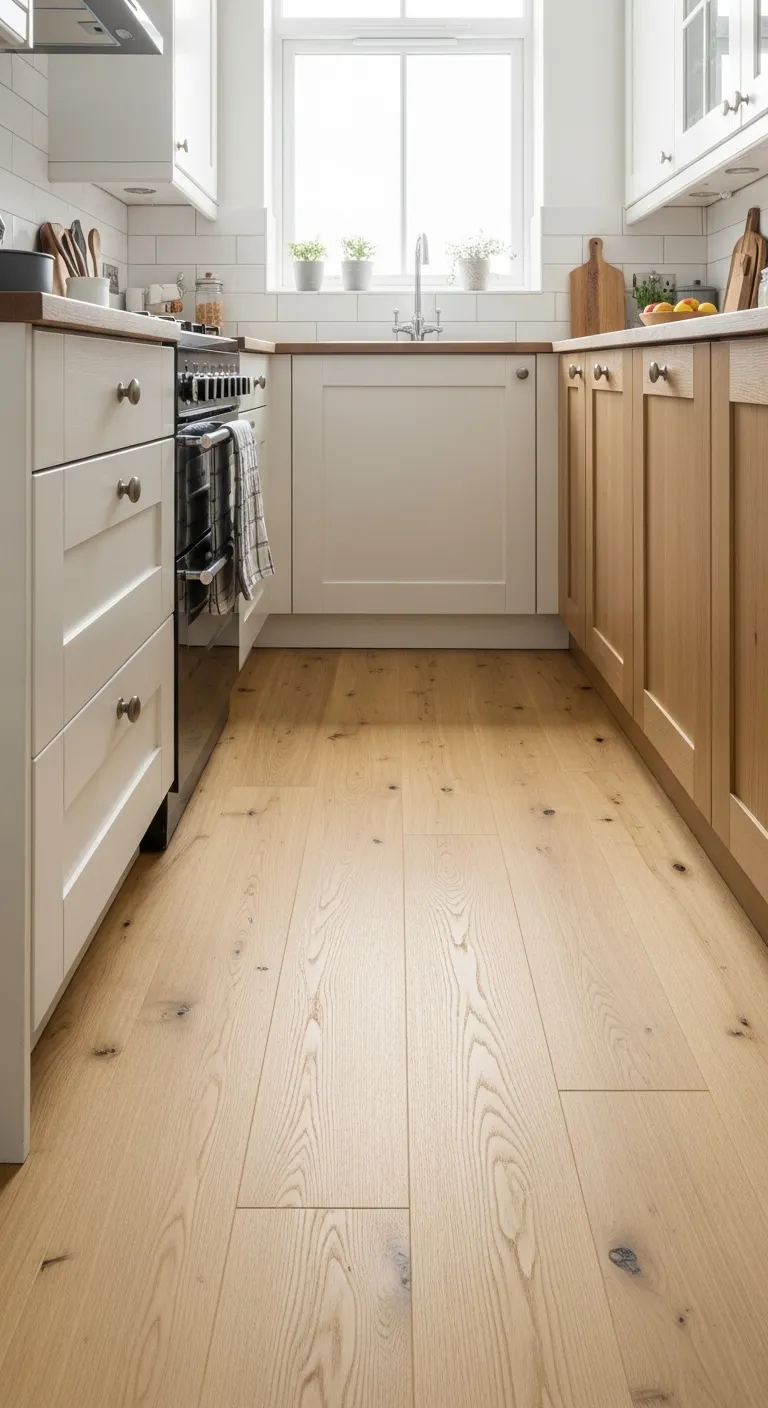
Light wood flooring remains one of the most effective choices for creating an airy and spacious small kitchen environment.
Pale oak and ash tones reflect light beautifully, helping compact kitchens appear brighter and more open throughout the day.
Long plank installations enhance visual length, which supports the illusion of extended floor space in narrow kitchen layouts.
This flooring style also introduces natural warmth, which balances modern cabinetry and minimalist interior design approaches effectively.
Homeowners often choose light wood because it blends easily with multiple color schemes and evolving kitchen décor trends.
Overall, this option delivers both aesthetic charm and practical functionality, making it ideal for small kitchen flooring upgrades.
Large Format Tiles for Seamless Small Kitchen Flooring
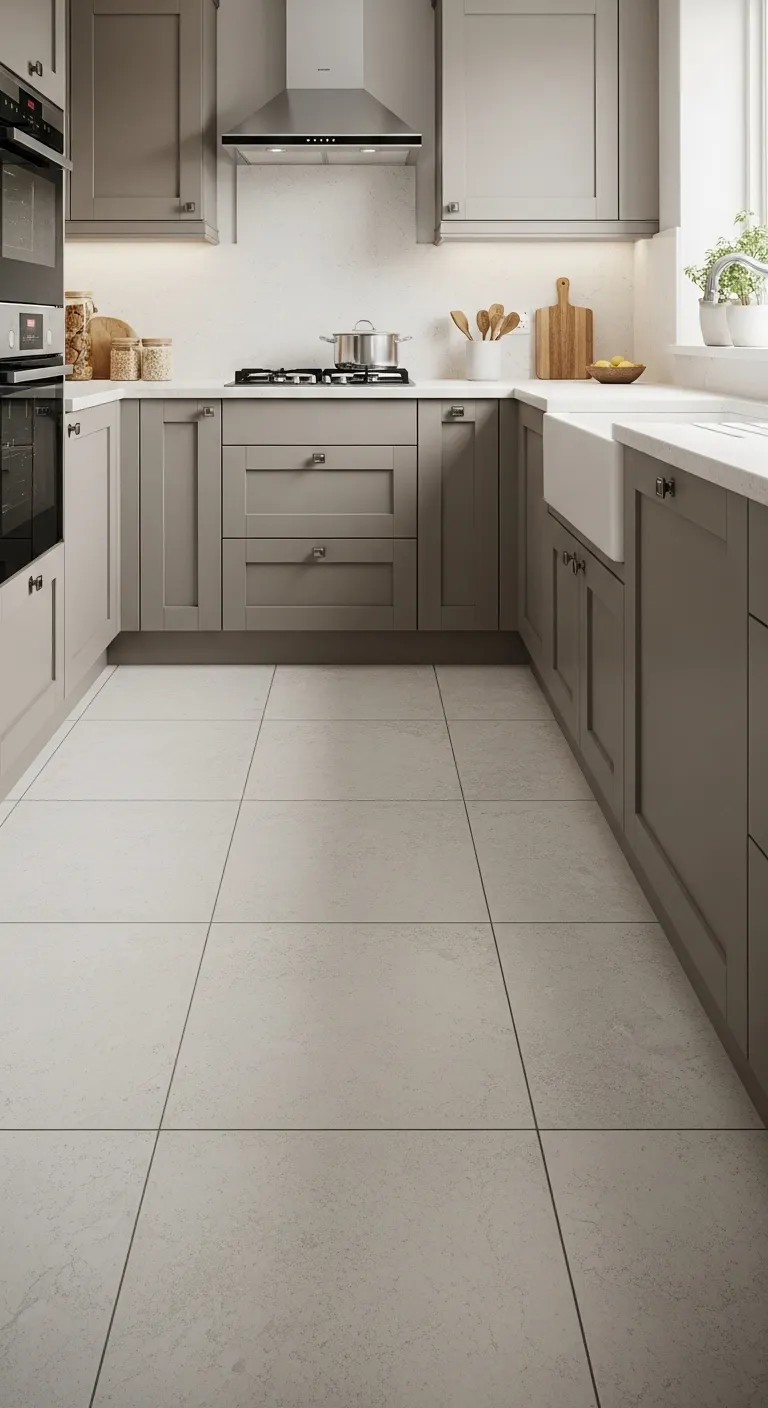
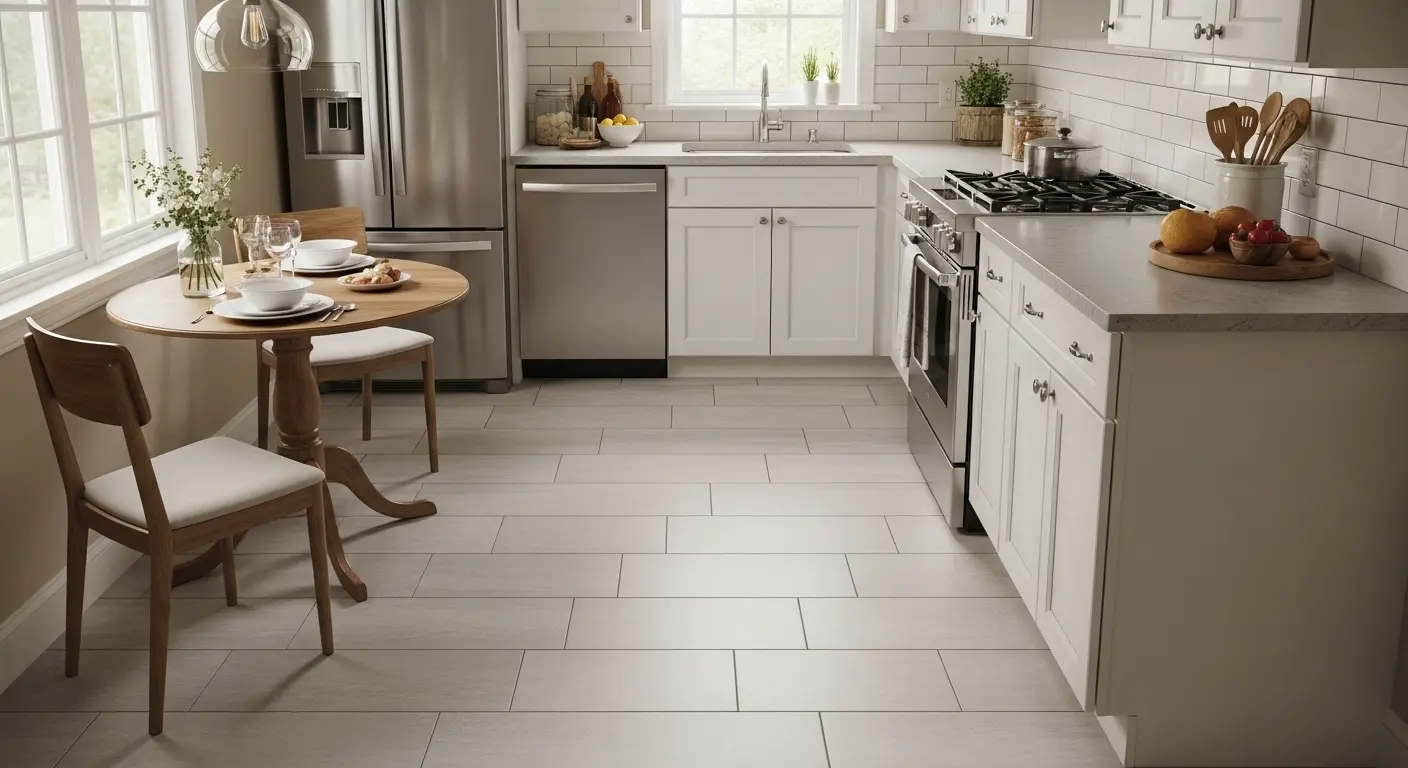
Large format tiles create a seamless appearance in compact kitchens by reducing grout lines and visual interruptions across flooring.
This design approach makes small kitchen flooring feel more unified, which enhances the perception of open space effectively.
Neutral porcelain tones work especially well because they complement modern cabinetry and maintain a clean aesthetic throughout.
Fewer joints also simplify cleaning, which benefits busy households that prioritize low maintenance kitchen environments daily.
Durable tile materials resist moisture and stains, making them ideal for high activity cooking areas with frequent spills.
This flooring choice balances practicality and style, making it a strong option for modern small kitchen floors.
Checkerboard Patterns That Add Character Without Clutter
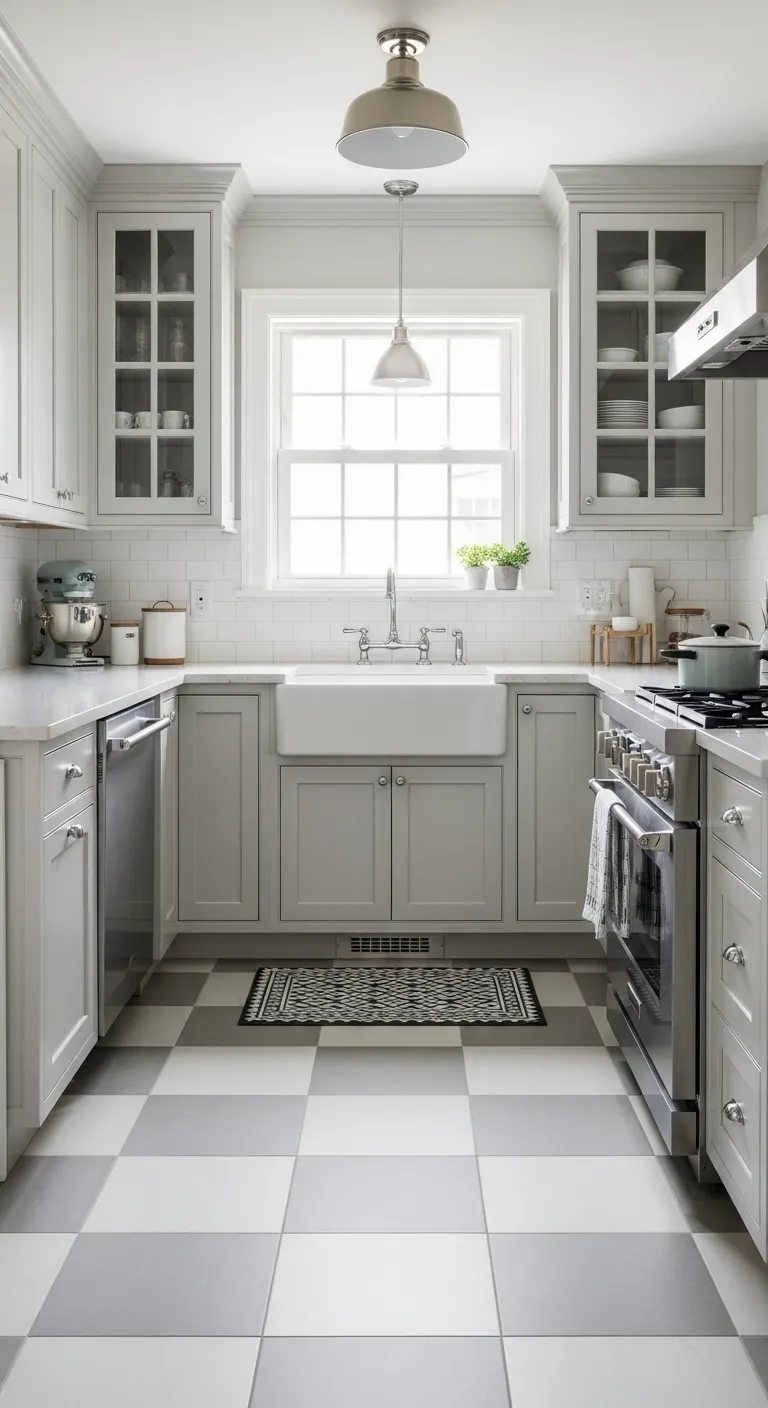
Checkerboard flooring introduces timeless character into small kitchens while maintaining visual balance through controlled contrast patterns.
Soft gray and white combinations work best because they avoid overwhelming compact kitchen layouts with excessive contrast.
This pattern adds personality without relying on additional décor elements that may clutter limited kitchen space visually.
When used carefully, checkerboard floors create a subtle focal point that enhances rather than dominates the room.
Designers recommend pairing patterned flooring with simple cabinetry to maintain harmony and prevent visual overcrowding.
This approach works well in both traditional and modern interiors seeking a balanced yet expressive kitchen design.
Luxury Vinyl Planks for Budget-Friendly Small Kitchen Flooring
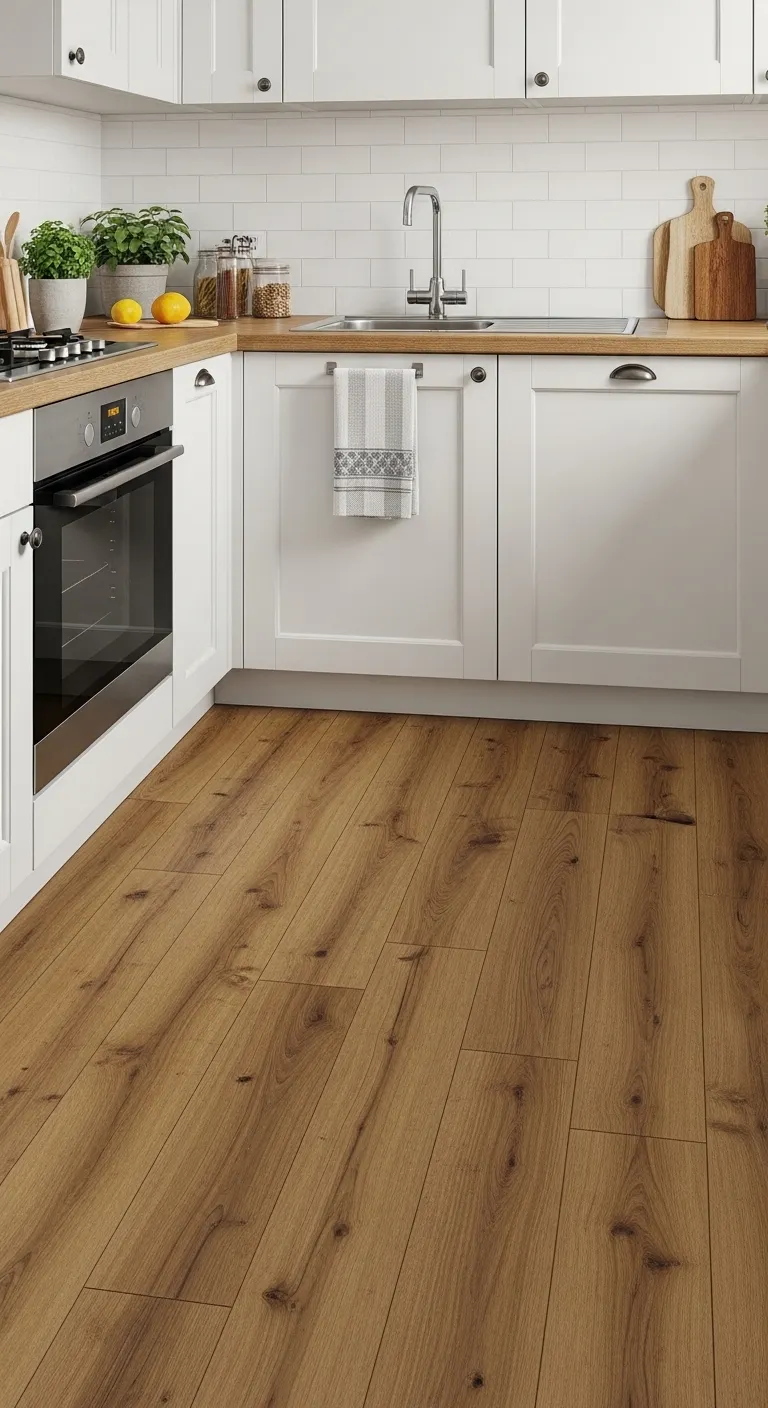
Luxury vinyl planks offer an affordable yet stylish solution for homeowners upgrading small kitchen flooring on a budget.
Modern vinyl designs closely mimic natural wood textures while providing improved resistance to moisture and scratches daily.
This material feels softer underfoot, making it more comfortable for long cooking sessions in compact kitchen spaces.
Installation remains relatively simple, which reduces labor costs and shortens renovation time for busy homeowners significantly.
Many families choose vinyl because it combines durability with design flexibility across multiple kitchen styles easily.
As a result, it continues to grow as a popular choice for practical small kitchen flooring solutions today.
Herringbone Floors for Elegant Small Kitchen Style
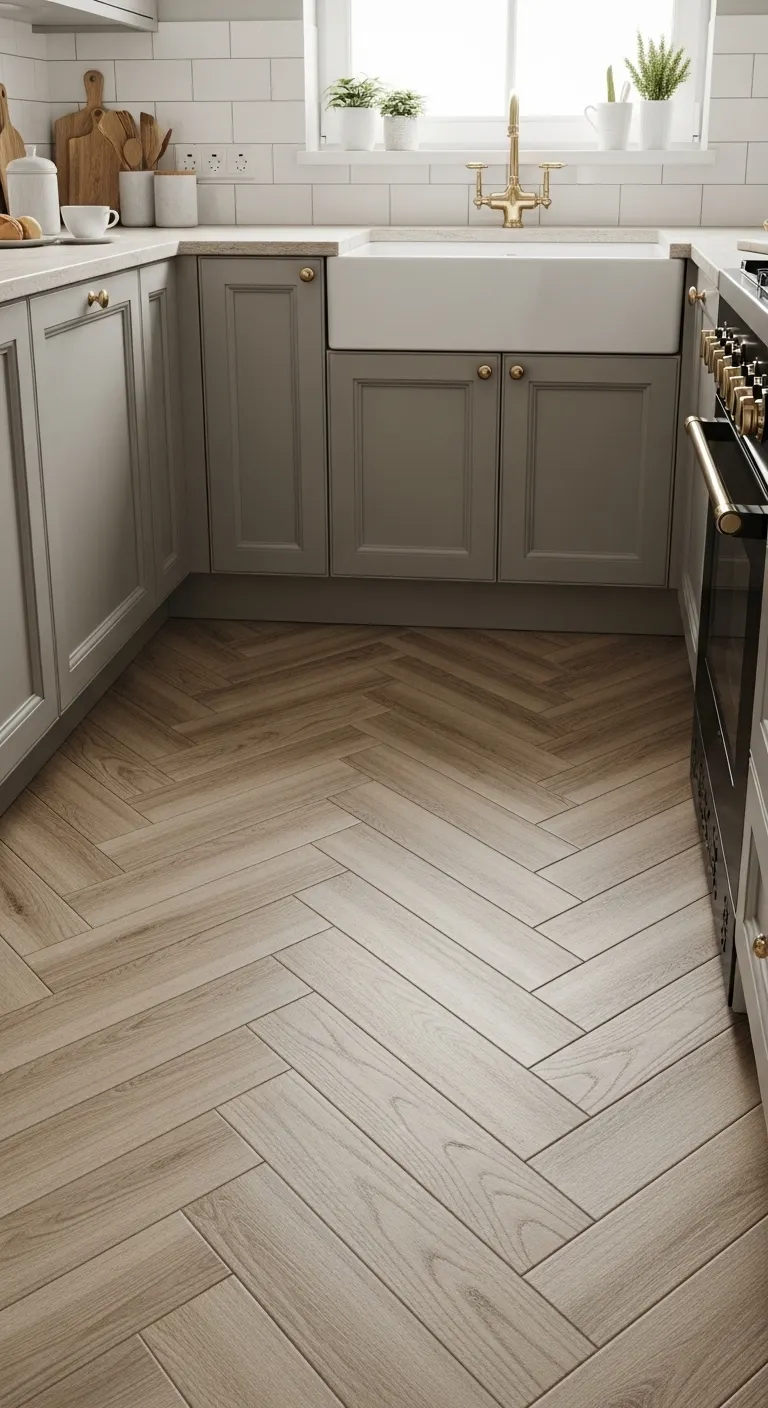
Herringbone flooring adds a refined sense of movement that enhances the visual depth of small kitchen layouts.
The angled pattern naturally guides the eye across the room, making compact spaces feel more dynamic and expanded.
Wood or wood-look materials work best because they soften the geometry while maintaining a premium interior appearance.
Muted tones help prevent the pattern from overwhelming limited square footage, keeping the kitchen visually balanced and calm.
This flooring style pairs well with minimalist cabinetry, allowing the floor design to become a subtle focal point.
Homeowners often choose herringbone when they want elegant small kitchen flooring that feels both modern and timeless.
Matte Stone Finishes for Natural Small Kitchen Flooring
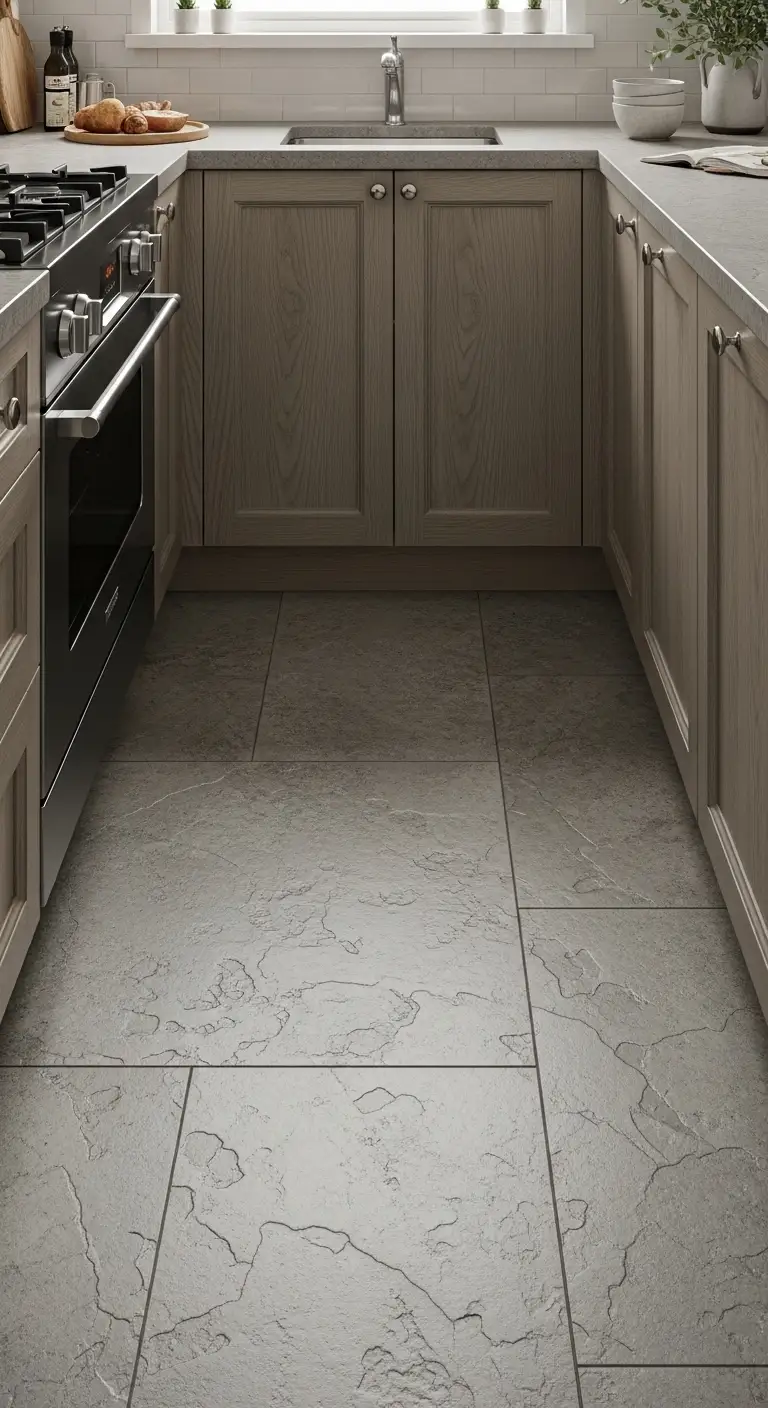
Matte stone finishes bring a grounded and natural feel that works beautifully in compact kitchen environments.
These surfaces reduce glare, which helps maintain a softer and more comfortable visual atmosphere in small cooking areas.
Gray and beige stone tones blend easily with wood or neutral cabinetry without creating visual conflict or clutter.
Durability makes stone-inspired flooring a practical choice for kitchens that experience frequent cooking and foot traffic daily.
Textured finishes also improve grip, which adds safety benefits in spaces where spills and moisture often occur.
This option remains popular for homeowners seeking durable kitchen flooring with a natural and understated aesthetic appeal.
Continuous Flooring Between Kitchen and Living Areas
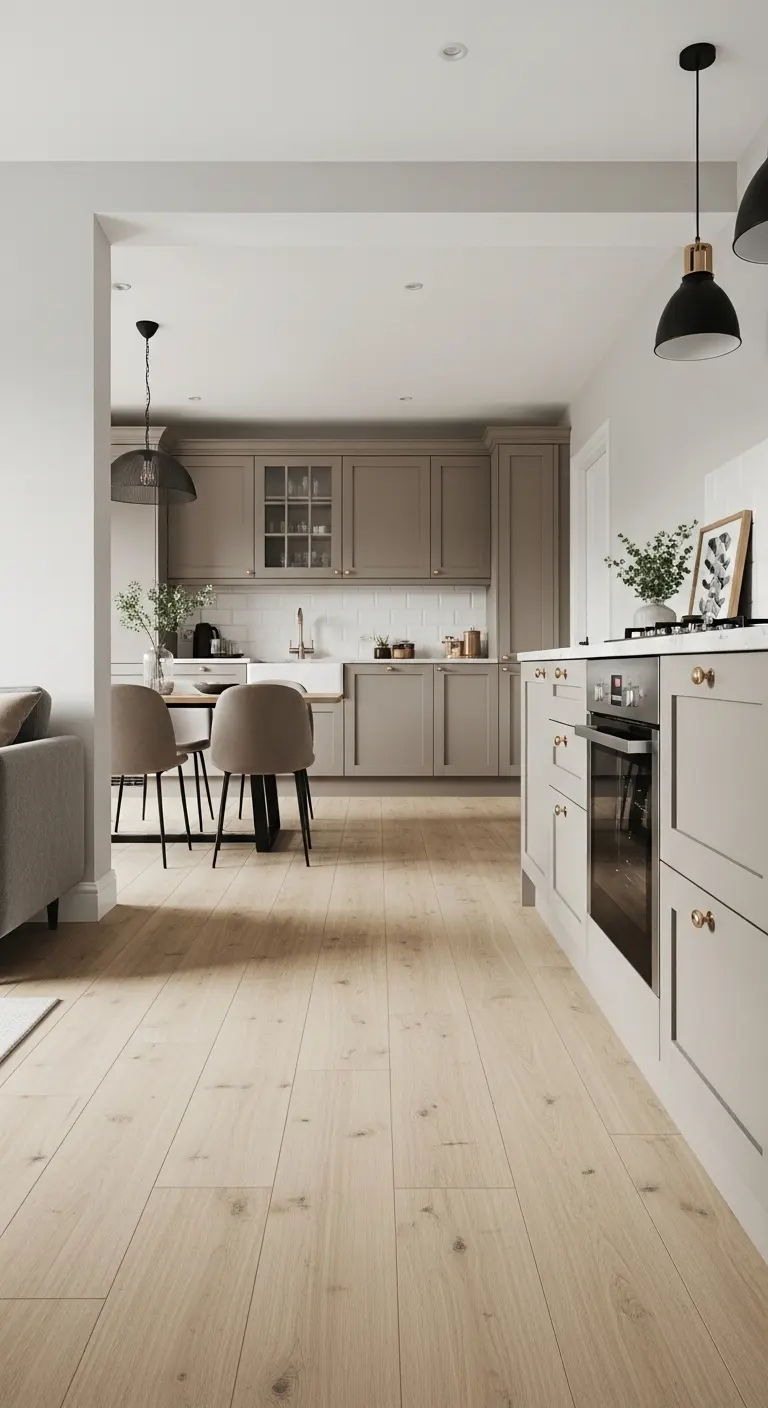
Continuous flooring creates a seamless visual transition that significantly improves the sense of openness in small homes.
When kitchen and living areas share the same flooring, boundaries feel less restrictive and spaces appear more connected.
This approach works especially well in open-plan layouts where maximizing visual flow becomes a key design priority.
Consistent materials eliminate abrupt transitions that often make compact homes feel segmented and visually smaller than they are.
Neutral tones such as light wood or soft stone work best for maintaining design harmony across connected spaces.
This strategy supports kitchen floor ideas for small spaces by enhancing both functionality and overall interior unity.
Patterned Tiles for a Small Kitchen Focal Point
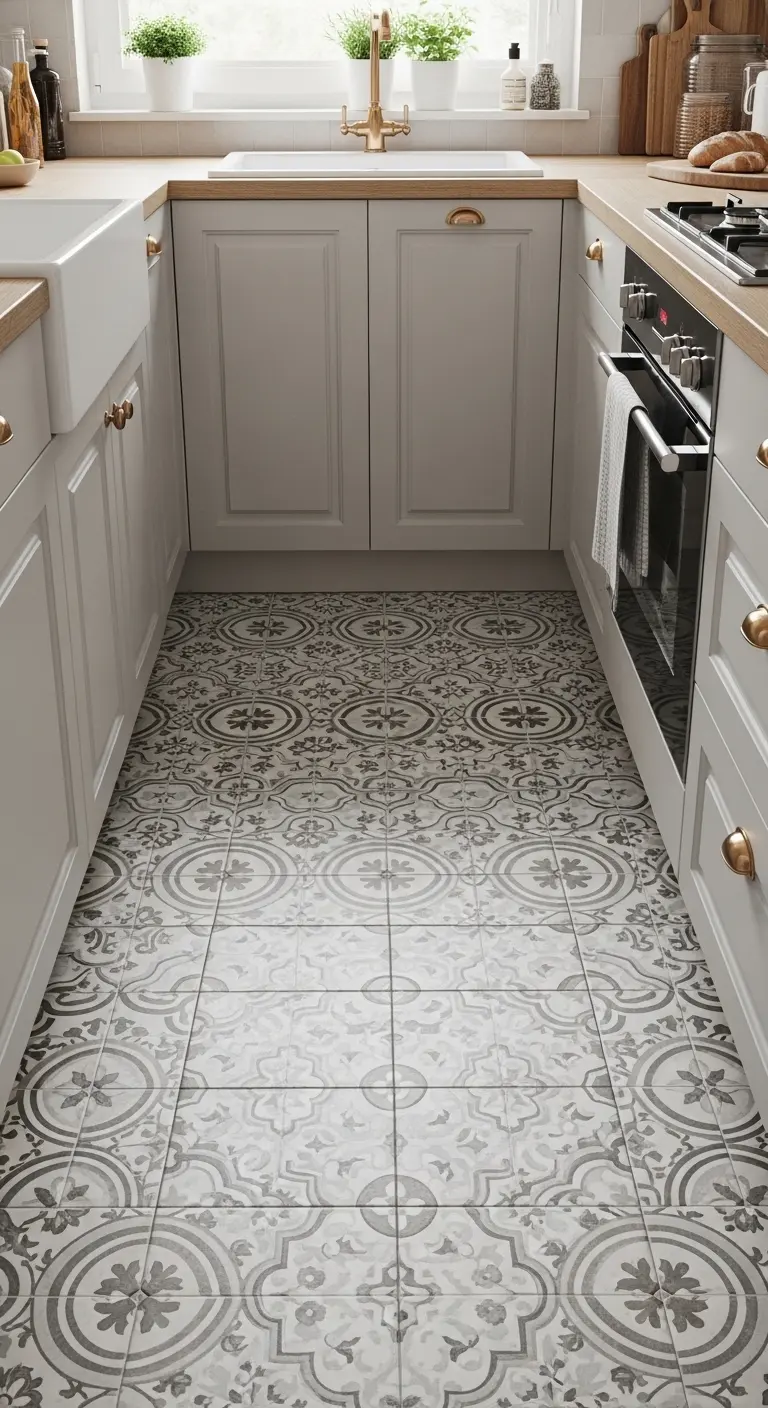
Patterned tiles introduce artistic detail that can elevate small kitchen flooring without requiring additional decorative elements elsewhere.
When used strategically, a single patterned floor becomes the centerpiece that defines the entire kitchen design identity.
Subtle geometric or floral motifs work best because they add interest without overwhelming compact layouts visually.
Pairing patterned floors with simple cabinets helps maintain balance and prevents the kitchen from feeling overly busy.
This approach allows homeowners to express creativity while still respecting the limitations of small kitchen dimensions.
It remains a strong option for those seeking unique and expressive small kitchen flooring solutions.
Cork Small Kitchen Flooring for Added Comfort
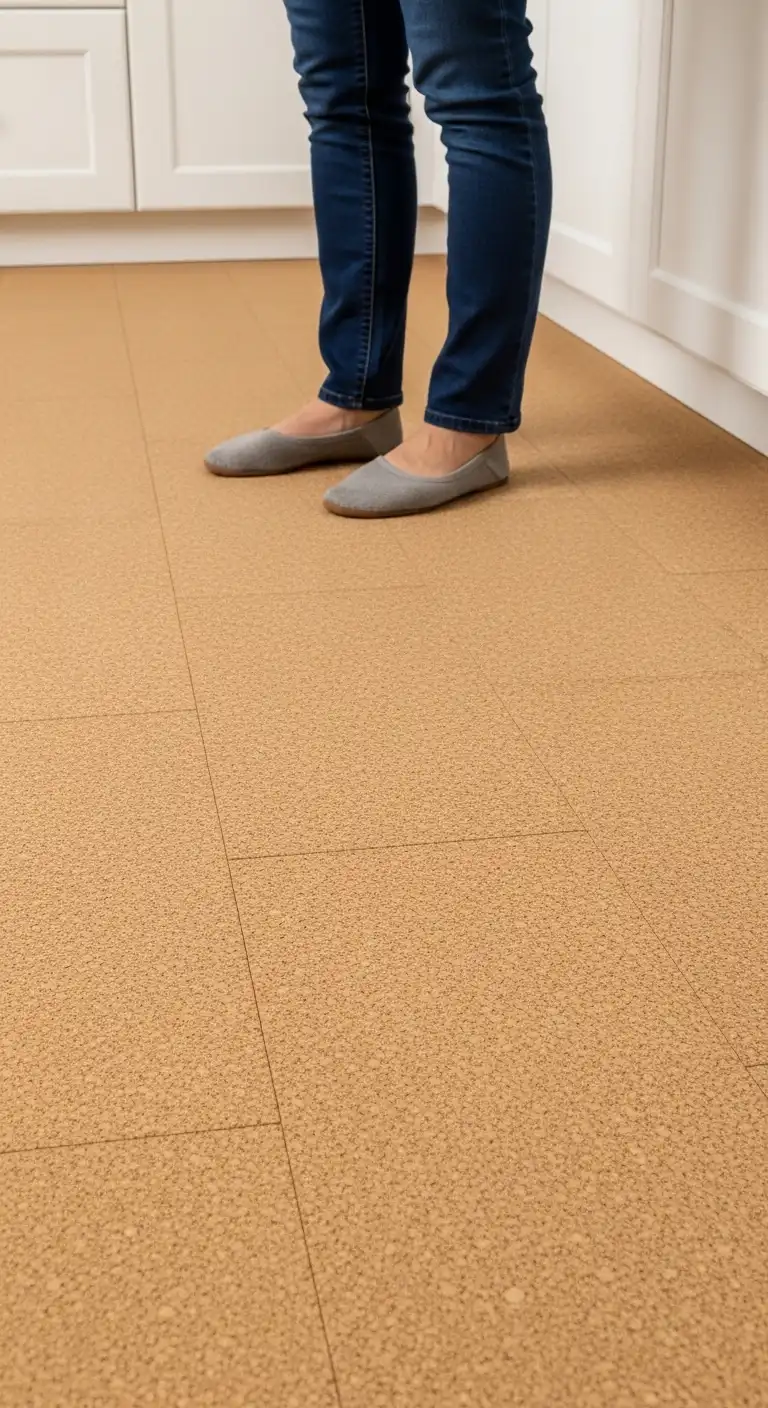
Cork flooring provides a softer and warmer surface that improves comfort in kitchens where standing time is frequent.
Its natural elasticity reduces strain on feet and joints, which benefits people who cook or clean for long periods.
Cork also absorbs sound effectively, making it a practical choice for apartments or shared living environments.
Modern sealing techniques improve durability and protect the surface from moisture and everyday kitchen spills.
Natural tones give kitchens a calm and eco-friendly appearance without overpowering other interior design elements.
This makes cork a thoughtful choice for durable kitchen flooring that prioritizes comfort and sustainability together.
Concrete-Look Floors for Contemporary Small Kitchens
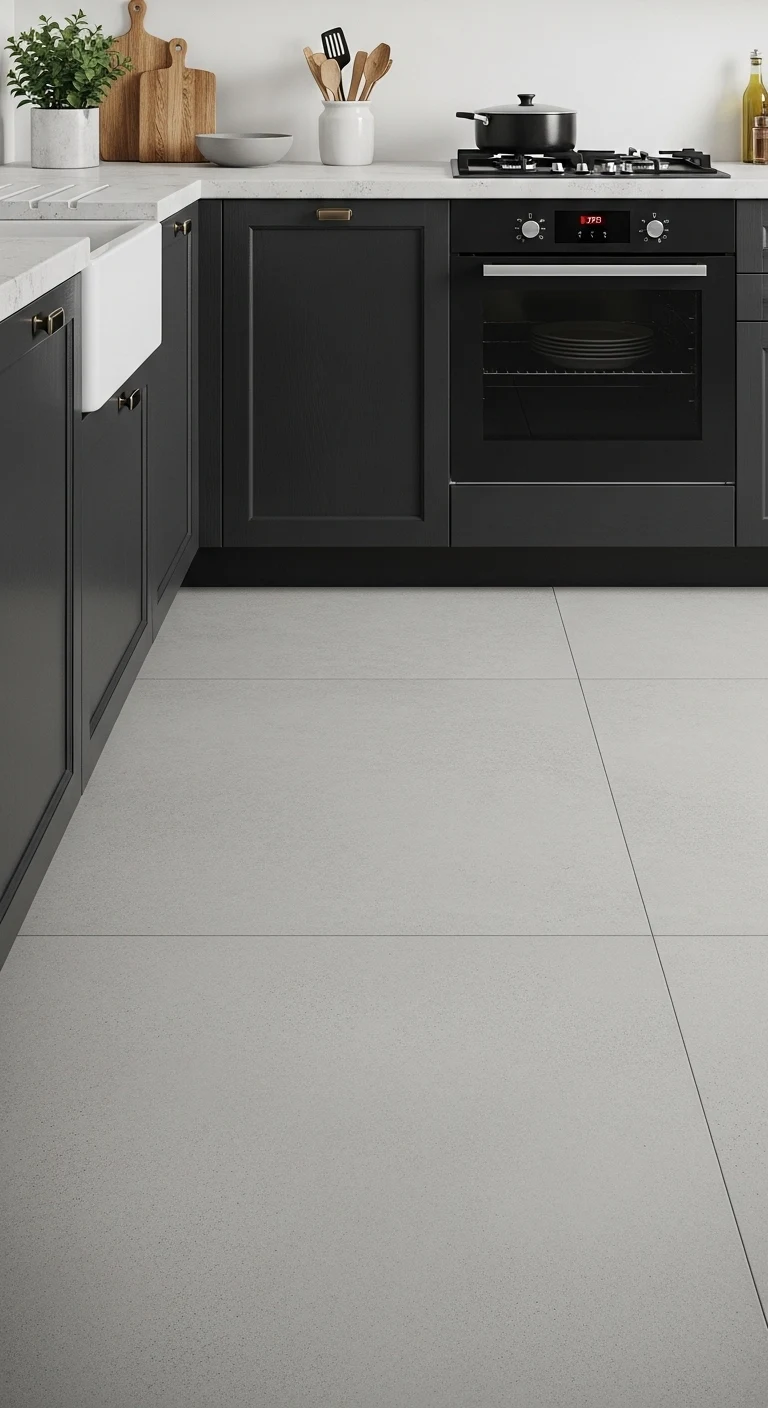
Concrete-look flooring delivers a clean and minimalist appearance that works well in modern small kitchen designs.
Its smooth surface creates a continuous visual plane that reduces distractions and enhances spatial simplicity effectively.
Light gray shades help avoid a heavy industrial feel while still maintaining a contemporary design aesthetic.
This flooring option pairs well with black, white, or wood cabinetry for a balanced and structured kitchen style.
Durability remains a key advantage because concrete-inspired materials handle daily wear with minimal maintenance requirements.
It suits homeowners who prefer modern small kitchen floors that emphasize simplicity, strength, and long-term usability.
Diagonal Flooring Layouts That Visually Expand Space
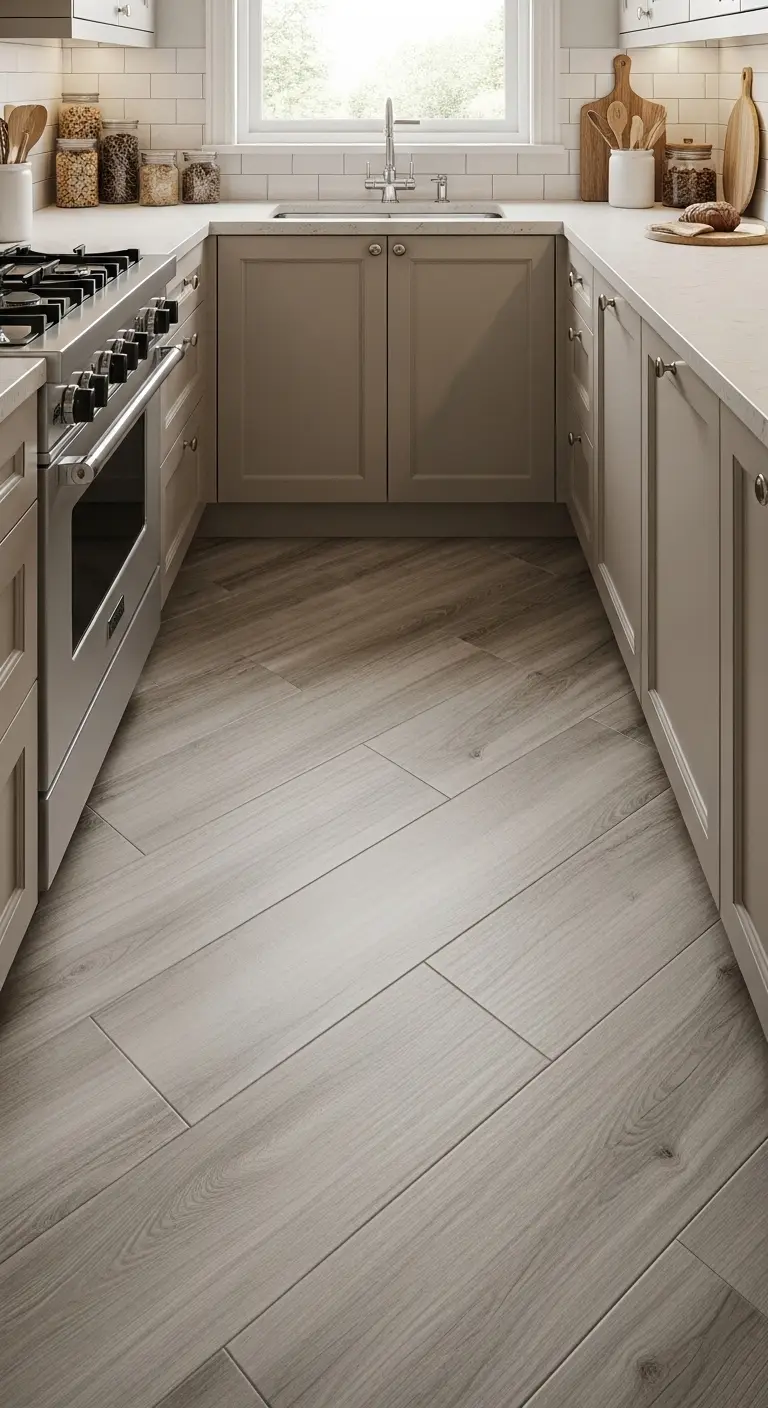
Diagonal flooring layouts change visual perception by directing the eye across angles instead of rigid straight lines.
This technique makes narrow kitchens appear wider and more open by disrupting predictable rectangular viewing patterns.
Tile and plank materials both work effectively when installed in diagonal arrangements for compact kitchen spaces.
The angled design introduces subtle movement that prevents the floor from feeling static or confined visually.
Neutral tones ensure the pattern enhances space without adding unnecessary complexity or visual clutter to the kitchen.
This method offers a simple yet powerful way to improve small kitchen flooring without changing materials entirely.
Smart Design Balance in Small Kitchen Flooring
Balancing flooring design with cabinetry and countertops ensures a cohesive and visually pleasing kitchen environment overall.
Matching undertones between surfaces helps create harmony without forcing every element to look identical or repetitive.
Contrasting textures can define zones while still maintaining a unified design language across the kitchen space.
Too many competing patterns can overwhelm compact kitchens and reduce the sense of openness significantly.
Designers recommend focusing on two or three core materials to maintain clarity and visual order throughout.
This approach strengthens both functionality and aesthetics in small kitchen flooring planning decisions.
Final Thoughts
Selecting the right small kitchen flooring requires balancing aesthetics, comfort, durability, and long-term practicality within limited space constraints.
Each flooring option influences how spacious, bright, and functional your kitchen feels during everyday cooking and movement activities.
Light tones, seamless patterns, and thoughtful layouts consistently help small kitchens feel more open and visually organized overall.
At the same time, durability and maintenance needs should guide your decision to ensure long-lasting satisfaction with your choice.
Design consistency across flooring, cabinetry, and lighting creates a unified environment that improves both usability and style together.
Ultimately, the best flooring transforms a small kitchen into a comfortable, efficient, and visually appealing living space.