How to Fix an Orange Flame on a Gas Stove
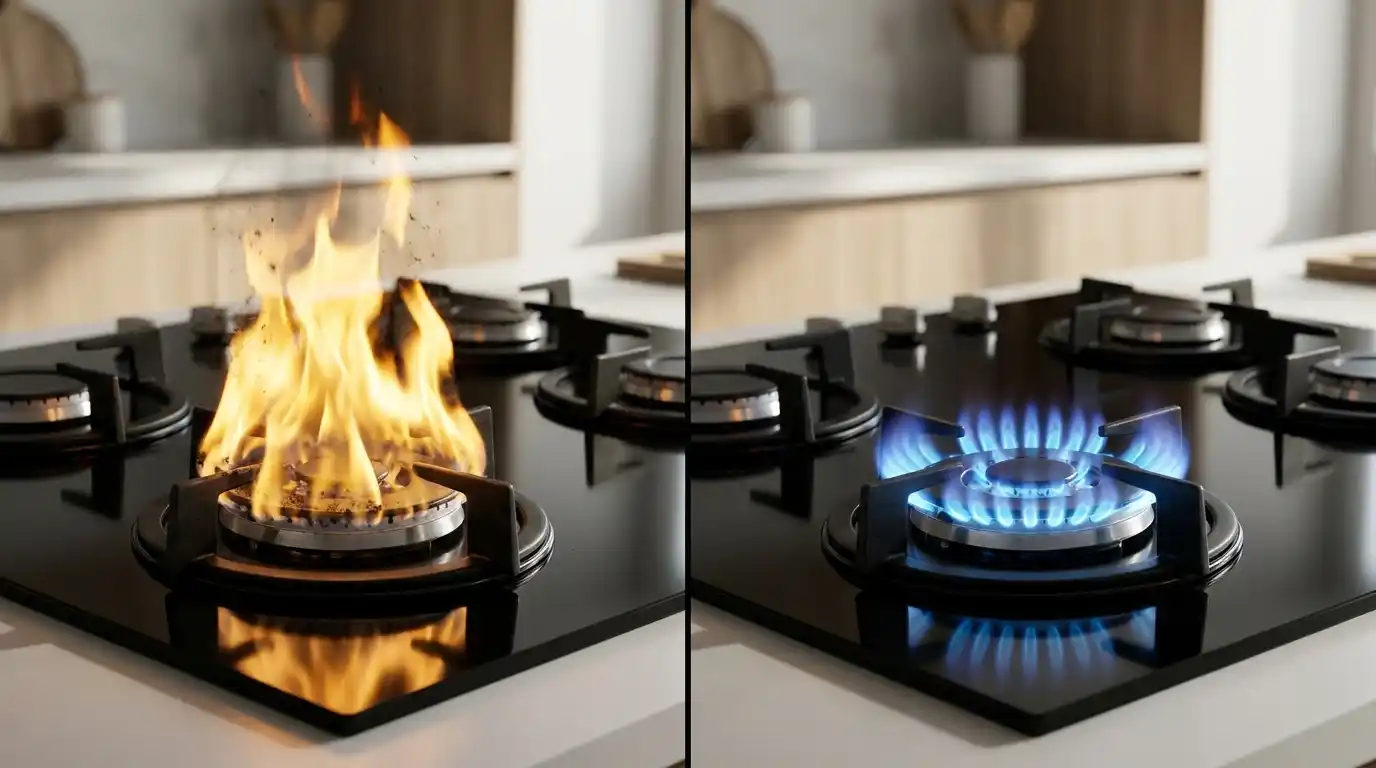
Picture this: you’re preparing a delicious meal, but when you glance at your gas stove, you notice something worrisome – an orange flame.
That’s a sign that something’s not right. But fret not! With a little know-how, you can easily tackle this issue and ensure your kitchen remains a safe haven for culinary adventures.
To fix an orange flame on gas stoves, clean the stove thoroughly, adjust the air shutter for proper air-to-gas ratio, check gas pressure, and replace damaged burners if necessary. Ensuring proper safety measures and regular maintenance are crucial for optimal stove performance.
What Causes of an Orange Flame?
Before we get into the solution, let’s understand the root cause. An orange flame on your gas stove usually results from incomplete combustion.
This could be due to various factors like dirt and impurities clogging the burners or an incorrect air-to-gas ratio.
Even something as simple as the gas pressure being off can contribute to this frustrating orange glow.
Step-by-Step Guide: How to Fix an Orange Flame on a Gas Stove
Step 1: Cleaning the Gas Stove
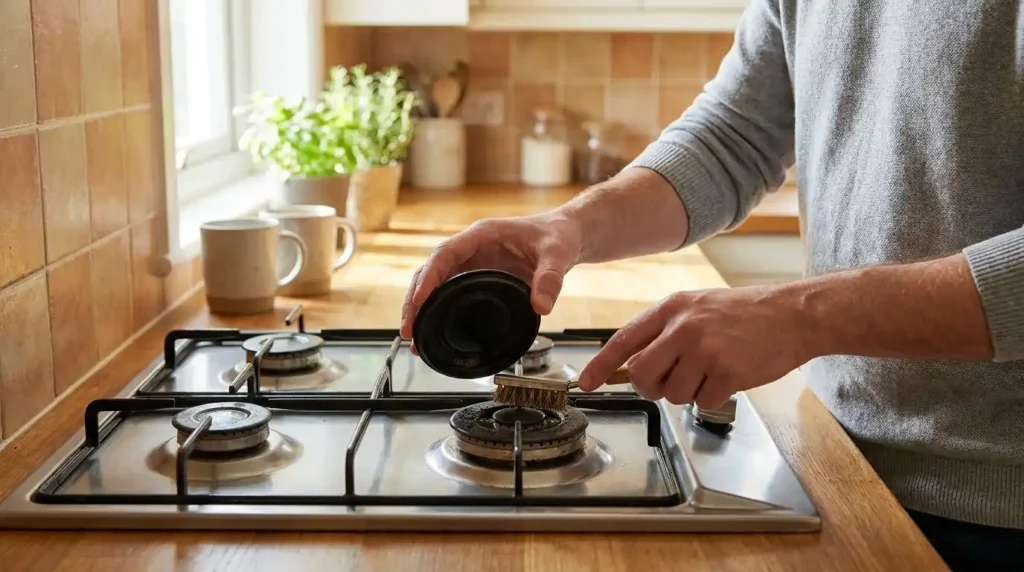
The first order of business is giving your gas stove a good clean. Those stubborn dirt and grime particles can play a significant role in hindering the efficiency of your stove.
Grab a mild soap and water solution and scrub away, paying special attention to those burners. A clean stove is a happy stove!
Step 2: Adjusting the Air Shutter
Now, let’s talk about the air shutter. This little component is responsible for the right balance of air mixing with the gas before it burns.
If it’s not open enough, you might end up with that pesky orange flame. To adjust it, don’t forget to consult your stove’s owner’s manual for the right guidance.
Step 3: Checking Gas Pressure
Gas pressure is crucial. Too low, and you’re facing inefficient burning. You can easily check this with a gas pressure gauge.
If it’s not up to par, don’t hesitate to reach out to your gas company for a solution. It’s better to be safe than sorry.
Step 4: Burner Replacement
Sometimes, the burners themselves might be the culprits. Damage or clogs can severely affect their performance.
If you notice any signs of trouble, consider replacing them. Your stove’s manual should be able to guide you through this process. It’s simpler than it sounds!
Step 5: Ensuring Safety Measures
Safety always comes first. Before you dive into any maintenance work, remember to turn off the gas at the shutoff valve.
Also, keep any electrical appliances far away from the stove to prevent any mishaps. And of course, wait for the stove to cool down completely before getting your hands dirty.
Importance of Regular Maintenance
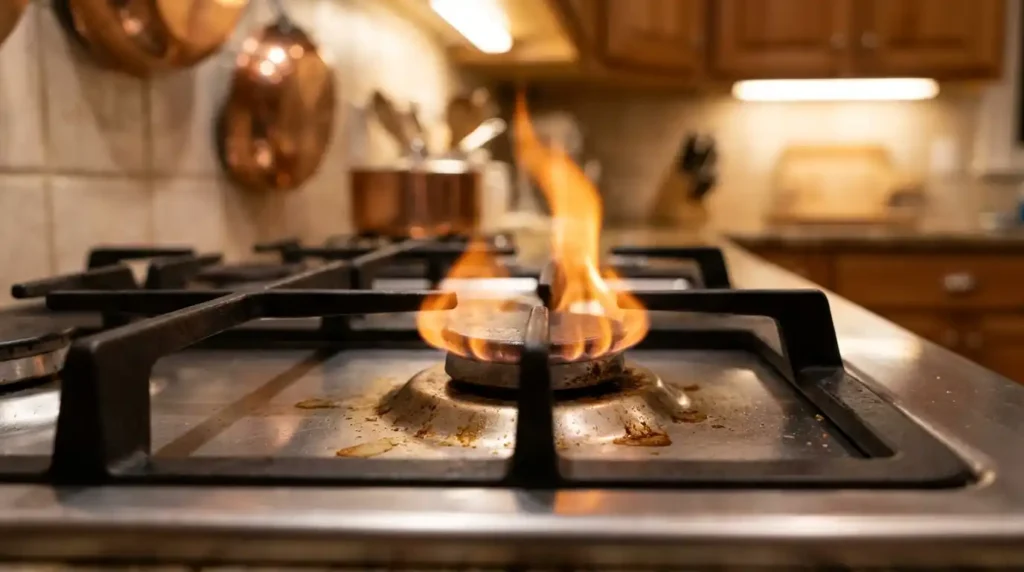
Now that you’ve fixed that orange flame, it’s essential to keep up with regular maintenance. A little preventive TLC can go a long way in preventing future issues.
Periodic inspections and cleanings can significantly extend your stove’s lifespan and ensure your cooking adventures remain uninterrupted.
What Makes a Flame Orange?
An orange flame is produced by incomplete combustion of carbon-containing substances, leading to the emission of soot particles that radiate light in the orange spectrum. The presence of sodium and calcium, along with impurities in the fuel or air, can also contribute to the orange coloration of a flame.
What Color Should the Flames on a Gas Stove Be?
The flames on a gas stove should ideally be blue, signifying efficient combustion. A blue flame indicates the optimal air-to-gas ratio, ensuring complete burning and minimizing the production of harmful byproducts like carbon monoxide.
What Causes Orange Flames on Gas Stoves?
Orange flames on gas stoves result from incomplete combustion, often due to clogged burners, improper air-to-gas ratio, or impurities in the fuel. Such conditions hinder the efficient burning of gas, leading to the emission of soot particles that give the flame its orange appearance.
What Are the Signs and Symptoms of Carbon Monoxide Poisoning?
Signs of carbon monoxide poisoning include headache, dizziness, nausea, fatigue, and confusion. Severe cases can lead to chest pain, unconsciousness, and even death. Immediate evacuation and medical assistance are essential upon experiencing these symptoms.
Conclusion
There you have it! Armed with these simple steps, you’re now equipped to bid farewell to that troublesome orange flame on your gas stove. Remember, a clean and well-functioning stove is the heart of any bustling kitchen.
By following these easy guidelines and prioritizing safety, you can continue creating culinary masterpieces without any worries. So go ahead, get that stove shining and those burners blazing blue!