How to Light a Luxury Kitchen Interior
Look, I’ll be honest with you: nothing kills the vibe of a gorgeous luxury kitchen faster than bad lighting. You could have marble countertops that cost more than a car and custom cabinets that would make HGTV weep tears of joy, but if your lighting is off, the whole space falls flat.
The good news? Getting kitchen lighting right isn’t rocket science—it just requires some planning and understanding of how different layers of light work together.
Think of it like seasoning a dish: you need the right balance, and each element plays a specific role. Let me walk you through exactly how to make your luxury kitchen shine (literally).
Layer Your Lighting Like You Actually Know What You’re Doing
The biggest mistake I see people make is thinking one type of lighting can do it all. Spoiler alert: it can’t. A luxury kitchen needs three distinct layers of lighting working in harmony—ambient, task, and accent lighting.
Ambient lighting is your foundation, the general illumination that fills the entire space. Task lighting is where you get serious about functionality, illuminating specific work areas. Accent lighting? That’s your chef’s kiss, the finishing touch that adds drama and highlights your kitchen’s best features.
When you nail all three layers, you create depth and dimension that makes your kitchen feel professionally designed. Skip even one layer, and something will feel off, even if people can’t put their finger on exactly what.
Ambient Lighting: Setting the Stage
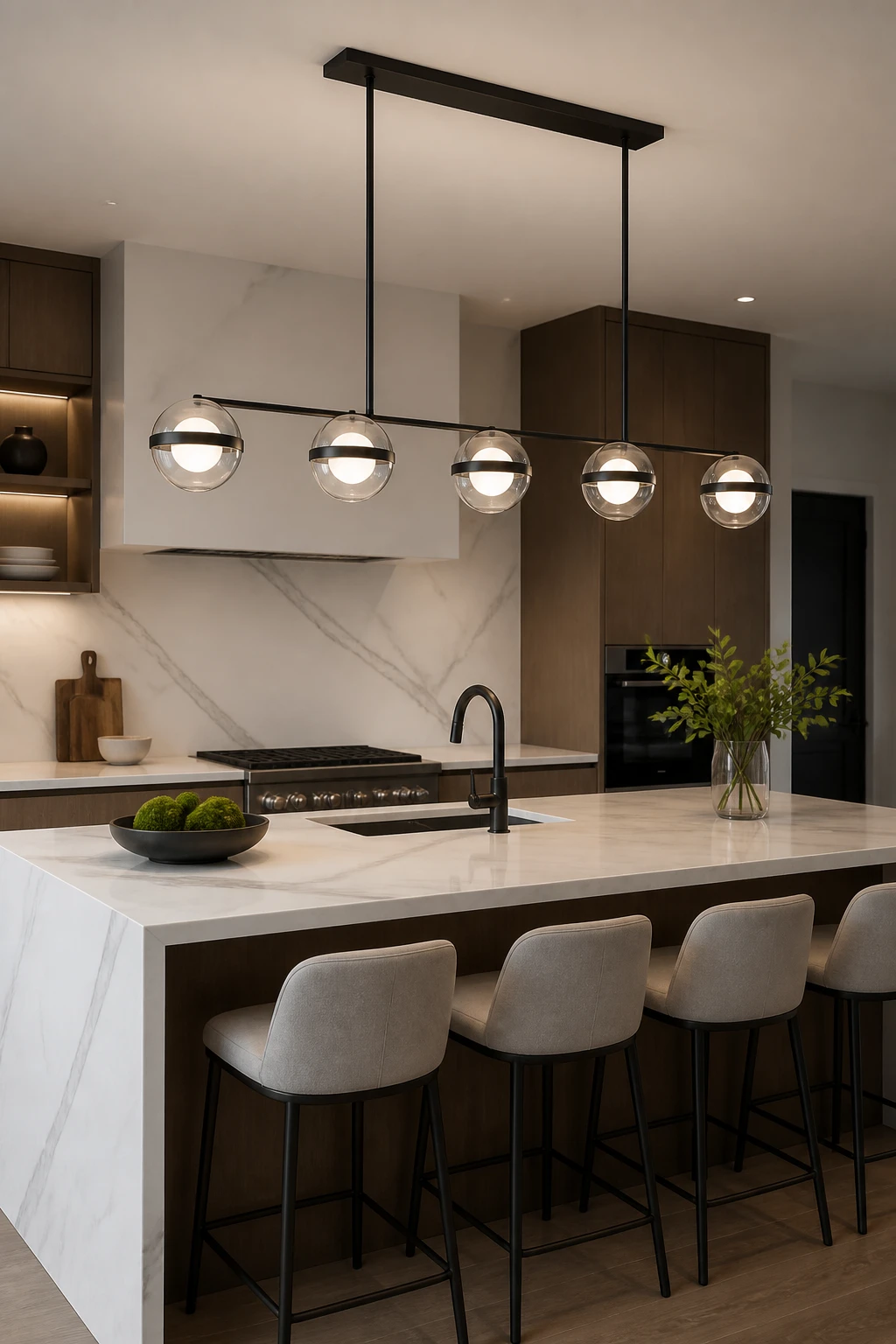
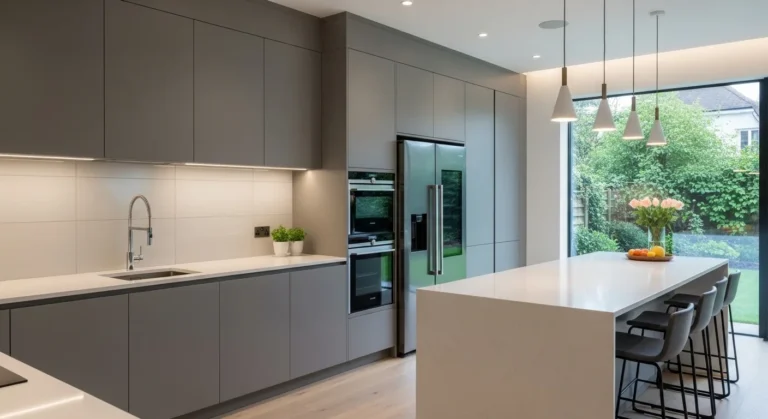
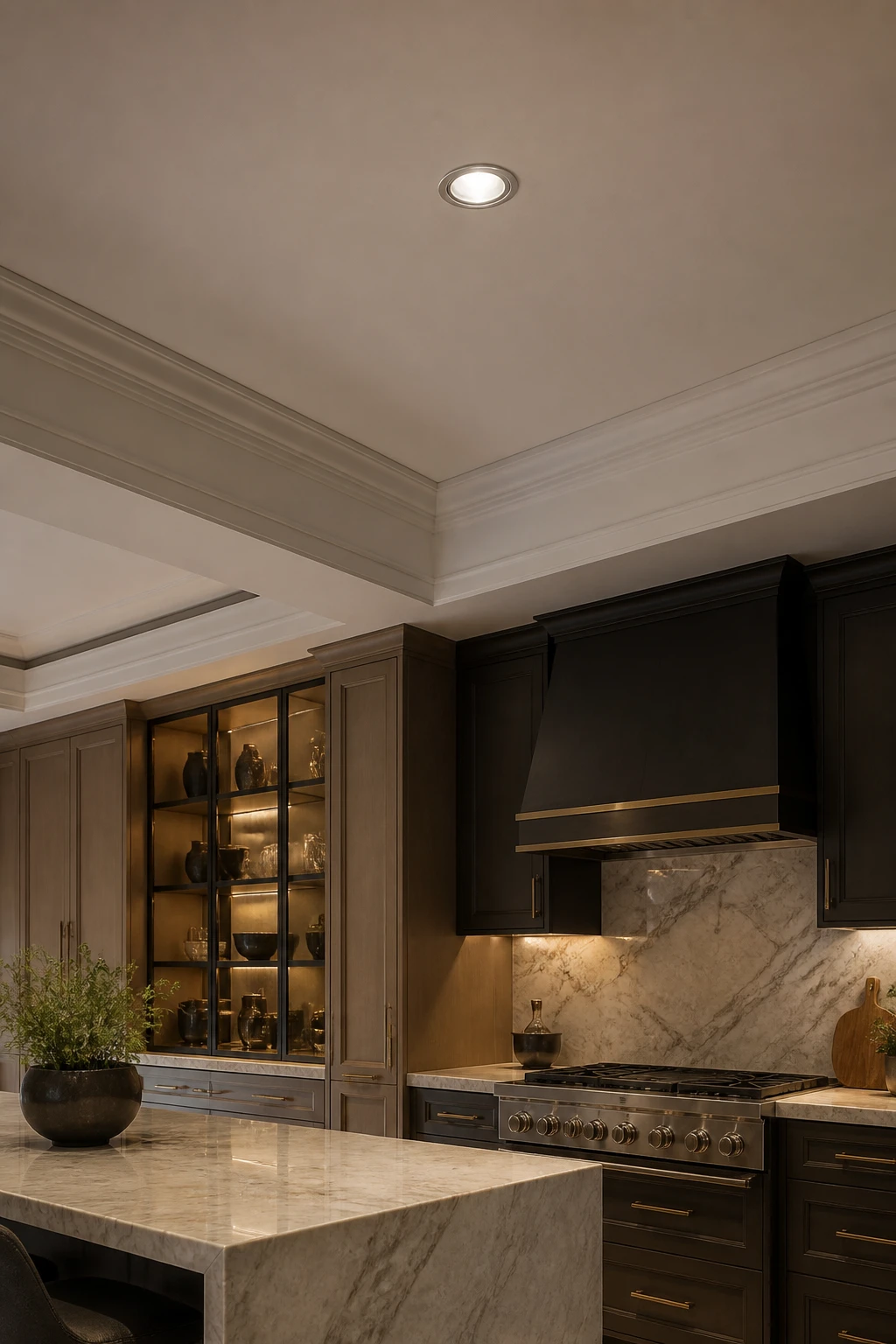
Your ambient lighting should feel natural and welcoming, not like you’re prepping for surgery. Recessed lighting remains the gold standard for luxury kitchens because it’s clean, contemporary, and doesn’t clutter your sightlines.
But here’s the thing: spacing matters more than you think. Position recessed lights about 4 to 6 feet apart for even coverage. Too far apart and you’ll get weird shadows; too close together and your ceiling starts looking like Swiss cheese.
Alternative Ambient Options
Not feeling the recessed vibe? A stunning statement chandelier or pendant cluster over your island can serve double duty as ambient lighting and a focal point. Just make sure whatever you choose provides enough lumens to actually light the space—beauty without function is just expensive decoration.
Track lighting can also work in modern luxury kitchens, especially if you want flexibility to adjust your light direction as needs change. The key is choosing fixtures that look intentional and high-end, not like leftovers from a 1990s office renovation.
Task Lighting: Where the Magic Happens
Let me paint you a picture: you’re prepping ingredients for dinner, and you’re basically working in your own shadow because your only light source is directly overhead. Frustrating, right? That’s why dedicated task lighting is non-negotiable in a luxury kitchen.
Under-cabinet lighting is your best friend here. LED strip lights or puck lights mounted beneath your upper cabinets illuminate countertops perfectly for chopping, measuring, and all those detailed tasks. Plus, they eliminate those annoying shadows that overhead lighting creates.
Don’t forget about your island or peninsula. Pendant lights hung 30 to 36 inches above the counter surface provide excellent task lighting while adding visual interest. Choose fixtures that complement your kitchen’s style—sleek and minimal for modern spaces, or something with more character for traditional designs.
Inside Your Cabinets
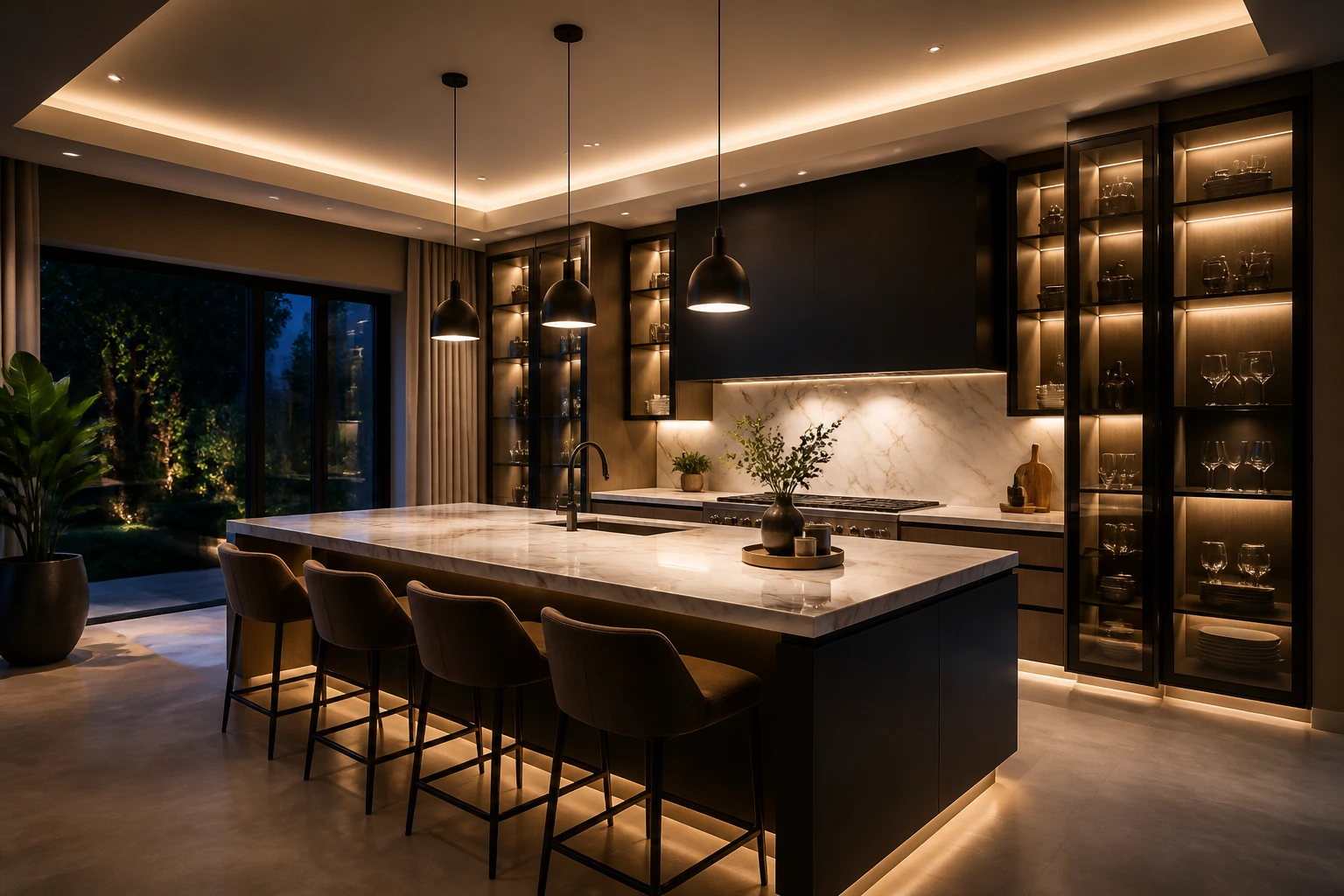
Want to take it up a notch? Install lighting inside glass-front cabinets or open shelving. It’s not just practical (finding that specific spice becomes way easier); it also creates a warm glow that makes your kitchen feel lived-in and inviting, even when you’re not cooking.
Accent Lighting: The Drama Queen of Kitchen Lighting
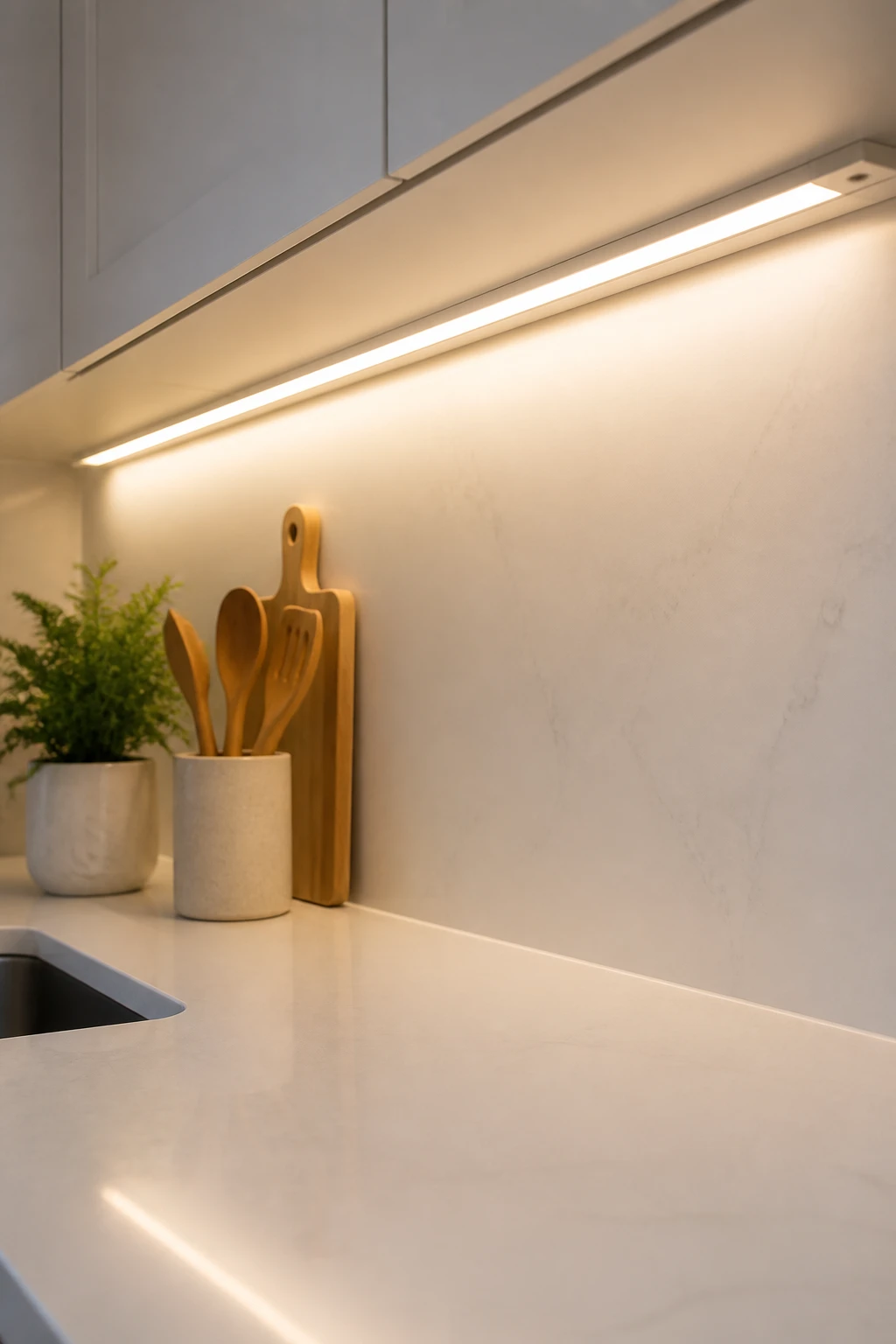
This is where you get to have some fun. Accent lighting doesn’t serve a practical purpose—it’s all about creating atmosphere and highlighting architectural features or design elements you’re proud of.
Toe-kick lighting (LED strips installed at the base of your cabinets) creates a floating effect that looks incredibly sophisticated. It’s subtle during the day but transforms your kitchen at night. Same goes for lighting above your upper cabinets if there’s space between them and the ceiling.
Got a beautiful backsplash you invested serious money in? Light it up. Textured stone, metallic tiles, or glass mosaics all come alive with the right accent lighting. The play of light and shadow adds depth that you simply can’t achieve with flat, even illumination.
Dimmer Switches Are Your Secret Weapon
Real talk: if you’re designing a luxury kitchen and not installing dimmers on every circuit, you’re doing it wrong. Dimmer switches give you complete control over your kitchen’s mood and functionality.
Bright and energizing for Sunday morning breakfast prep? Done. Soft and romantic for an evening dinner party? Easy. The ability to adjust your lighting throughout the day makes your kitchen infinitely more versatile.
Plus, dimming your lights extends bulb life and saves energy. It’s basically a no-brainer that pays for itself over time.
Color Temperature Matters More Than You Think
Here’s something that often gets overlooked: not all white light is created equal. The color temperature of your bulbs, measured in Kelvin, dramatically affects how your kitchen looks and feels.
For luxury kitchens, I recommend sticking to the 2700K to 3000K range for ambient and accent lighting. This warm white range feels inviting and makes finishes like wood and brass look rich and expensive. It’s also more flattering for skin tones, which matters if you’re entertaining.
Task lighting can go slightly cooler—3000K to 3500K—for better visibility and color accuracy when you’re cooking. FYI, anything above 4000K starts feeling too clinical for a residential kitchen, even a luxury one.
Consistency is Key
Whatever you do, keep your color temperatures consistent within each layer. Mixing warm and cool whites makes your kitchen feel disjointed and accidental rather than thoughtfully designed. Trust me on this one—I’ve seen too many beautiful kitchens ruined by mismatched bulbs.
Smart Lighting Controls: Welcome to the Future
IMO, if you’re investing in a luxury kitchen renovation, you should seriously consider smart lighting controls. The technology has come so far that it’s no longer just for tech geeks—it’s genuinely useful and user-friendly.
Smart systems let you create custom scenes at the touch of a button or voice command. “Cooking mode” brightens task lighting and dims ambiance. “Entertaining mode” softens everything for a warm, welcoming glow. “Cleanup mode” cranks everything to full brightness so you can see every crumb.
You can also integrate lighting with your circadian rhythm, automatically adjusting color temperature throughout the day to support your natural sleep-wake cycle. Cooler light in the morning to wake you up, warmer light in the evening to help you wind down.
Conclusion: Light Makes the Difference
Getting your luxury kitchen lighting right transforms the entire space from impressive to absolutely stunning. It’s not about having the most expensive fixtures or the most lights—it’s about thoughtful layering, proper placement, and attention to details like color temperature and dimming capability.
Take the time to plan each layer carefully, invest in quality fixtures and bulbs, and don’t be afraid to work with a lighting designer if the project feels overwhelming. Your kitchen is the heart of your home, and proper lighting ensures it always looks and functions at its absolute best.
Frequently Asked Questions
How many recessed lights do I need in my kitchen?
A good rule of thumb is one recessed light per 25 to 30 square feet of kitchen space, but this varies based on ceiling height and the specific layout. For a 200-square-foot kitchen, you’re looking at roughly 6 to 8 recessed lights. Just remember that placement matters as much as quantity—you want even distribution without dark spots or excessive overlap.
Should I use LED bulbs in my luxury kitchen?
Absolutely, yes. LED bulbs are the clear winner for luxury kitchens because they last forever (well, 25,000+ hours), use minimal energy, run cool so they won’t heat up your space, and now come in excellent color rendering options. The upfront cost is higher than traditional bulbs, but the longevity and energy savings make them a smart investment. Plus, you won’t be climbing on counters to change bulbs every few months.
How low should pendant lights hang over a kitchen island?
Hang pendant lights 30 to 36 inches above your island countertop for optimal task lighting and visual balance. If you have particularly tall ceilings or unusually tall family members, you might go slightly higher, but don’t exceed 40 inches or the lights won’t effectively illuminate your work surface. The bottom of the pendant should never block sightlines across the kitchen.
What’s the difference between lumens and watts when choosing bulbs?
Watts measure energy consumption, while lumens measure actual light output—and lumens are what you should care about. Thanks to LED technology, you can get bright light (high lumens) with very low energy use (low watts). For kitchen task lighting, aim for 450-800 lumens per fixture. For ambient lighting, you want roughly 30-40 lumens per square foot of kitchen space.
Can I install kitchen lighting myself or should I hire an electrician?
Unless you’re experienced with electrical work and comfortable navigating local building codes, hire a licensed electrician for anything beyond changing bulbs. Kitchen lighting often requires new circuits, proper junction boxes, and specific safety considerations around water sources. A professional ensures everything is safely installed, properly grounded, and up to code—which matters both for safety and for your home’s resale value.
How do I light a kitchen with no upper cabinets?
Open-concept kitchens without upper cabinets need creative task lighting solutions since you can’t rely on under-cabinet lights. Consider installing a track lighting system with adjustable heads you can aim at work surfaces, or use longer pendant lights over the counter areas. Recessed lighting positioned closer to the wall (about 18-24 inches away) can also effectively illuminate countertops without upper cabinets to mount fixtures beneath.