How to Style a Dining Table Centerpiece for Beginners
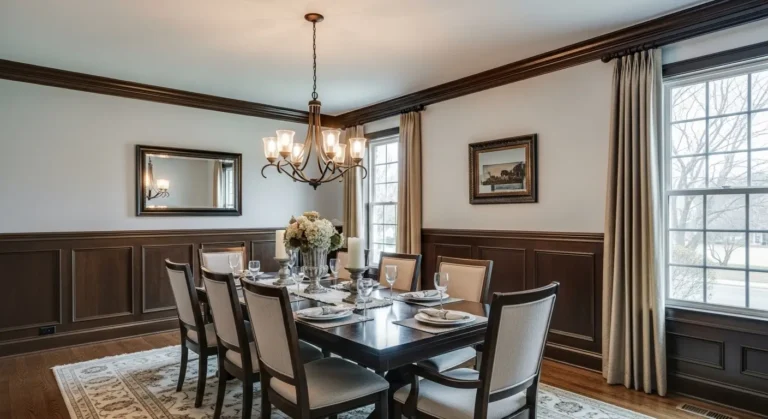
Walk into any beautifully styled home. Your eyes naturally fly right to the dining room table. Replicating that look at home often leaves you staring at a cluttered mess.
Most beginners assume centerpiece styling requires an expensive interior design degree. Or maybe you think it takes a massive budget. This leads to tables that feel either completely bare or totally overstuffed. You want to know how to style a dining table centerpiece for beginners.
The good news is that great styling is based on repeatable math. It does not require pure luck. This guide breaks down the structural design formulas professionals use.
You will learn easy tablescaping ideas using spatial math and texture pairing. You can build beautiful arrangements effortlessly. Everyday centerpiece styling is simpler than you think.
You will walk away with three exact tools today. You get the 12 inch rule, the rule of three, and proportion math.
The 12 Inch Rule: Keep Your Table Functional
Picture this common scenario. You sit down at a dinner party. You have to crane your neck around a giant floral arrangement just to pass the salt. That awkward social friction ruins the vibe. A dining table is for eating and talking. (Why this matters: If people cannot see each other, the table fails its main job).
You can fix this physical problem instantly. Keep your decor under 12 inches tall. Design outlets like Chairish confirm this standard industry metric. Centerpieces must stay at or below 12 inches to allow natural eye contact across the table.
Are you wondering if your setup is too tall? Use the simple hand test to check height visibility quickly. Rest your elbow on the table and point your fingers straight up.
Your centerpiece should not be taller than your forearm. This is one of the most important dining table decor rules to follow.
You also need to balance low centerpieces with overhead hanging light fixtures. A low bowl might look odd if your chandelier hangs very high. In that case, add slightly taller taper candles.
Just make sure the candles are thin enough so they do not block faces. Learning how to style a dining table centerpiece for beginners starts with keeping sight lines clear.
3 Steps to Master Visual Balance with the Rule of Three
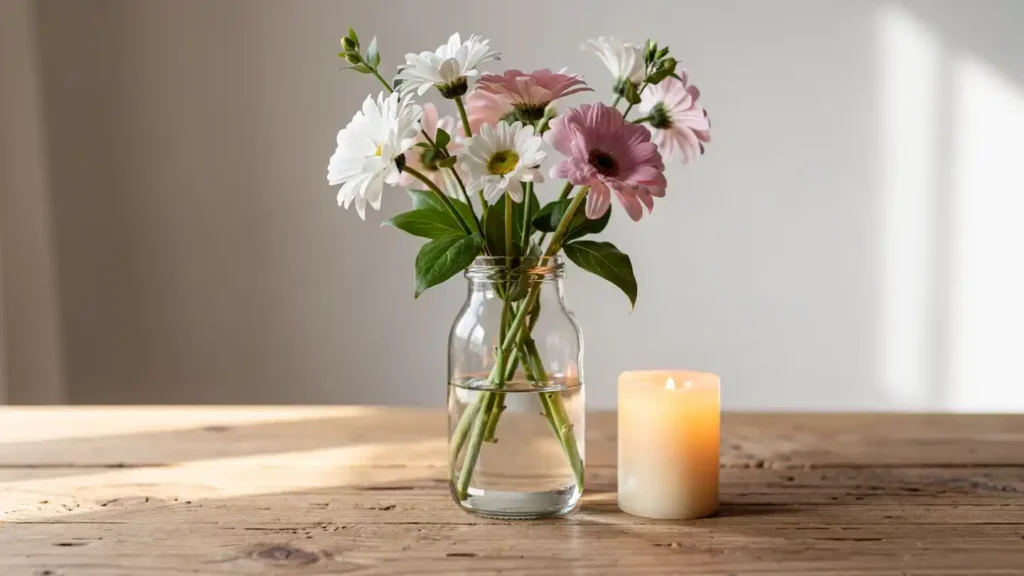
Pairs look clean. But trios create energy. Human brains naturally find odd numbered groupings more interesting than stiff pairs. Two identical vases divide a space strictly in half. Three objects cause human eyes to naturally track across an arrangement in a dynamic triangle.
Varying heights are crucial for visual balance. The anatomy of a perfect trio follows a simple formula. You need one vertical element. You add one medium supporting element. You finish with one low grounding element.
Here is a foolproof recipe for a starter trio. Start with one tall ceramic vase. Add two candles of varying heights. You now have three distinct visual levels.
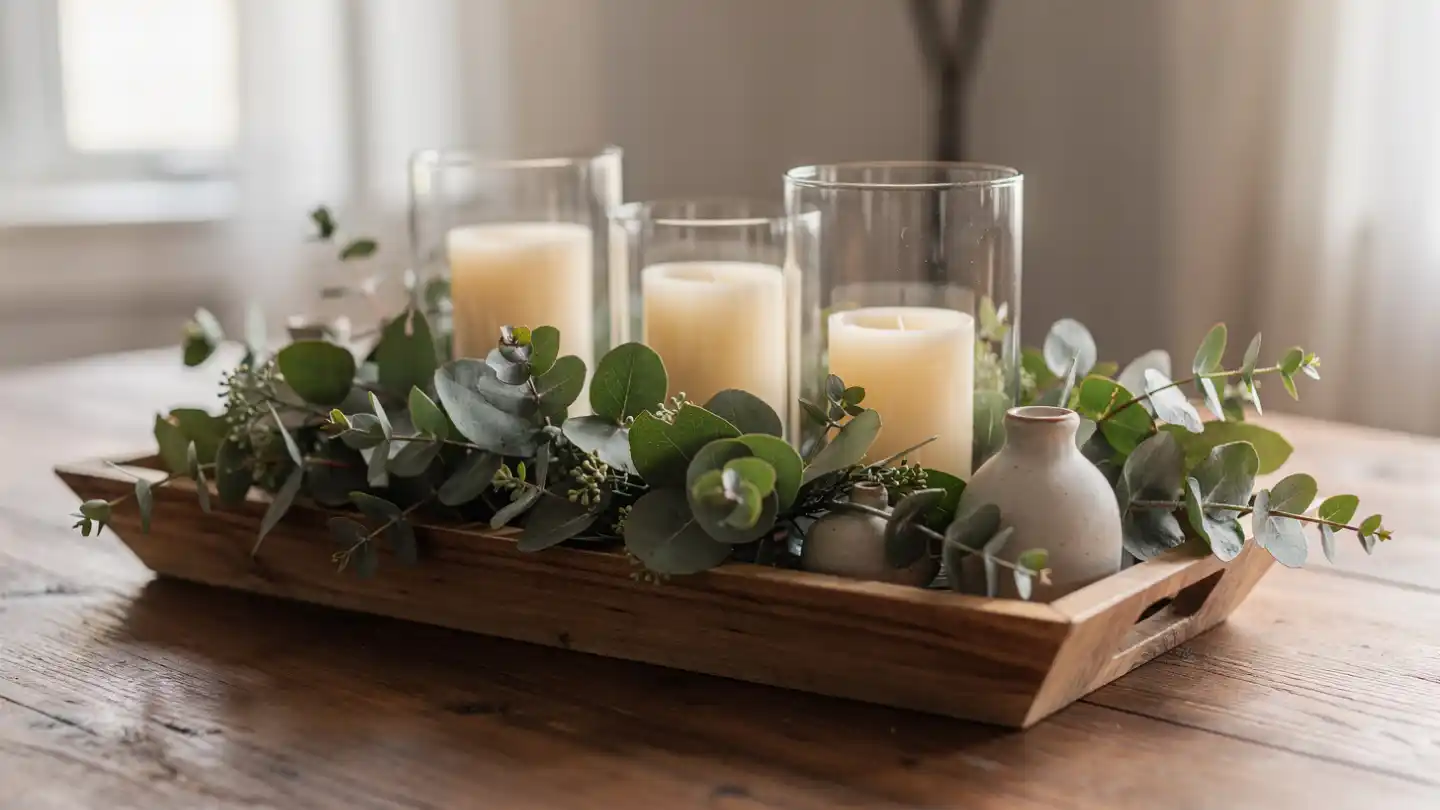
Sometimes loose items look messy. You can fix this by using structural foundations to bring disparate items together cleanly. A simple tray or a stack of books acts as a visual anchor. You can place a small potted plant and an organic sculptural object on a low woven tray.
The tray corrals the independent items so they count as a single visual unit. This is the secret to everyday centerpiece styling. These easy tablescaping ideas give you confidence to create your own looks.
How to Scale Centerpieces to Your Table Shape
Now you need to shift focus from the individual items to the actual piece of furniture. You must scale your centerpiece to your table shape. A tiny vase looks lost on a massive ten foot table. A long garland overwhelms a small round kitchen table.
Trade designers use exact mathematical guidelines for layout data. Companies like Coohom suggest using the one third length rule for rectangular and oval tables. Your centerpiece should span roughly one third of a rectangular table.
You also need to follow the 20 to 35 percent width rule. A centerpiece should span roughly 20 to 35 percent of the total tabletop width. (Why this matters: You must leave comfortable breathing room for plates and glassware). You want to prevent crowding place settings when serving food.
Match your layout to your furniture geometry. Use linear styling tracks for long rectangles. You can spread three small vases down the middle of a long table. Use tight clustered layouts for circles and squares. A single round tray works perfectly in the center of a round table.
Mastering these proportions makes everyday centerpiece styling feel natural. Following these dining table decor rules guarantees your table looks professionally planned.
3 Ways to Mix Earthy Textures and Subtle Color
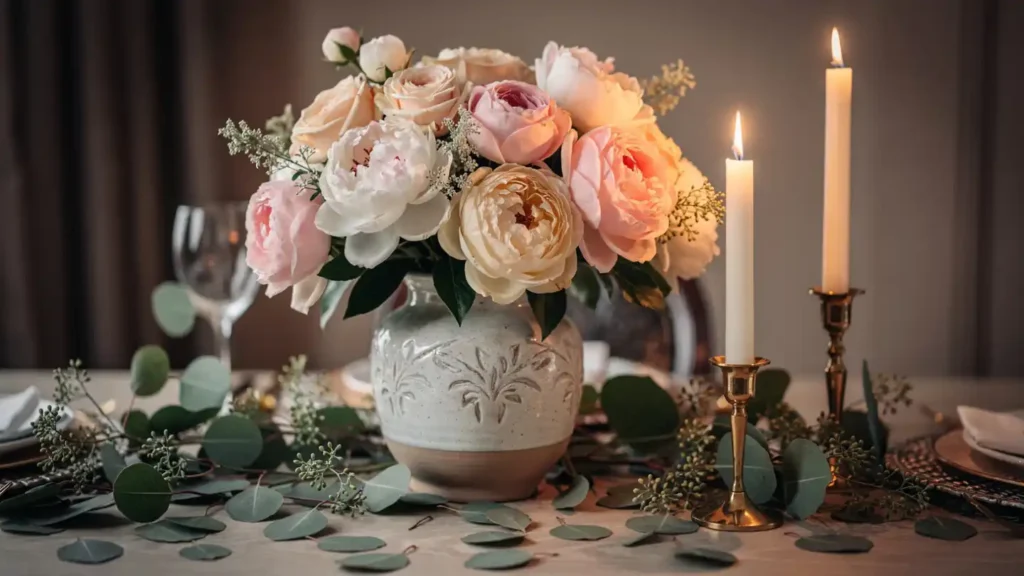
Your layout math is complete. Now you need to select the right materials and colors. Current shifts favor relaxed artisanal textures over highly structured floral arrangements. You want to tie tactile textures back to the overall goal of making a table feel welcoming.
- Pair high contrast materials together. You can place matte pottery on top of soft linen runners. The rough texture against the soft fabric creates visual interest.
- Embrace eco friendly materials. Designers love using recycled glass and handmade ceramics right now. These natural materials look much better than cheap plastic decor.
- Design with foliage forward botanicals. The current trend highlights a departure from saturated rainbow tablescapes.
Move toward gentle nature inspired tones like sage green, warm clay, and terracotta. Use a leaf beside bloom approach. Mix leafy branches with a few simple flowers to achieve a modern look without spending a fortune at a florist shop.
These easy tablescaping ideas bring warmth to any room. This is exactly how to style a dining table centerpiece for beginners.
Conclusion
Styling a breathtaking table does not require endless accessories. It just takes a clear grasp of height limits, odd numbered groupings, and scale proportions. Everyday centerpiece styling is a skill you can learn today.
Your challenge is simple. Head to your dining room right now to try this out.
- Grab three items of varying heights from around the house.
- Place them on a tray or book stack in the center of your table.
- Check the height to ensure the tallest item is under 12 inches.
Test the rule of three layout for yourself. You will see an instant improvement in your space. Learning how to style a dining table centerpiece for beginners will completely change how your dining room feels.