How to Weatherproof an Outdoor Patio Kitchen
Investing thousands into a premium backyard setup only to watch winter weather or summer humidity destroy your luxury finishes is a homeowner’s worst nightmare. Most outdoor spaces are built for aesthetics first.
This leaves structural elements vulnerable to moisture infiltration, rust, and thermal expansion. When your hard earned cash is on the line, basic setups will fail you.
This guide outlines a data-driven blueprint detailing exactly how to weatherproof an outdoor patio kitchen. You will learn about material selection, appliance safety shielding, and structural engineering defenses.
By using the best outdoor kitchen materials and investing in weatherproof outdoor kitchen cabinets, you can protect your investment for years to come.
Selecting the Toughest Base Foundations
Do not frame your outdoor island with pressure-treated lumber, regardless of what your neighborhood contractor claims. Wood framing absorbs atmospheric moisture over time. Frame rebuilding costs account for 35% of outdoor kitchen failures within 5 years when built with standard wood studs.
Wood also warps and twists when the weather changes. This movement shifts your entire island, which naturally warps the doors attached to it.
To prevent this, look at marine grade polymers and high density polyethylene (HDPE). Brands like Werever make cabinets out of solid HDPE that cannot absorb water. These materials eliminate wood warping, rot, and pest damage completely.
Another excellent option is modular powder coated aluminum framing. Aluminum does not rust when exposed to rain. It also pair well with modern porcelain paneled setups, like Porcelanosa’s Offroad Kitchen lines. These materials create 100% waterproof substrates.
They keep your kitchen stable, level, and dry in any climate. Once your foundation framework is completely impervious to moisture absorption, you can pivot your attention to protecting the expensive machinery sitting inside it.
Safeguarding Your Stainless Steel & Appliances
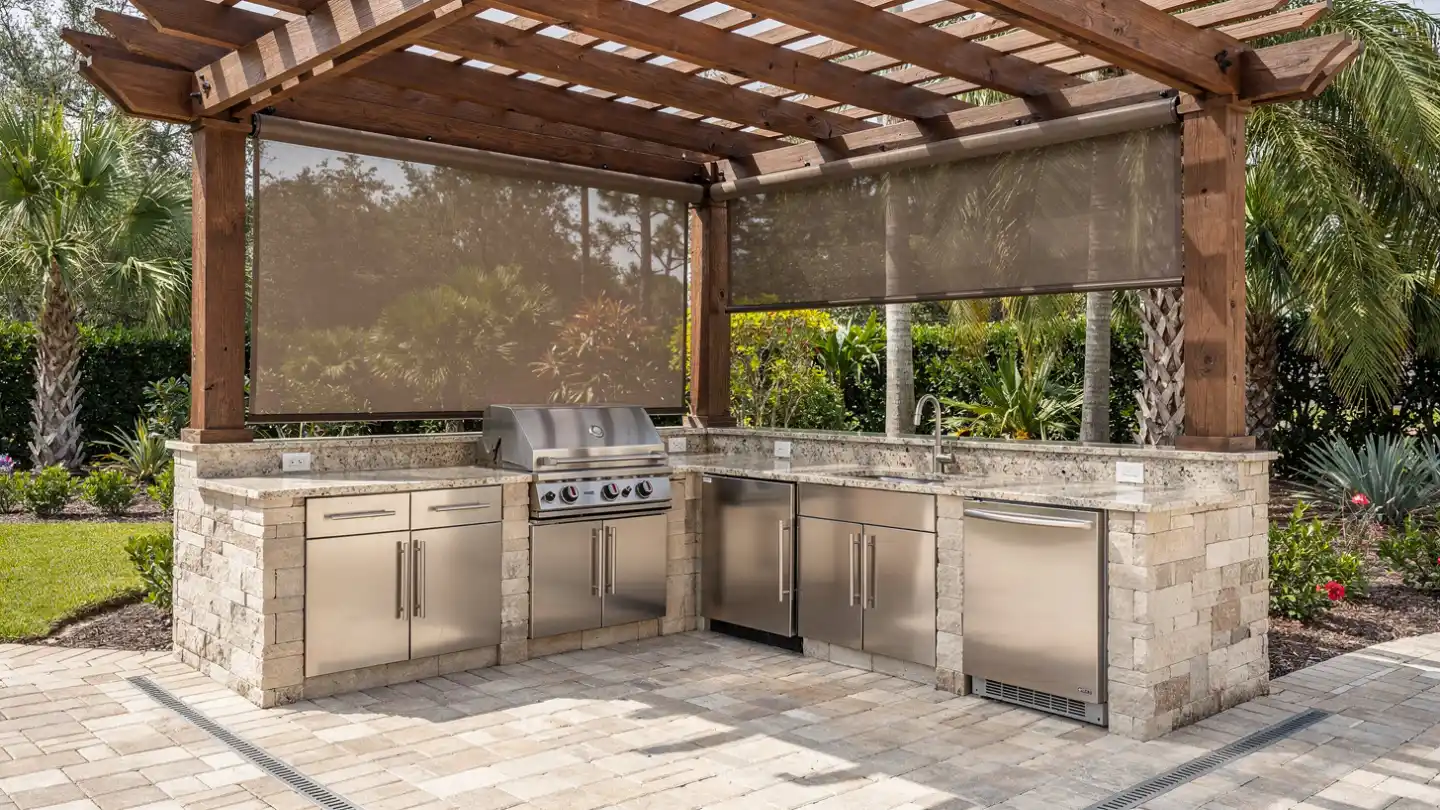
Stainless steel is highly corrosion resistant, but it is not entirely stain or rust proof. Cooking appliances and refrigeration represent the largest portion of outdoor kitchen investments, averaging 42.8% of project costs. To protect this money, you must understand your metals.
Use Grade 304 stainless steel at a minimum for inland areas. If you live near salt water or have a salt water pool, you must upgrade to Marine Grade 316 stainless steel.
Rain and humidity cause a surface oxidation called tea staining on cheaper metals. You can prevent this by applying hydrophobic protective barriers twice a year.
Spraying your appliances with a protective polymer layer is like ceramic coating a luxury vehicle’s paint against acid rain. It forces water to bead up and roll away before it can damage the steel.
Water also damages your electrical systems. You must use dedicated Ground Fault Circuit Interrupter (GFCI) outlets. Protect these outlets with weatherproof, while-in-use covers that keep water out even when cords are plugged in.
Finally, standard indoor bar fridges fail within one season if subjected to ambient outdoor heat indexes over 100°F. Always buy units rated for outdoor use.
These units have stronger compressors and better insulation. Isolating your electrical lines prevents fire hazards, but water dropping from above can still ruin your equipment if your countertops fail to properly shed moisture.
Countertop Armor: Preventing Fractures and Fading
An outdoor countertop faces two brutal opponents: intense ultraviolet light radiation and subsurface water freezing. Countertops cost anywhere from $40 to $200 per square foot, so mistakes get expensive quickly.
Many homeowners choose engineered quartz, but this material ruins easily outside. The sun’s UV rays turn the binding resins yellow and cause the slab to crack.
Natural granite slabs and technical porcelain tiles hold their integrity much better. Swapping quartz for large format engineered porcelain tiles, like XTONE, avoids resin yellowing completely. Porcelain is completely non-porous, meaning it cannot absorb water.
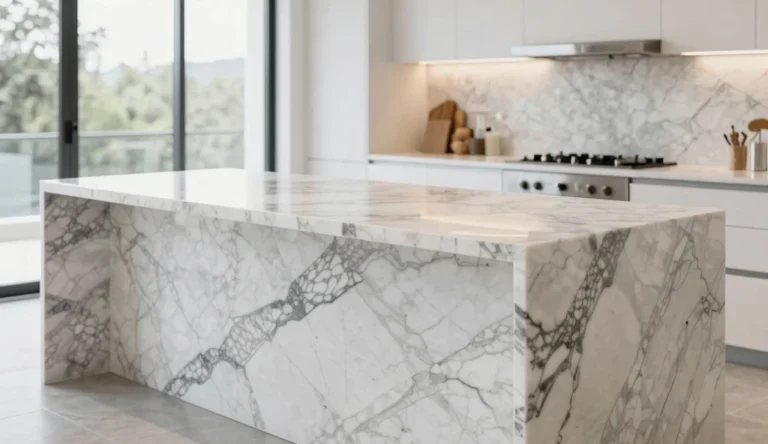
Natural stone is porous and requires more care. If you do not apply a deep penetrating solvent sealer every year, water will seep into the stone and grout lines. When winter hits, that trapped water freezes and expands. This process, known as freeze-thaw cracking, can shatter thick stone surfaces from the inside out.
Your countertop choice also impacts your framing. If a frame flexes under temperature swings, your solid stone top will snap along its weakest point. Sealing the work surface keeps moisture out of the cabinet interior, but true moisture management requires dealing with overhead rainfall.
Overhead Protection and Drainage Architecture
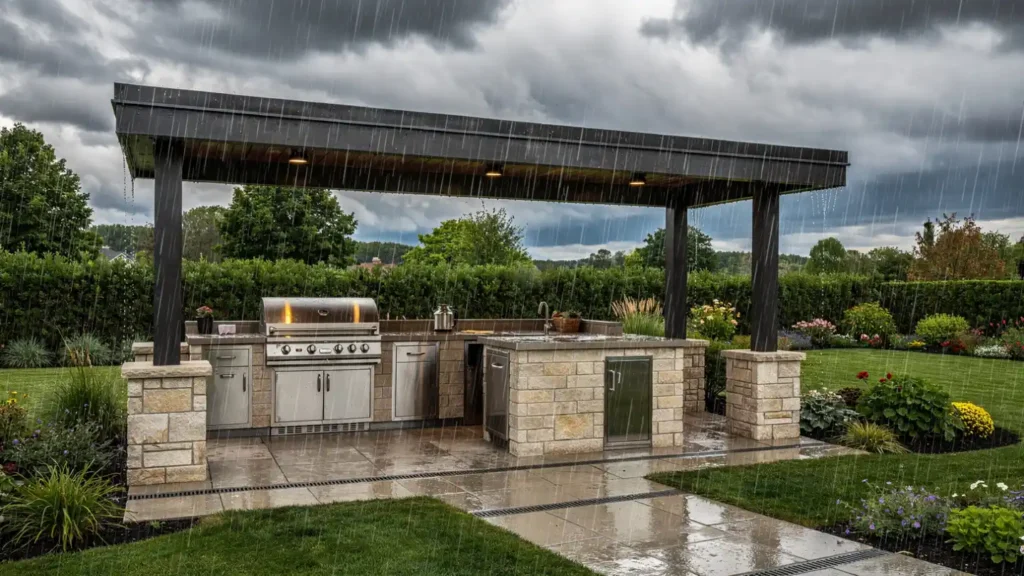
The ultimate insurance policy for an outdoor kitchen setup is structural overhead protection. Covered outdoor kitchens retain up to 40% more structural value over a 10 year period than completely exposed footprints.
Motorized, louvred aluminum pergolas are becoming highly popular for this reason. They allow you to open the roof for sun or close it tight when a rainstorm hits.
You also need to think about gas safety. Built in gas grills require proper ventilation paths inside the island cabinetry. Without vents, heavy propane gas can pool in low pockets and create an explosion hazard during atmospheric shifts.
Good drainage starts on the ground. You must grade your patio foundation to maintain a mandatory 1% slope away from your cabinet bases. This slope prevents standing water pools from rotting your grout or sealing layers.
Connect your overhead drainage systems to lower level patio grades. Keeping rain off the top matters little if puddles creep in from the bottom. By combining water deflection from above with an active ground level pitch, your outdoor culinary space remains entirely dry, safe, and ready to perform year round.
Critical Component Performance Metrics
| Material | Primary Vulnerability | Weatherproofing Requirement | Long-Term Reliability |
| HDPE Polymer | Minor thermal expansion | Use UV stabilized formulations | Excellent (No rot or fading) |
| Grade 304 Stainless | Surface oxidation / Tea staining | Bi-annual hydrophobic spray coatings | Good (Inland only) |
| Marine Grade 316 Stainless | High initial cost | Routine freshwater washdowns | Excellent (Coastal / Saltwater safe) |
| Natural Granite | Porous micro fissures | Annual deep penetrating solvent sealer | Good to Excellent |
| Engineered Quartz | UV resin yellowing and cracking | Must be completely shaded from sun | Poor (Not recommended outdoors) |
| Sintered Porcelain | Edge chipping on impact | Professional mitered edge fabrication | Excellent (UV and freeze proof) |
Step-by-Step Pre-Winterization Checklist
Follow these steps in order before freezing temperatures arrive to prevent split pipes and broken appliances.
- Shut Off Main Supply Lines: Locate the indoor shut off valve feeding your outdoor lines. Close it completely to cut off water flow to sinks and ice makers before temperatures drop to 32°F.
- Drain and Blow Out the Pipes: Open the outdoor sink faucets completely to vent remaining pressure. Use an air compressor line adapter to blow out residual water pockets lingering in low spots.
- Disconnect Refrigeration Units: Unplug your outdoor refrigerator or ice maker. Clean the interior completely to prevent mold, and flip off the dedicated outdoor GFCI breaker.
- Install Custom Fitting Covers: Clean your grill grates and apply a thin layer of food grade mineral oil. Secure heavy duty, multi layer canvas covers tailored tightly to each appliance footprint to block out winter moisture.
Conclusion
Protecting an exterior kitchen is not about throwing a cheap canvas tarp over it when it rains. It is an intentional choice of non-porous surfaces, robust metallurgy, and smart drainage routing.
Audit your current setup before the next seasonal shift hits your area. Upgrade your cabinetry to stable polymers and apply proper metal sealants to maximize your asset’s lifespan. Taking action now saves you thousands of dollars later.