How to Choose the Right Dining Room Lighting
In 2026, your dining room is more than a place to eat. It is a hub for connection, a remote office, and a spot for digital decompression after a long day.
But why does your space still feel like a sterile office at night? Most people choose the right dining room lighting based on looks alone.
This leads to poor color rendering and awkward shadows that ruin your meal’s atmosphere.
You deserve a space that feels as good as it looks. In this guide, you will learn the “Golden Ratio” for hanging fixtures and the 2026 “Layered Minimalism” approach.
These steps will help you master the latest 2026 lighting trends and create the perfect ambiance for every occasion.
Use These Golden Rules for Sizing and Placement
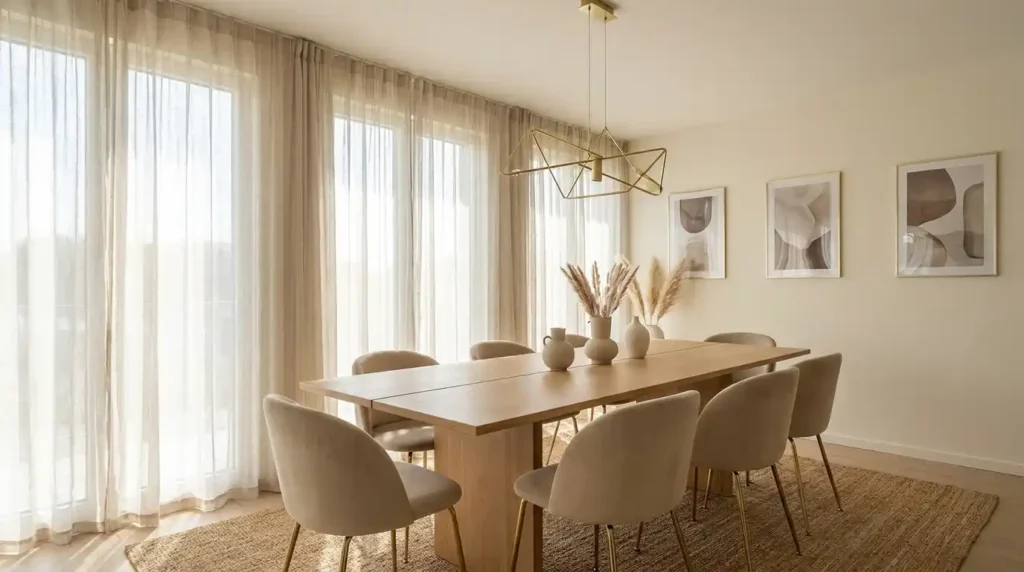
The most common mistake happens before the light is even turned on.
You find a beautiful chandelier, but once it is up, the room feels off. This is usually a math problem. To get your table proportions right, use the Diameter Formula.
Take your table width in inches and subtract 12. That number is your ideal fixture diameter. For example, a 42 inch wide table needs a 30 inch wide light.
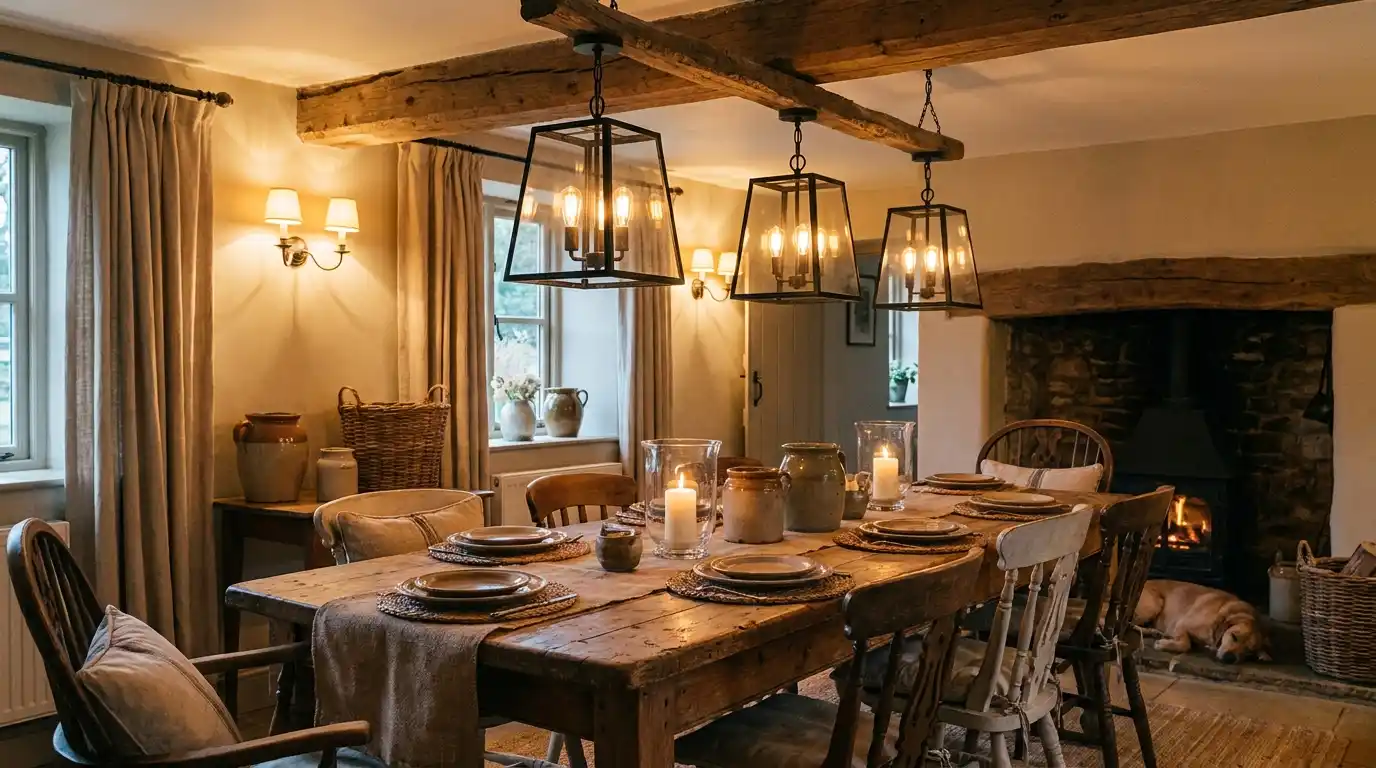
Next, let’s talk about chandelier height. You want to avoid head-bumps while keeping the light intimate. Aim for 30 to 36 inches between the tabletop and the bottom of the fixture.
If your ceilings are higher than 8 feet, add 3 inches for every extra foot of height. And remember: always center the light on the table, not the room.
Even if your table is off-center, the light must follow the furniture. In 2026, high-end interiors require a Color Rendering Index (CRI) of 90 or higher.
This ensures your food looks vibrant and appetizing instead of gray or dull. Once the fixture is hung, the next step is controlling the glow.
Why You Need Human-Centric Lighting
Light is a biological trigger, not just a utility. Have you ever felt restless during dinner or sleepy during a work session? That is because of your lighting.
Human-centric lighting fixes this by mimicking the sun. In 2026, we use tunable white LED tech to match our bodies’ needs.
- 4000K (Cool White): Use this during the day for focus and energy.
- 2700K (Warm White): Use this for standard evening meals.
- 2400K (Candlelight): Use this for a “Hosting Scene” as the night winds down.
Modern systems now use “Dim-to-Warm” technology. As you lower the brightness, the light automatically becomes warmer.
This supports your circadian rhythms and helps you relax. Market data shows a 40% increase in demand for these systems because they improve sleep and mood setting.
Your home should adapt to you, not the other way around. Smart tech shouldn’t be seen; it should be felt.
The Best Dining Room Lighting Trends for 2026
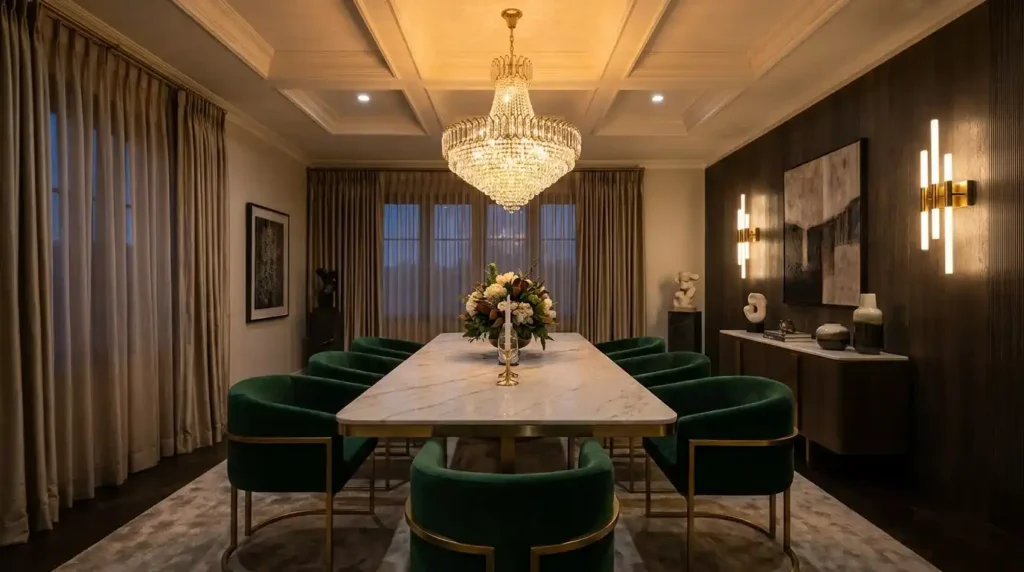
2026 is moving away from the industrial look toward “Sensorial Minimalism.” We are seeing a rise in sculptural pendants that act as art even when they are turned off.
People want sustainable lighting made from tactile materials. Think about smoked glass, aged bronze, or even 3D-printed textures made from bio-plastics. These materials feel soft and organic.
Another major shift is “Invisible Tech.” You no longer need bulky plastic boxes on your ceiling. Smart sensors are now hidden inside the canopy of the light fixture.
These sensors can talk to other devices using Matter-enabled apps or Lutron systems. This allows your lights to adjust automatically as you walk into the room.
This trend connects your personal style with the latest tools. The right trend is the one that serves your lifestyle for the next decade.
Summary of Your Lighting Plan
To get the best results, balance the “Golden Ratio” measurements with smart, tunable tech.
Make sure your fixture fits your table size and sits at the right height.
Then, use high CRI bulbs and tunable whites to keep your home healthy and inviting.
Ready to transform your space? Start by measuring your table width today.
Choosing the right dining room lighting is the fastest way to make your home feel professional and cozy at the same time.