Open-Concept vs. Closed-Concept Dining Rooms: Which Layout Fits Your Lifestyle?
Your dining room is no longer just a place to eat. In 2026, it is a hub for your work, your family time, and your need to relax.
But many homeowners are feeling stuck. You might love the look of a big, open space, but you hate hearing the dishwasher roar while you try to host a dinner.
The “Great Open Floor Plan” is facing a major backlash. People now care more about privacy and the air they breathe.
This guide helps you choose between open-concept vs. closed-concept dining rooms by looking at noise, social habits, and modern “zoning” tricks.
You will learn how to pick a floor plan that actually helps you live better.
The Open-Concept Dining Room: Social Hub or Sensory Overload?
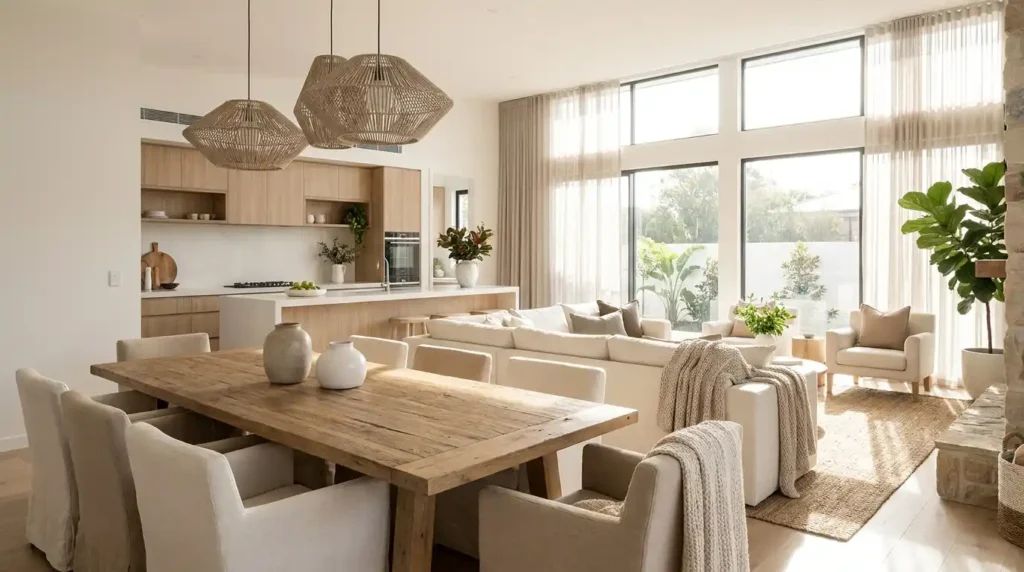
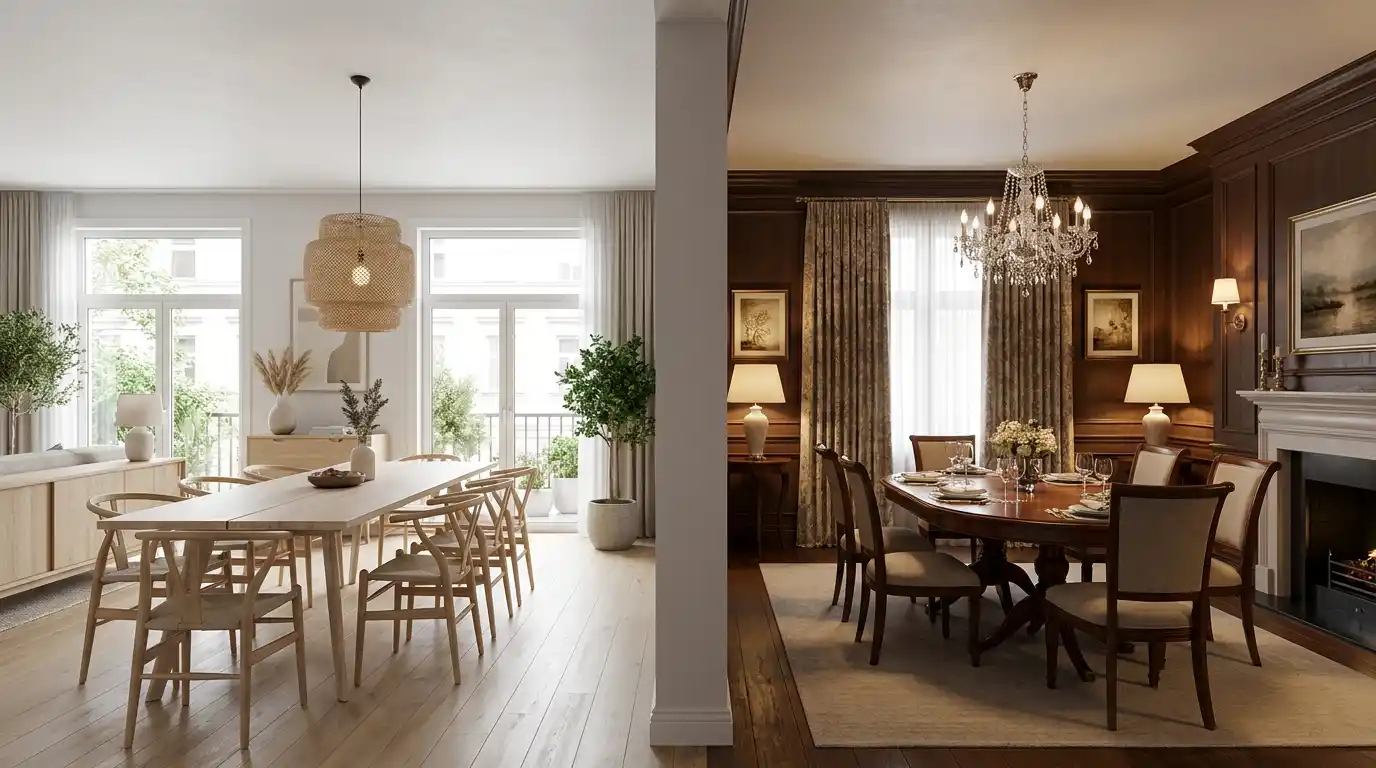
Walking into an open home feels like catching a breath of fresh air. There are no walls to stop the light. You can cook in the kitchen while talking to friends at the dining table.
This layout is built for movement. In fact, research shows that open designs improve how people move and interact by over 15%.
But there is a hidden cost to all that extra space. When the walls come down, the noise goes up.
Data shows that 45% of people in open spaces feel unhappy because it is too loud or crowded. It is hard to focus on a book when the TV is blaring ten feet away.
Then there is the air quality. We spend 90% of our time indoors, so what we breathe matters. In an open plan, cooking smells and smoke travel everywhere.
If you sear a steak, your dining chairs and sofa might smell like grease for days.
Why People Love (and Hate) Open Plans:
- The Big Pro: You never feel left out of the party while preparing food.
- The Big Con: You cannot hide a messy kitchen from your guests.
- The Lighting: Natural light reaches every corner, which boosts your mood.
- The Noise: Every clink of a spoon sounds louder without walls to soak up the vibrations.
Open plans offer a sense of freedom. But what if you actually need a door to shut out the chaos?
The Closed-Concept Dining Room: 3 Reasons to Bring Back Walls
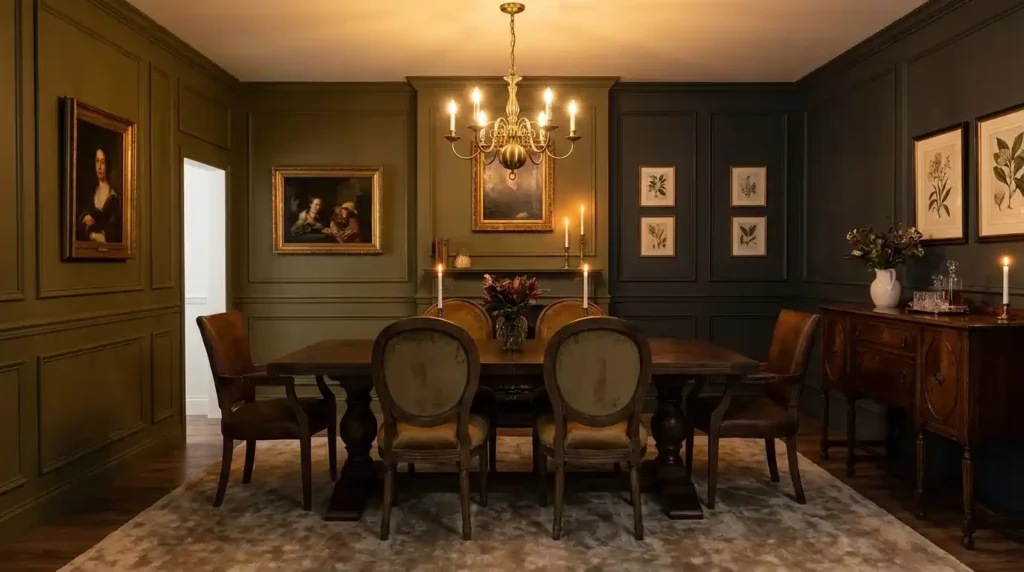
If an open plan is a party, a closed dining room is a sanctuary. This layout is making a huge comeback. It creates a defined space where the rest of the house disappears.
When you sit down to eat, you aren’t looking at a pile of dirty pans in the sink or a laptop on the counter.
Privacy is the biggest win here. People report feeling much more satisfied during “focus” tasks when they have four walls around them.
It also solves the noise problem. Solid walls act as natural sound barriers. You can have a quiet, romantic dinner even if the kids are playing video games in the next room.
Think about the “Mess Factor.” In a closed room, you can shut the door on the kitchen clutter. Your guests only see the beautiful table you set.
This creates a sense of ceremony that open spaces often lack.
The Benefits of a Defined Space:
- Acoustic Privacy: Walls keep conversations in and distractions out.
- Scent Control: Cooking odors stay in the kitchen instead of sticking to your curtains.
- Special Design: You can paint your dining room a bold, dark color without it clashing with the rest of the house.
3 Ways to Pick the Layout That Wins for Your Life
How do you choose? It comes down to your daily habits.
The Social Host
If you love casual buffet dinners and having ten people over at once, the open layout is your best friend. It allows people to flow from the sofa to the snacks without getting stuck in a doorway.
The Remote Worker
Do you work from your dining table? If so, you might need a closed space. It prevents “meeting fatigue” because you won’t see your family walking behind you on every video call.
The Health-Conscious Family
Closed kitchens and dining areas are better at trapping indoor pollutants. If you are worried about air quality, having a way to wall off the cooking area helps keep your living space cleaner.
Quick Comparison Guide
| Feature | Open-Concept | Closed-Concept |
| Noise Level | High | Low |
| Natural Light | Excellent | Limited |
| Privacy | Low | High |
| Best For | Casual Parties | Quiet Focus |
Finding Your Perfect Balance
Both layouts have flaws. Open plans can be too loud, and closed plans can feel too dark. The big trend for 2026 is the “Broken Plan.”
This uses glass partitions or bookshelves to create “zones.” You get the light of an open room but the quiet of a closed one.
Think about how you want to feel when you sit down for dinner tonight. Do you want to see everything, or do you want to hide away?