How to Plan a Kitchen Remodel Design Step by Step
In 2026, the kitchen isn’t just a place to cook; it’s a high-tech, multi-functional hub that blends wellness with smart efficiency.
But here is the hard truth. Most homeowners choose paint colors and tile before they look at a spreadsheet. This leads to 25% budget overruns and what pros call “renovation fatigue.”
You want a beautiful space, but you also want to protect your bank account. Learning how to plan a kitchen remodel the right way saves you months of stress.
This guide gives you a 7-step system to get it done. You will see the latest 2026 kitchen design trends and learn a secret about ROI that most contractors won’t tell you.
Let’s turn your messy kitchen renovation into a smooth project that actually adds value to your life.
Remodel Priority Matrix
Step 1: Define Your “Why” and ROI Goals
A kitchen that works for a growing family looks very different from one meant to sell a house. Your goals dictate every dollar you spend.
If you plan to live in your home for ten years, focus on what you love. If you might move soon, follow the 15% rule. This means your total project cost should not exceed 15% of your home’s total value.
The financial data for this year is surprising. Zillow 2026 data shows that minor remodels currently see a 113% kitchen remodel ROI. On the flip side, major luxury overhauls only recoup 36 to 51%.
Keeping it simple often pays more. Think about your home value before you tear down every single wall.
Pro-Tip: Focus on “high-touch” areas like handles, faucets, and lighting if you want the best return on your investment.
Step 2: Establish a 2026 Reality-Based Budget
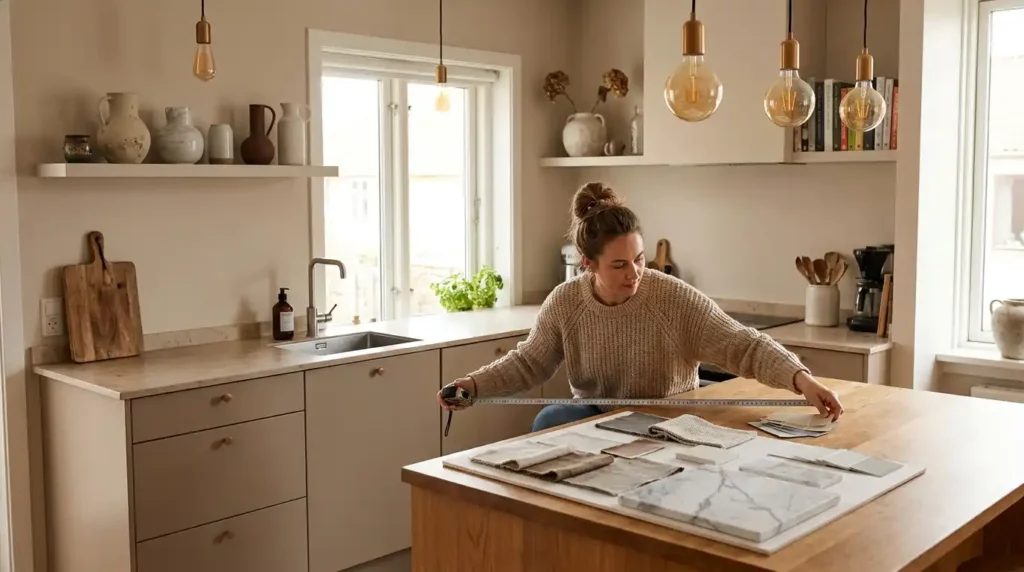
A well-planned budget is the difference between a dream kitchen and a financial nightmare. You must be honest about costs from day one.
In 2026, wooden cabinet prices have spiked by nearly 50% due to new import tariffs. If you don’t account for this early, your remodeling budget will fail.
Always set aside a 20% contingency fund. This money is for the “hidden” problems found behind your walls. Here is a standard kitchen renovation cost breakdown:
- Cabinets: 30 to 40%
- Labor and Installation: 20 to 30%
- Appliances: 10 to 15%
- Countertops: 10%
Order your materials as soon as you can. Waiting even a month can lead to price hikes or shipping delays that stall your project.
Pro-Tip: Ask your supplier for a “price lock” agreement when you pay your deposit to avoid mid-project inflation.
Step 3: Map Your Layout (The Workstation Era)
Once your finances are locked in, the fun begins with the layout. Forget the old “work triangle” of the fridge, stove, and sink.
Modern homes now use “Work Zones.” This means you group items by task. You have a Prep Zone, a Cook Zone, and a Social Zone.
A modern kitchen design often features a workstation sink. These sinks have built-in cutting boards and drying racks.
They save space and keep the mess in one spot. Also, look into the “Invisible Kitchen” trend.
This is where you use panel-ready doors to hide your fridge and dishwasher. It makes the kitchen layout look like a clean living room instead of a utility space.
Pro-Tip: Place your dishwasher near the storage for your daily plates to make unloading fast and easy.
Step 4: Select 2026 Sustainable Materials
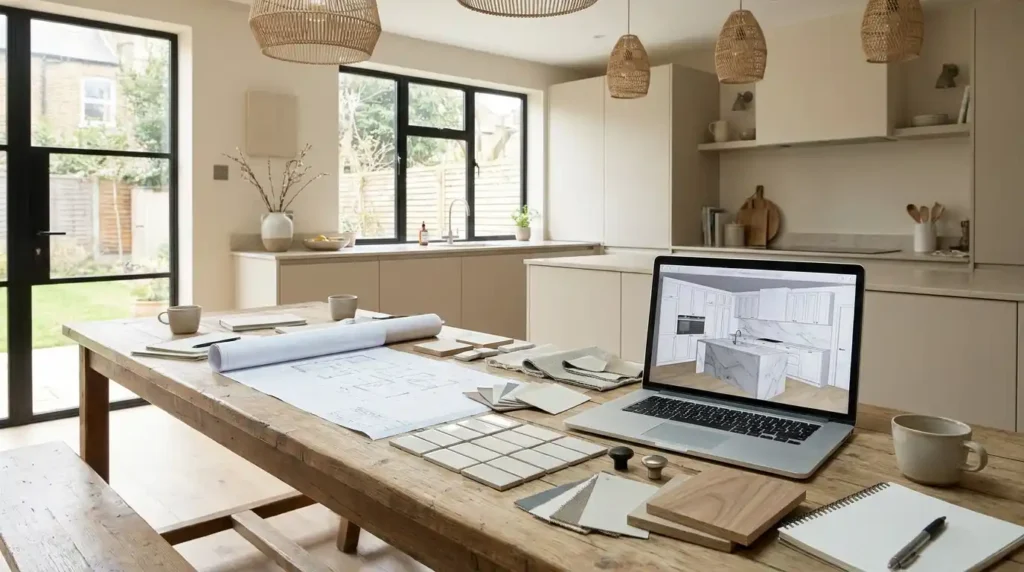
The materials you choose today will affect your home’s air quality and future value. Most buyers now look for sustainable kitchen materials.
Quartzite is the top choice for 2026, with a 62% preference over standard quartz. It is a natural stone that resists heat better than man-made slabs.
For cabinets, look for eco-friendly composites and low-VOC finishes. These don’t release harmful chemicals into your home.
The 2026 kitchen design trends lean into “Earth-inspired” palettes. Use greens, deep blues, and ochre.
These colors feel warm and grounded. They are the new neutrals that replace the cold whites of the past.
Pro-Tip: Check for “Cradle to Cradle” certification on flooring and cabinets to ensure they are truly eco-friendly.
Step 5: Integrate Smart Tech and Wellness
A smart kitchen should make your life easier, not more complicated. Induction cooktops are the standard now.
They use magnets to heat your pans. This is safer, faster, and much better for energy efficiency.
Focus on wellness-focused design too. This includes voice-activated faucets that prevent the spread of germs.
High-end smart kitchen appliances, like the Bosch 800 Series with CrystalDry, are the gold standard for saving water and time. Good lighting is also key.
Use sculptural LED lights that you can dim at night to help your body get ready for sleep.
Pro-Tip: Install a dedicated “tech drawer” with USB-C ports to keep your counters free of charging cables.
Step 6: Hire Your 2026 Power Team
You might want to do it all yourself, but a pro saves you money in the long run.
Hiring a kitchen remodel contractor is a big step. In today’s high-demand market, the best ones are booked six months out.
You have two main choices. A Design-Build firm handles everything from the drawings to the tile.
An Interior Designer focuses on the look and then works with a separate builder. Get at least three quotes and call their last three clients.
If they can’t show you a professional design on a computer first, they might not be the right fit for a 2026 project.
Pro-Tip: Always verify that your contractor has current liability insurance before they swing a hammer.
Step 7: The Construction Timeline and Final Punch List
Expect your project to take 8 to 24 weeks. This depends on how much you change. Living without a kitchen is the hardest part of the process.
Build a “Temporary Kitchen” kit in another room. Include a microwave, a coffee maker, and a plastic bin for washing dishes in the tub.
As the job nears the end, keep a “Punch List.” This is a list of small things that aren’t quite right. Maybe a drawer sticks or a light switch is crooked.
Do not make the final payment until every item on that list is fixed.
Pro-Tip: Take photos of your open walls before the drywall goes up. You will want to know where the pipes and wires are later.
Conclusion
Planning is 80% of the success. If you rush into the work, you will likely regret the results.
By aligning your budget with the high-ROI trends of 2026, you ensure a home that is both beautiful and bankable. You now have the tools to build a space that works for your modern life.