How to Organize Kitchen Cabinets: A 2026 Beginner’s Guide
Think about opening your kitchen doors and feeling a sense of calm. Most people deal with a “tupperware avalanche” every time they reach for a bowl. It feels messy and stressful.
Did you know the average person spends over 50 minutes a day on meal prep? About 15% of that time is wasted just hunting for lids or hidden spices.
This guide gives you a simple plan to fix that. You will learn a step by step way to audit and sort your space. We will use a “warm minimalist” style that is popular in 2026.
This means your kitchen will look clean but still feel cozy. By the end, you will know how to organize kitchen cabinets for a functional kitchen layout that actually works. Kitchen decluttering does not have to be a giant chore if you have the right steps.
Cabinet Placement Logic
The Empty-Out Audit: Why You Must Start from Zero
To fix a mess, you have to see it first. Most beginners try to move things around while the cabinets are full. This is a mistake. You need the “Blank Slate” method. Take everything out. Yes, everything.
When your counters are covered in plates and cans, you can finally see what you own. This is the best time for an expired food audit. Check the dates on those sauce packets from three years ago. If you haven’t used a gadget in two years, you likely never will.
There is a psychological reason for this too. Experts point to the Zeigarnik Effect. This is the idea that unfinished tasks create mental background noise. A messy cabinet is like a computer program running in the back of your mind. It drains your energy. Once you empty the space, that noise stops.
3 Steps to Audit Your Space:
- Clear every single shelf until the cabinets are empty.
- Wipe down the wood with a damp cloth.
- Group items by “Keep,” “Donate,” or “Trash.”
A minimalist kitchen is about keeping what you use. Be honest about those extra coffee mugs. If you only have four people in your house, you probably do not need twenty mugs. Decluttering kitchen cabinets starts with letting go of the “just in case” items.
Kitchen Cabinet Audit
01. The Total Empty
Clear every single shelf until the cabinets are completely empty. Seeing the bare space helps you visualize a better layout without being influenced by current clutter.
02. Sanitize & Refresh
Wipe down the wood with a damp microfiber cloth. Removing dust and kitchen grease provides a fresh start for your items to return to a hygienic environment.
03. Categorize & Curate
Group items by Keep, Donate, or Trash. Be ruthless—if you haven’t used that specialty gadget in over a year, it’s taking up prime real estate that you need for daily essentials.
Use Kitchen Zones for a Better 2026 Workflow
Think like a professional chef. They do not run across the room to grab a spoon. They use kitchen zones. This keeps everything you need within reach.
Your “Active Zones” should be near the stove and the sink. This is prime real estate organization. If you use an item every day, it stays between your waist and eye level. This prevents you from bending down or reaching high while you are busy cooking.
How to Map Your Zones:
- Prep Zone: Keep knives and cutting boards within three feet of your main counter.
- Cooking Zone: Put pots, pans, and oils right next to the stove.
- Cleaning Zone: Store dish soap and towels under or near the sink.
- Deep Storage: Put the holiday platters or large crockpots in the high cabinets above the fridge.
Using functional storage means you stop walking back and forth. It makes cooking feel faster. If you have a functional kitchen layout, you can focus on the food instead of the hunt for a spatula.
Smart Tools for Beginner Organization
In 2026, people are moving away from cheap plastic bins. They break easily and look messy. Instead, look for sustainable kitchen organizers. Materials like bamboo, glass, and stoneware are better for the planet and look much nicer.
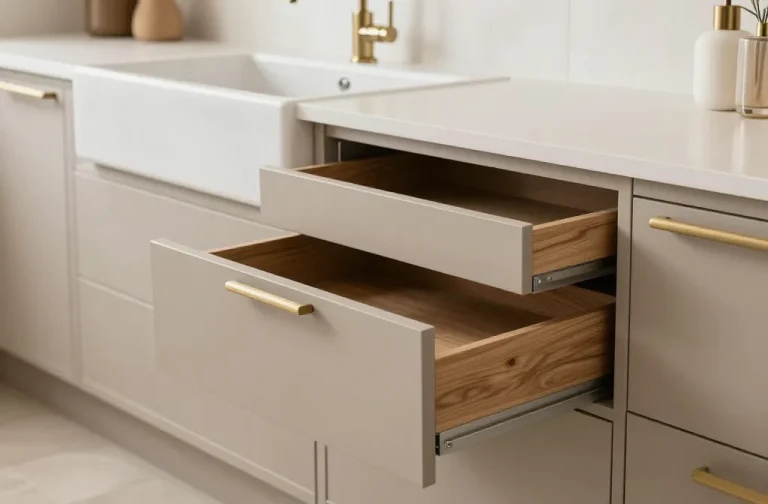
Drawer dividers made of wood are a great start. They create “invisible precision.” This means your drawers look custom-made even if they are standard sizes.
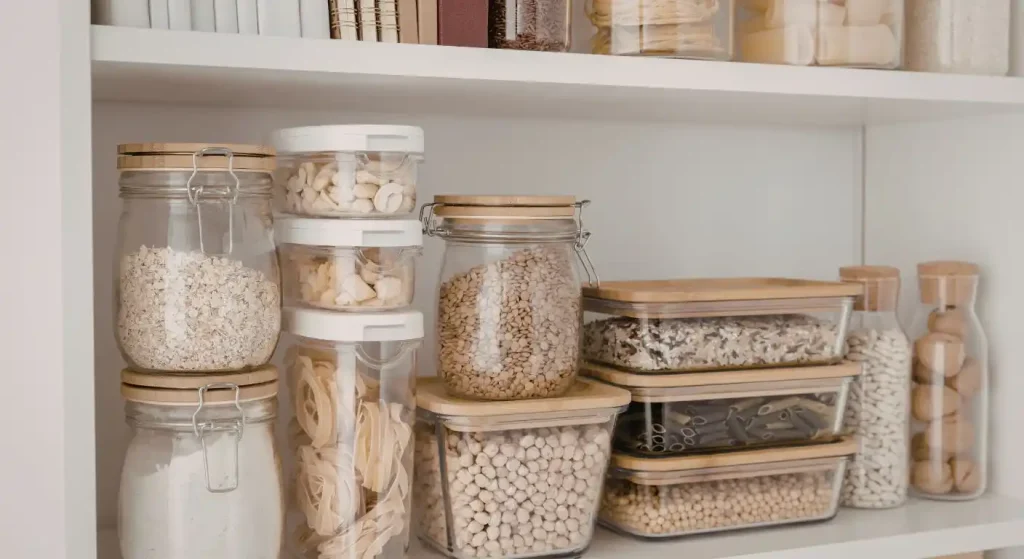
Glass canisters are also helpful for dry goods like pasta or flour. You can see exactly how much you have left at a glance.
Tools to Consider:
- Bamboo In-Drawer Knife Blocks: These keep blades sharp and fingers safe.
- Stoneware Utensil Holders: These add a nice texture to your counter.
- Clear Expandable Dividers: Use these to keep your “tupperware” lids in one straight line.
Focus on quality over quantity. You do not need a bin for everything. Only buy a tool if it solves a specific problem you found during your audit.
Use Vertical Space and Fix Those “Dead” Corners
Most people forget about the top half of their cabinets. This is wasted space. You can increase your storage by up to 40% just by using vertical kitchen storage.
Cabinet shelf risers are small wire or wood racks that act like a second floor for your dishes. Instead of stacking ten plates, you can have two small stacks. This makes it easier to grab the bottom plate without a struggle.
For those deep, dark corner cabinets, use the “Turntable Revolution.” A lazy susan allows you to spin your items around.
You will never lose a jar of honey in the back corner again. Tension rods are another great trick. Set them up vertically to hold baking sheets or pot lids like a file folder.
Quick Wins for Small Spaces:
- Use under-shelf baskets for small items like napkins.
- Install hooks on the inside of cabinet doors for measuring cups.
- Put a turntable in your spice cabinet so you can see every label.
Conclusion
The goal of a clean kitchen is not to look like a magazine. It is about making your daily life easier.
When you organize kitchen cabinets, you give yourself more time and less stress. You don’t have to do the whole room at once.
A clutter-free lifestyle starts with one small win. Pick one “junk drawer” or your spice cabinet and clean it out today.
Use the “One-In, One-Out” rule. If you buy a new blender, find an old gadget to donate. Keep it simple and keep it functional. Your future self will thank you during tomorrow’s dinner prep.