15 Kitchen Tile Flooring Ideas for a Fresh Modern Look
Want a kitchen floor that looks great and lasts for years? Tile flooring might be exactly what you need. From simple patterns to bold designs, these kitchen tile flooring ideas will help you create a space that is both practical and stylish.
When we first stepped into our new house, the kitchen looked fine, but something always felt off under our feet. The old flooring was dull, scratched, and made the space feel less clean even after mopping. That’s when I started looking into kitchen tile flooring as a long-term solution.
At first, I thought tiles were just about looks, but I quickly realized they completely change how a kitchen feels. From smooth ceramic to textured stone, each option can transform a tired space into something fresh and structured.
We eventually chose a light-toned tile, and it instantly brightened the kitchen. It wasn’t just a design upgrade—it changed how we used the space. Cooking became easier, cleaning simpler, and the kitchen finally felt like home.
Now I understand why kitchen tile flooring is so popular. It’s not just style—it’s comfort, durability, and everyday ease.
How Kitchen Tile Flooring Impacts Everyday Functionality
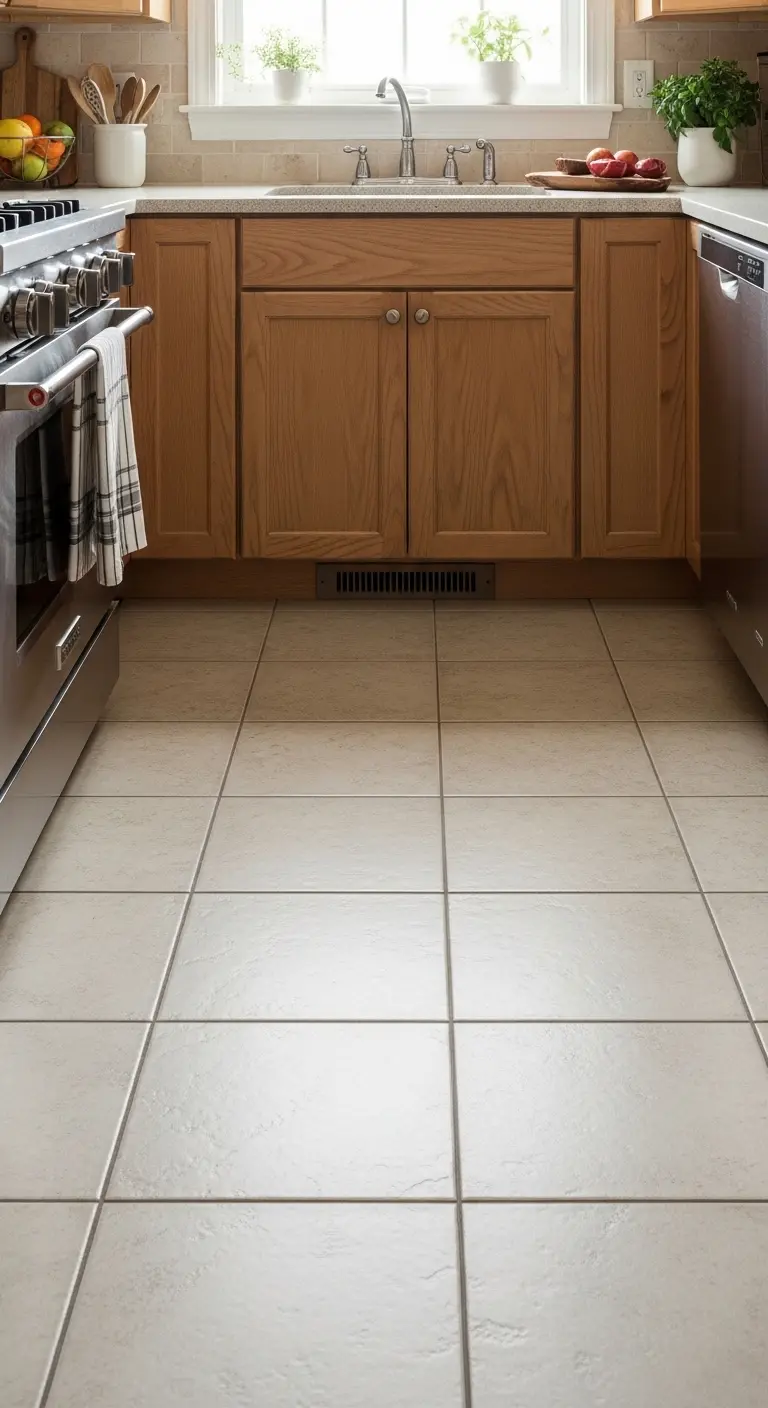
Kitchen tile flooring directly influences how comfortable and efficient your kitchen feels during everyday tasks and routines.
Tiles that resist stains and moisture help you manage spills quickly without worrying about permanent damage or discoloration.
A well-chosen surface also reduces cleaning effort, which becomes especially important in kitchens that experience frequent cooking activity.
Texture plays an important role because slip-resistant tiles can improve safety in areas where water or oil may reach the floor.
Durability is another critical factor, as strong flooring materials can handle heavy appliances and regular foot traffic without cracking.
When you focus on these functional aspects, you create a kitchen that supports both convenience and long-term reliability.
Choosing the Right Material for Kitchen Tile Flooring
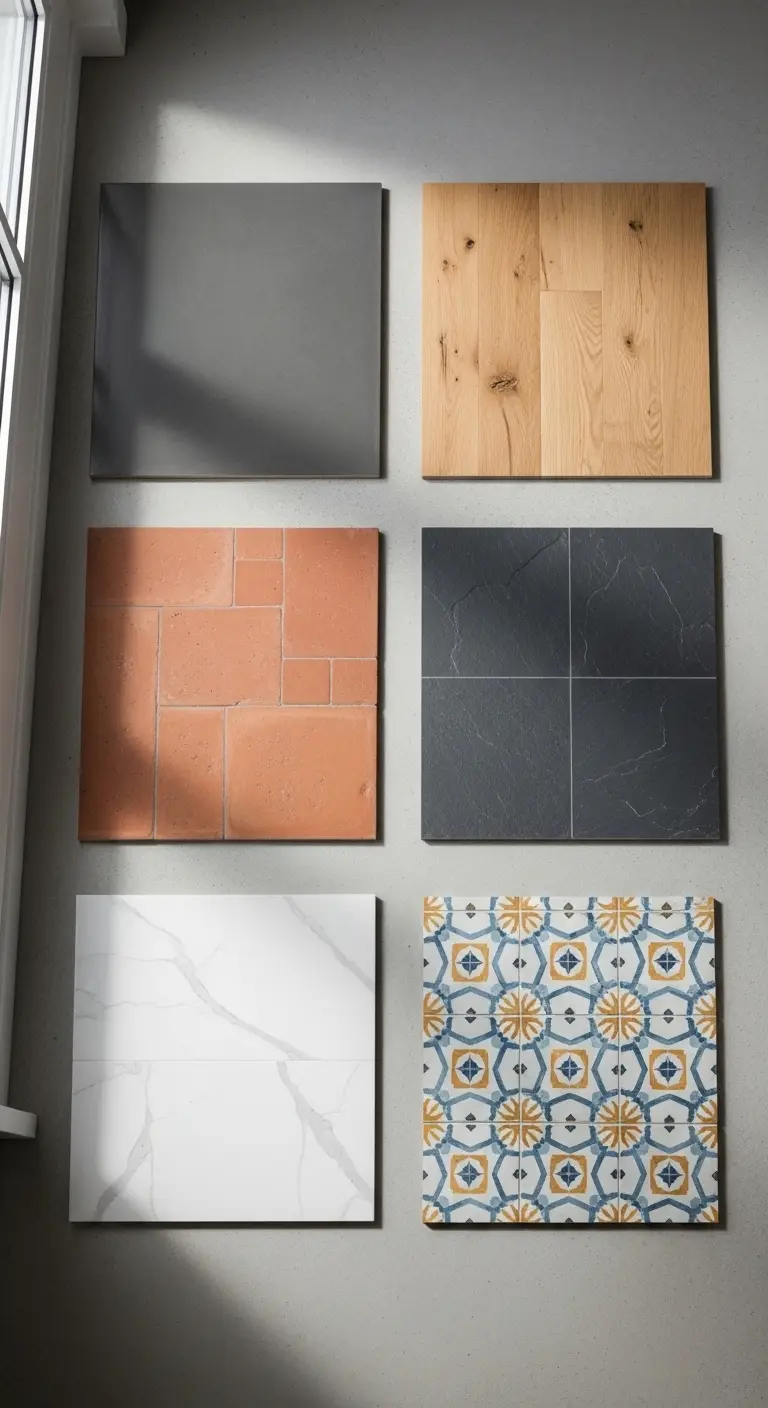
Selecting the right material for kitchen tile flooring requires a clear understanding of how each option performs in real-life conditions.
Ceramic tiles offer affordability and versatility, making them a popular choice for homeowners who want stylish yet budget-friendly solutions.
Porcelain tiles provide higher density and better resistance to water, which makes them ideal for busy kitchens with heavy usage.
Natural stone tiles introduce a unique and organic appearance, but they often require sealing and consistent care to maintain their quality.
Each material offers different advantages, so your decision should align with your lifestyle, maintenance preferences, and design goals.
By choosing wisely, you can ensure your kitchen tile flooring remains both functional and visually appealing for years.
15 Kitchen Tile Flooring Ideas
Classic Ceramic Kitchen Tile Flooring for Timeless Appeal
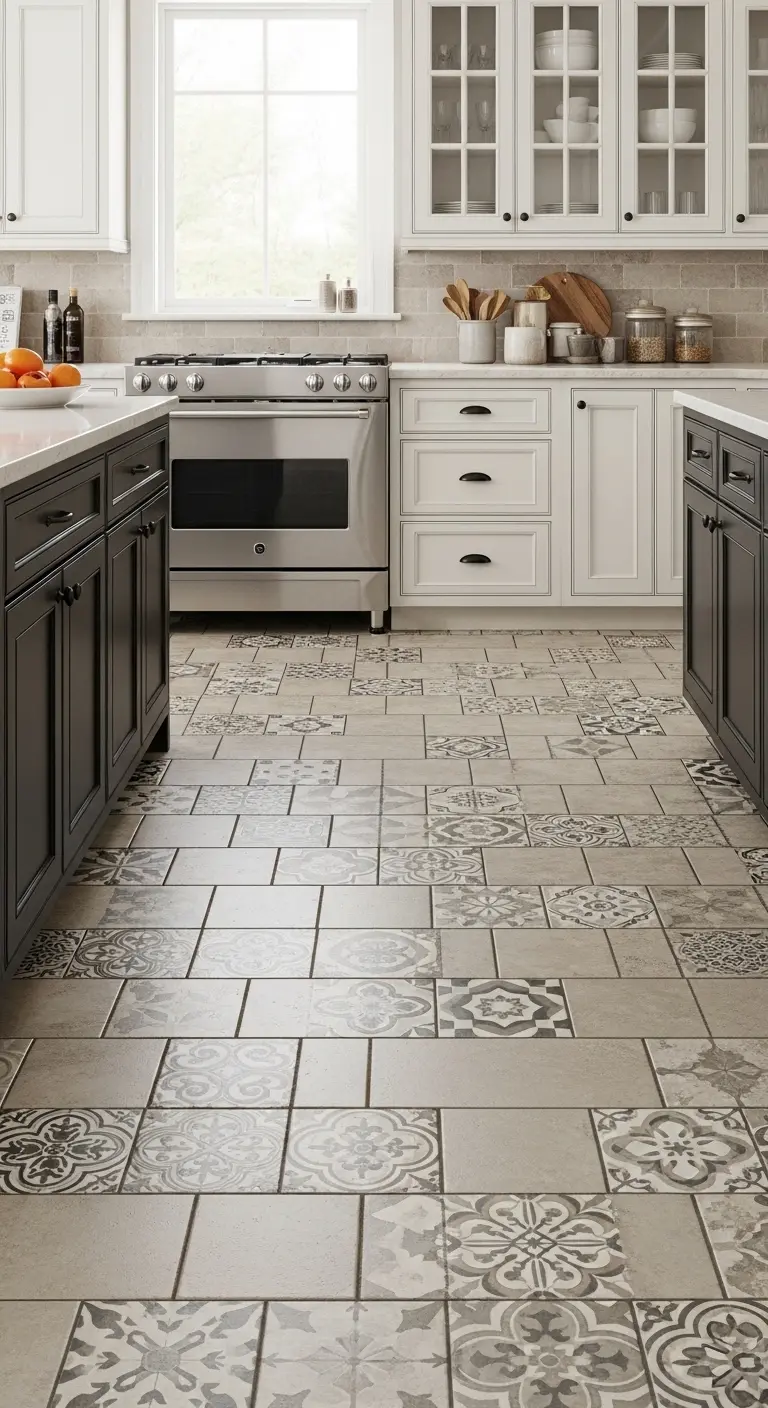
Classic ceramic kitchen tile flooring remains a reliable option for homeowners who want a balance between affordability and visual appeal.
These tiles come in a wide range of colors, patterns, and finishes, allowing you to create a design that suits your kitchen style.
You can easily match ceramic tiles with cabinets, countertops, and wall colors to achieve a cohesive and harmonious look.
Their smooth surface makes cleaning simple, which is especially helpful in kitchens where spills and stains occur frequently.
Ceramic tiles also offer decent durability, making them suitable for moderate foot traffic without compromising their appearance over time.
This option works well for both traditional and modern kitchens, making it a flexible and practical flooring choice.
Porcelain Kitchen Tile Flooring for High Durability
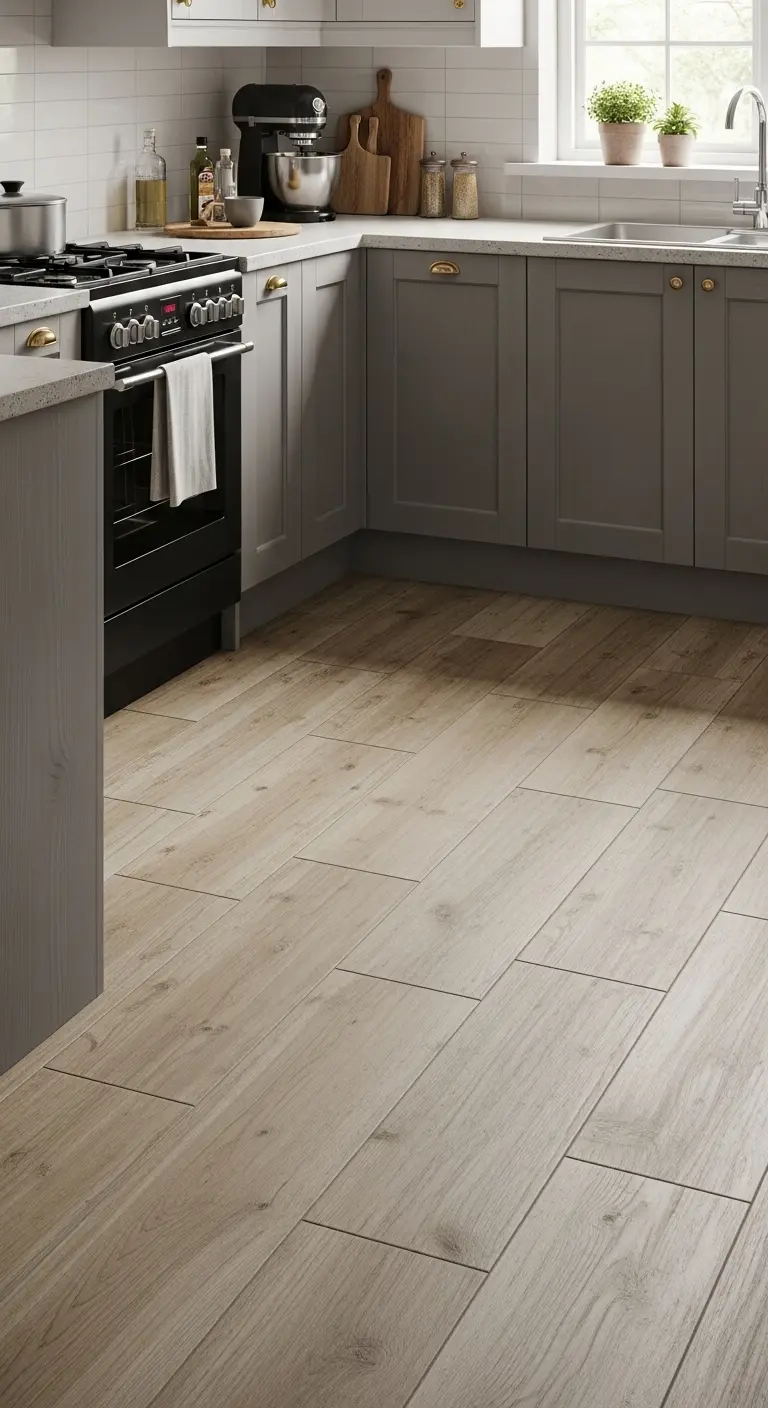
Porcelain kitchen tile flooring stands out as one of the most durable and long-lasting options available for modern kitchens.
These tiles are denser and less porous than ceramic tiles, which makes them highly resistant to moisture and daily wear.
They can handle heavy foot traffic and kitchen equipment without showing signs of damage or surface deterioration.
Many porcelain tiles are designed to mimic natural materials like wood and stone, offering both strength and visual appeal.
This allows homeowners to achieve premium looks without dealing with the maintenance challenges of natural surfaces.
Porcelain flooring works especially well in busy households where durability and low maintenance are top priorities.
Marble-Inspired Kitchen Tile Flooring for Luxury Look
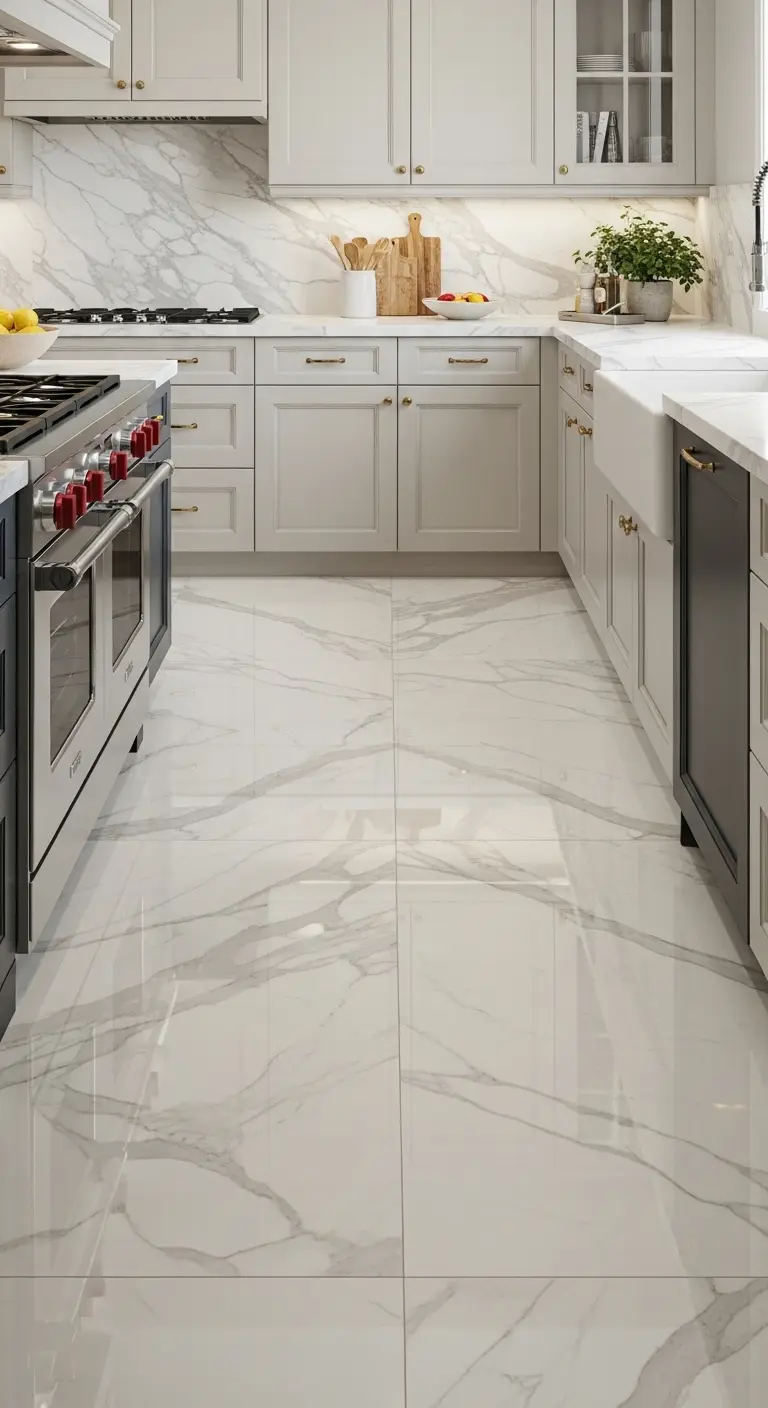
Marble-inspired kitchen tile flooring offers a luxurious appearance without the high maintenance requirements of natural marble surfaces.
These tiles feature elegant veining patterns that add depth and sophistication to the overall kitchen design.
They reflect light beautifully, which helps make the kitchen feel brighter and more open, especially in larger spaces.
Unlike real marble, these tiles are easier to clean and maintain, making them suitable for everyday use.
They allow homeowners to enjoy a high-end aesthetic without worrying about staining or frequent sealing.
This style is ideal for those who want to elevate their kitchen design while maintaining practicality and convenience.
Wood-Look Kitchen Tile Flooring for Warmth
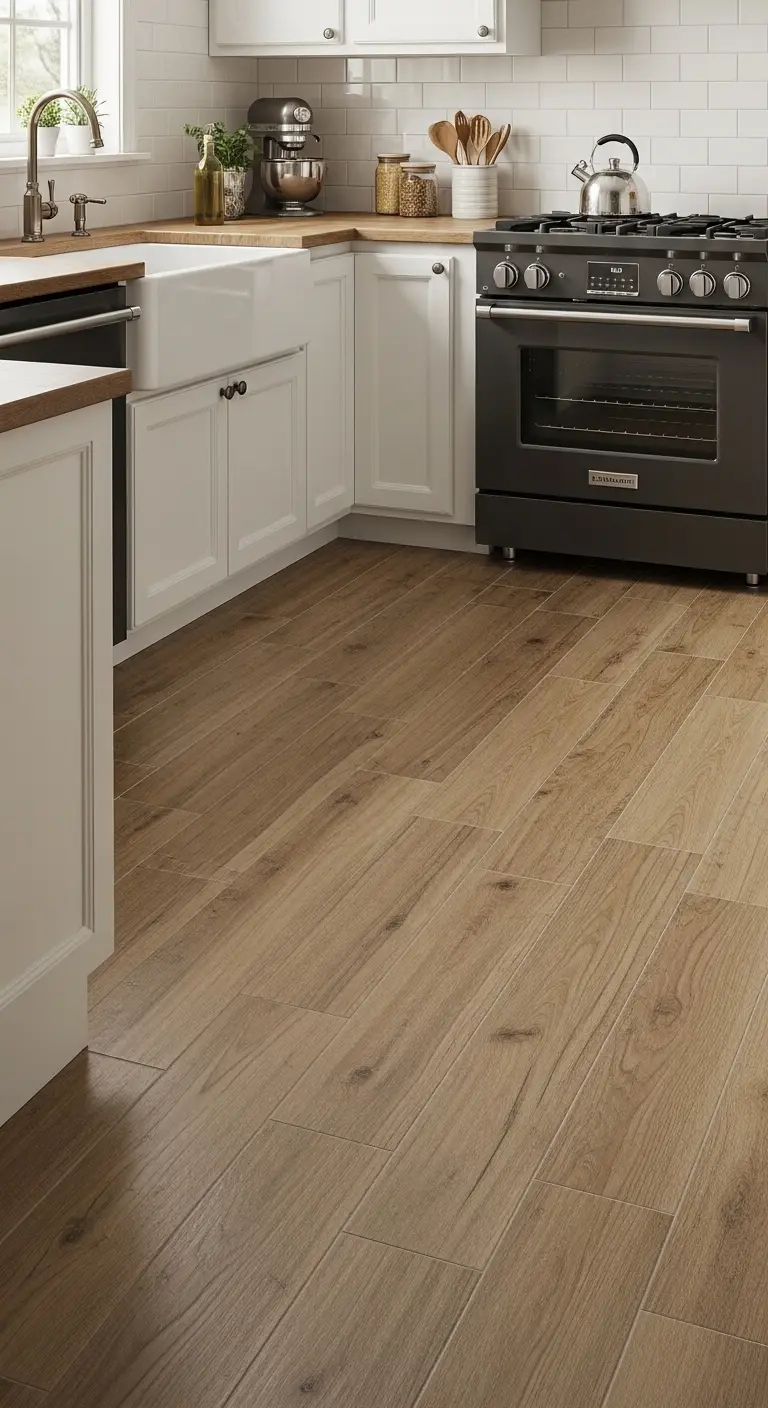
Wood-look kitchen tile flooring combines the natural beauty of wood with the durability and water resistance of tile materials.
These tiles replicate wood grain patterns realistically, creating a warm and inviting atmosphere in the kitchen.
They are perfect for homeowners who love rustic or farmhouse styles but need a surface that can handle moisture.
Unlike real wood, these tiles do not warp or absorb water, making them a reliable choice for busy kitchens.
They also require less maintenance, which makes them suitable for people with active lifestyles and limited cleaning time.
This flooring option successfully blends comfort, style, and practicality in a single design solution.
Patterned Kitchen Tile Flooring for Visual Interest
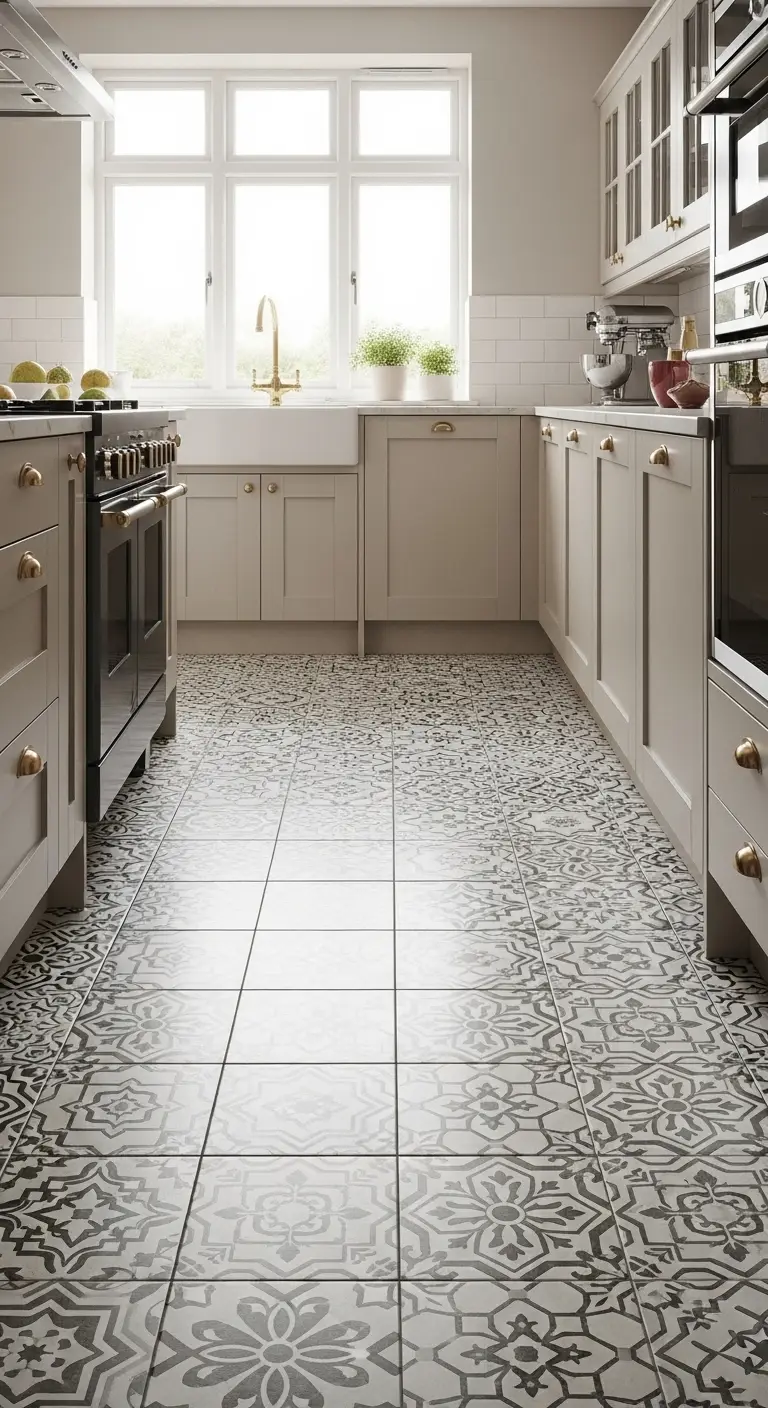
Patterned kitchen tile flooring adds personality and character by turning the floor into a visually striking design feature.
These tiles often include geometric shapes, floral designs, or intricate patterns that enhance the overall kitchen theme.
They work best in kitchens with neutral tones, where they can stand out without overwhelming the entire space.
You can use patterned tiles across the entire floor or limit them to specific sections for a balanced look.
This approach allows you to express creativity while maintaining functionality and design harmony.
Patterned flooring is ideal for homeowners who want to create a unique and memorable kitchen environment.
Matte Finish Kitchen Tile Flooring for Subtle Elegance
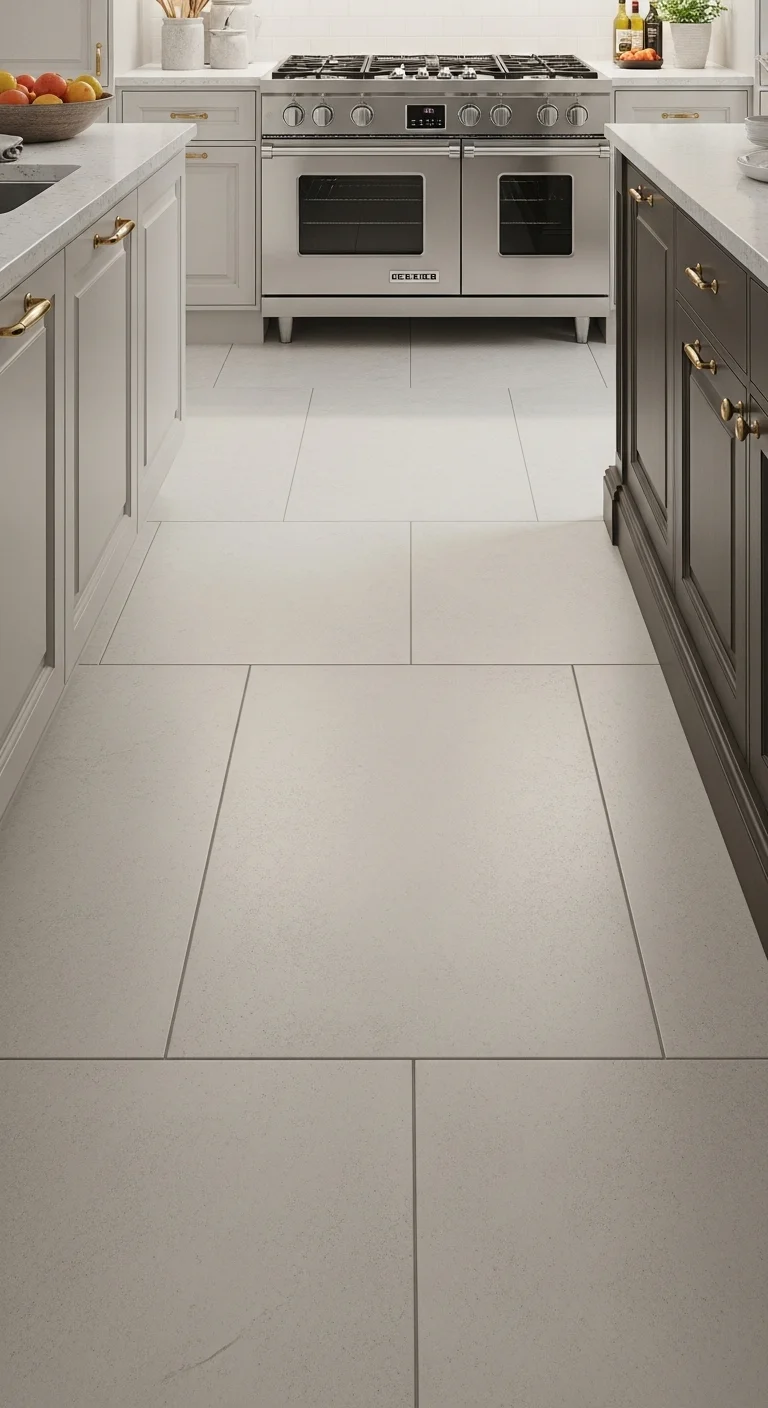
Matte finish kitchen tile flooring creates a calm and understated look that works well in both modern and traditional kitchen designs.
These tiles reduce glare because they do not reflect light strongly, which helps create a softer and more comfortable visual environment.
They are especially useful in kitchens with strong lighting, where glossy surfaces might feel too bright or overwhelming.
Matte tiles also hide smudges, dust, and footprints more effectively, which makes them easier to maintain on a daily basis.
This feature is helpful for busy households where frequent cleaning may not always be possible throughout the day.
Choosing matte kitchen tile flooring allows homeowners to achieve elegance while maintaining practicality and long-term visual consistency.
Glossy Kitchen Tile Flooring for Bright Spaces
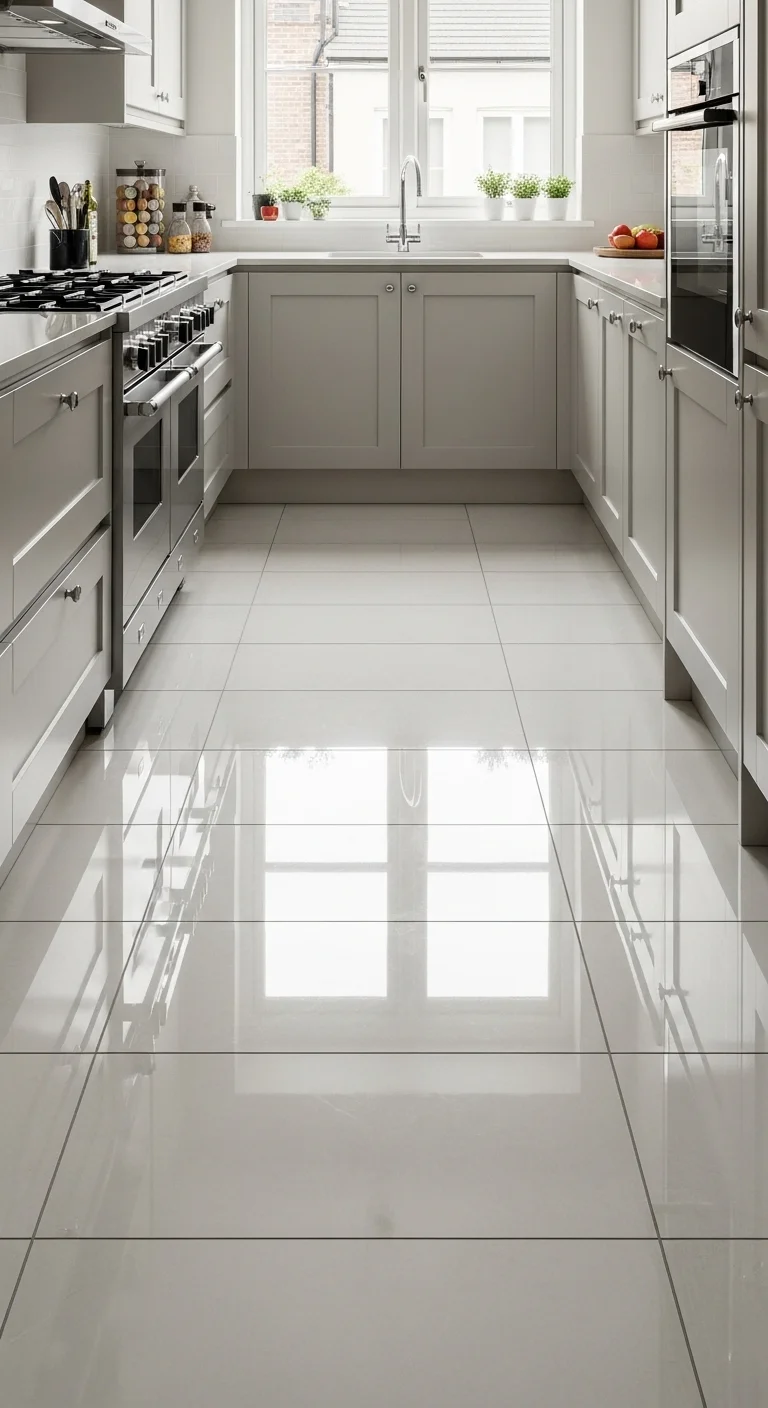
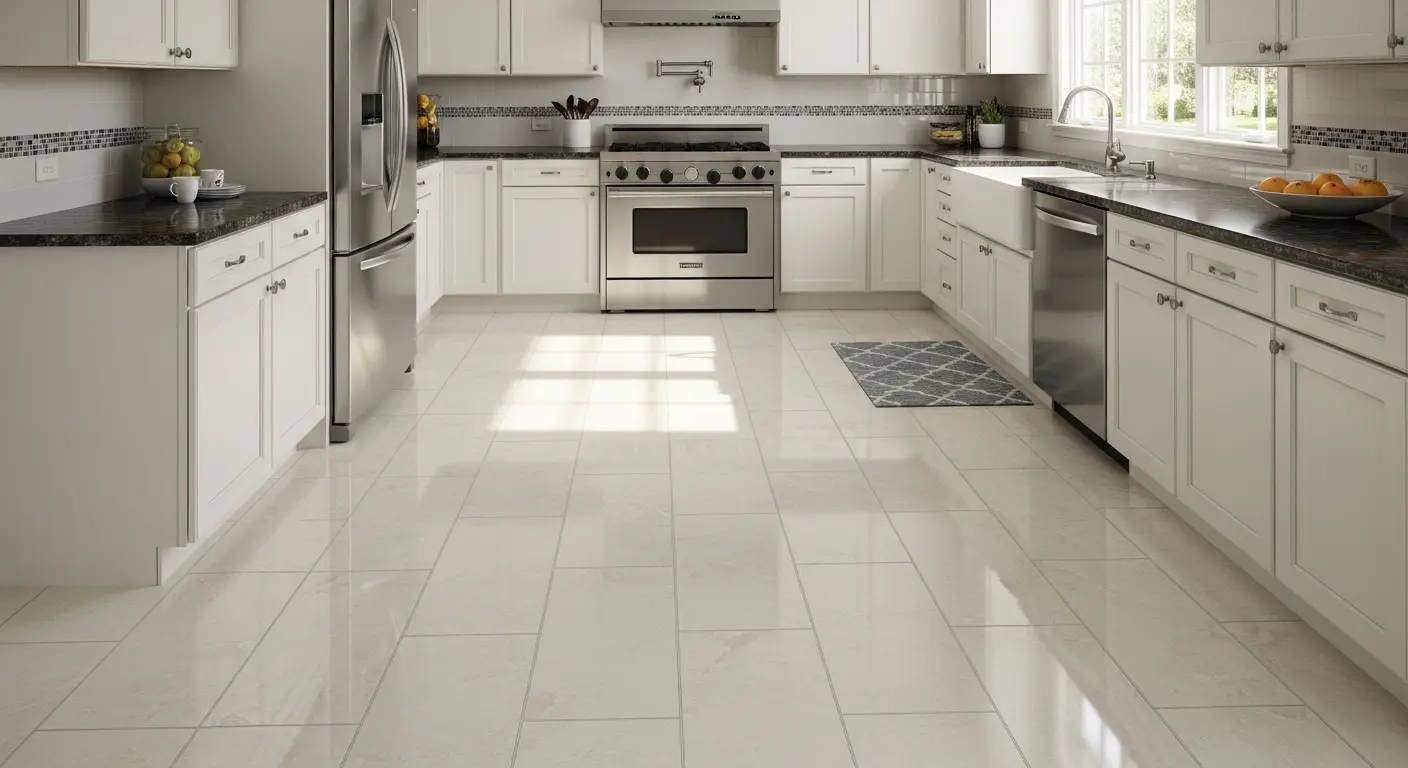
Glossy kitchen tile flooring enhances brightness by reflecting light across the space, making kitchens appear more open and spacious.
This feature makes glossy tiles an excellent choice for smaller kitchens that lack sufficient natural light during the day.
The reflective surface adds a polished and modern feel, which works well with contemporary kitchen designs.
However, glossy tiles require regular cleaning because they can show fingerprints, smudges, and water spots more easily.
Despite this, many homeowners prefer them because of their ability to instantly elevate the visual appeal of a kitchen.
This option suits those who prioritize brightness and want to create a sleek, modern kitchen environment.
Large Format Kitchen Tile Flooring for Seamless Look
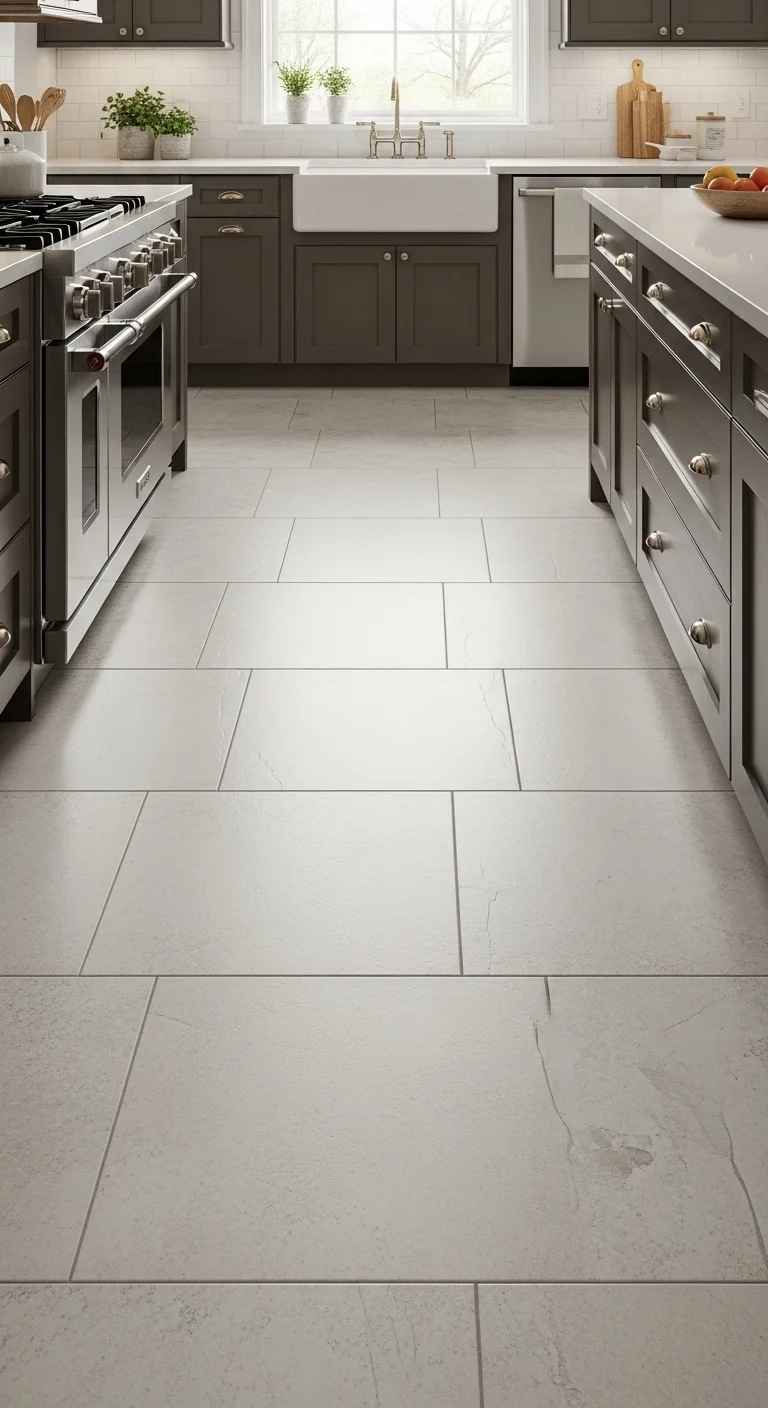
Large format kitchen tile flooring creates a smooth and continuous surface that makes the kitchen appear larger and more organized.
These tiles reduce the number of grout lines, which helps maintain a clean and uncluttered visual appearance.
Fewer grout lines also mean less maintenance, as there are fewer areas where dirt and stains can accumulate over time.
This style works particularly well in modern kitchens that focus on minimalism and simplicity in design elements.
Large tiles also create a sense of flow, which enhances the overall spatial experience of the kitchen.
Homeowners who prefer clean lines and open layouts often choose this kitchen tile flooring option for its sleek appearance.
Mosaic Kitchen Tile Flooring for Artistic Design
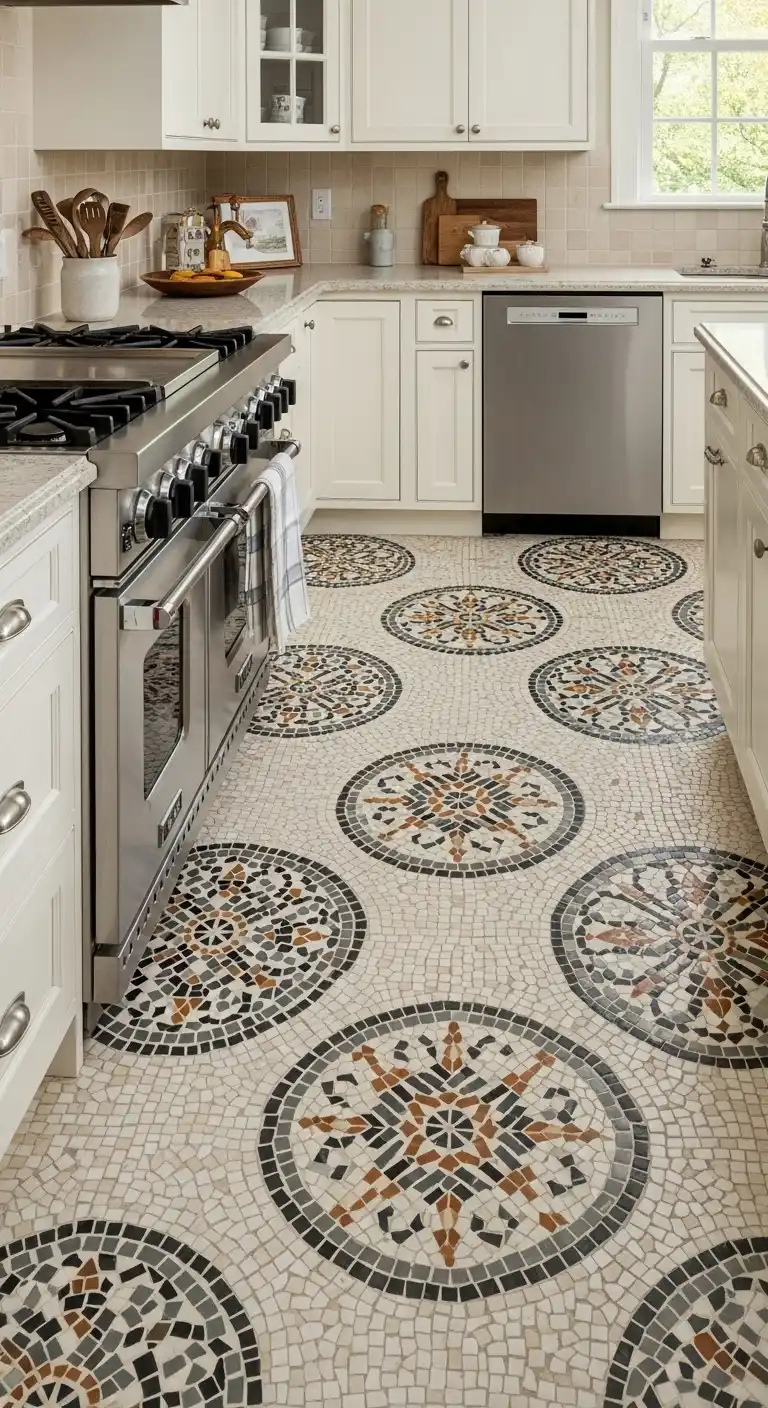
Mosaic kitchen tile flooring allows homeowners to introduce artistic expression through detailed patterns and creative tile arrangements.
These tiles come in small pieces that can be combined to form unique designs, giving the kitchen a personalized touch.
They are often used to create focal areas, such as specific zones within the kitchen, rather than covering the entire floor.
This approach prevents the design from becoming overwhelming while still adding visual interest to the space.
Mosaic tiles work well for those who want to experiment with colors, shapes, and textures in a controlled manner.
This idea transforms kitchen tile flooring into a creative element that reflects individual style and artistic preference.
Neutral Tone Kitchen Tile Flooring for Versatility
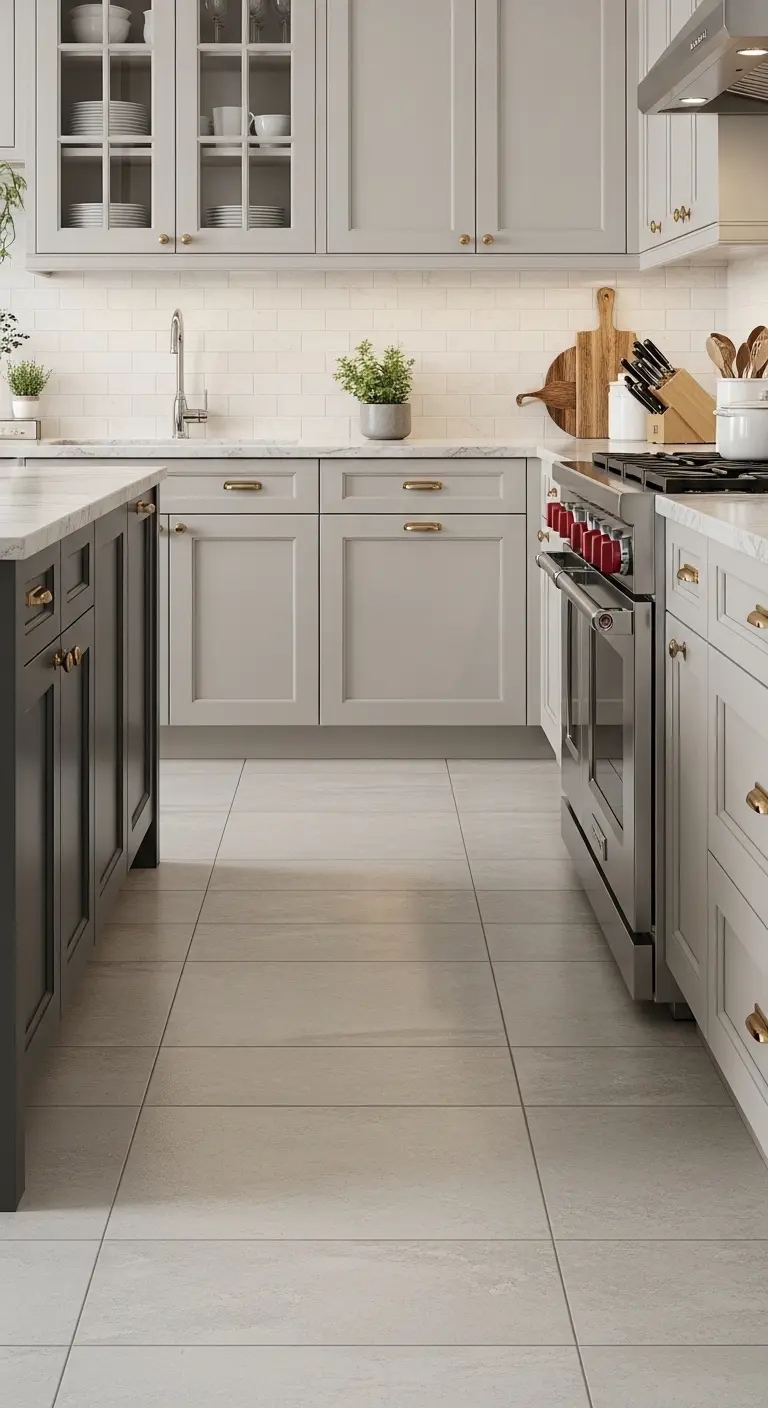
Neutral tone kitchen tile flooring provides a flexible foundation that works well with a wide range of kitchen styles and color schemes.
Colors such as beige, gray, and soft white create a calm atmosphere that complements both bold and subtle design elements.
These tones allow homeowners to update cabinets, walls, or décor without needing to replace the flooring.
Neutral tiles also help create a sense of balance, especially in kitchens that include multiple textures and materials.
They remain stylish over time, making them a practical choice for long-term design planning.
This option is ideal for homeowners who prefer timeless kitchen tile flooring that adapts easily to changing trends.
Textured Kitchen Tile Flooring for Added Grip
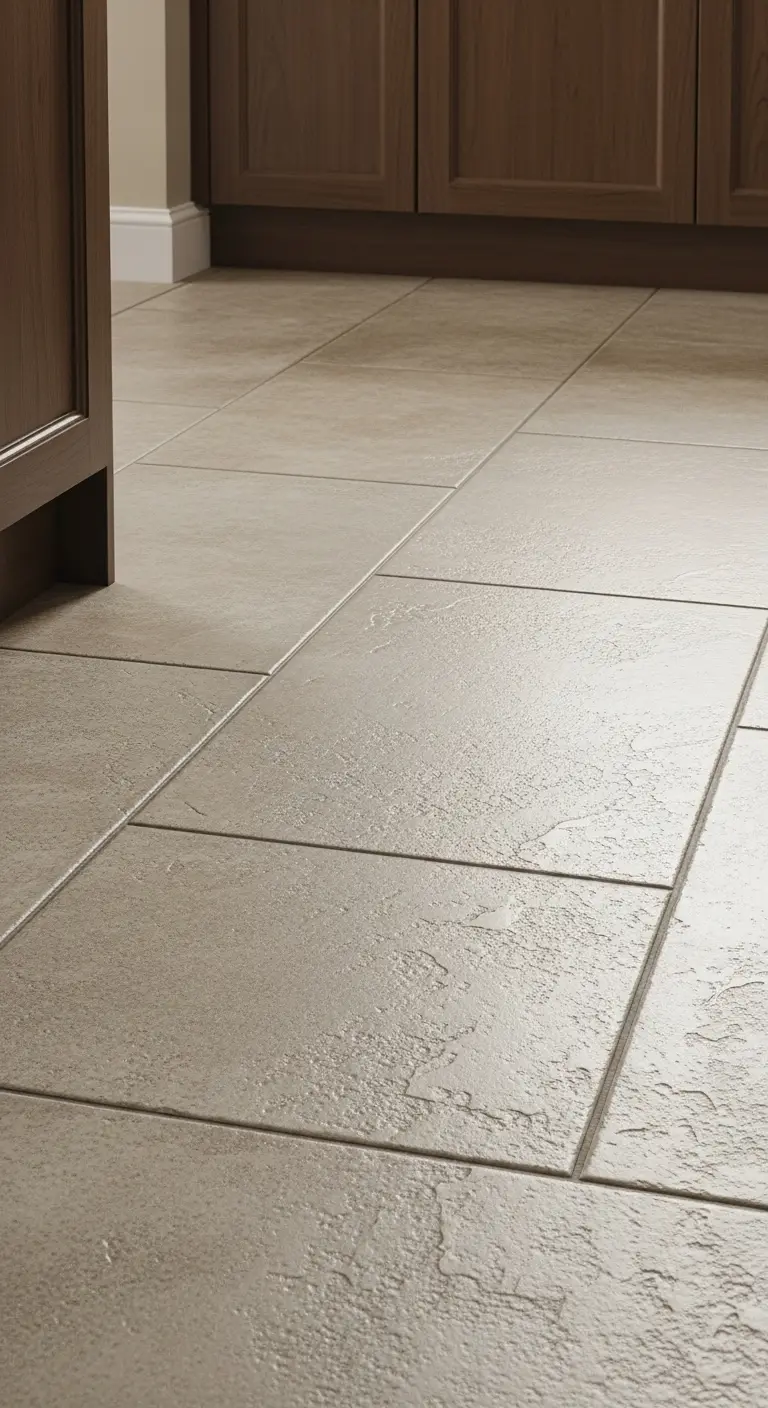
Textured kitchen tile flooring improves safety by providing better traction, which reduces the risk of slipping on wet surfaces.
This feature is particularly important in kitchens where spills from water, oil, or food preparation are common.
The textured surface also adds depth and dimension, enhancing the overall visual appeal of the flooring.
These tiles work well in both modern and rustic kitchens, depending on the chosen design and finish.
Although they may require slightly more effort to clean, the added safety benefits often outweigh this minor drawback.
Homeowners who prioritize safety and functionality often choose textured kitchen tile flooring for peace of mind.
Black and White Kitchen Tile Flooring for Contrast
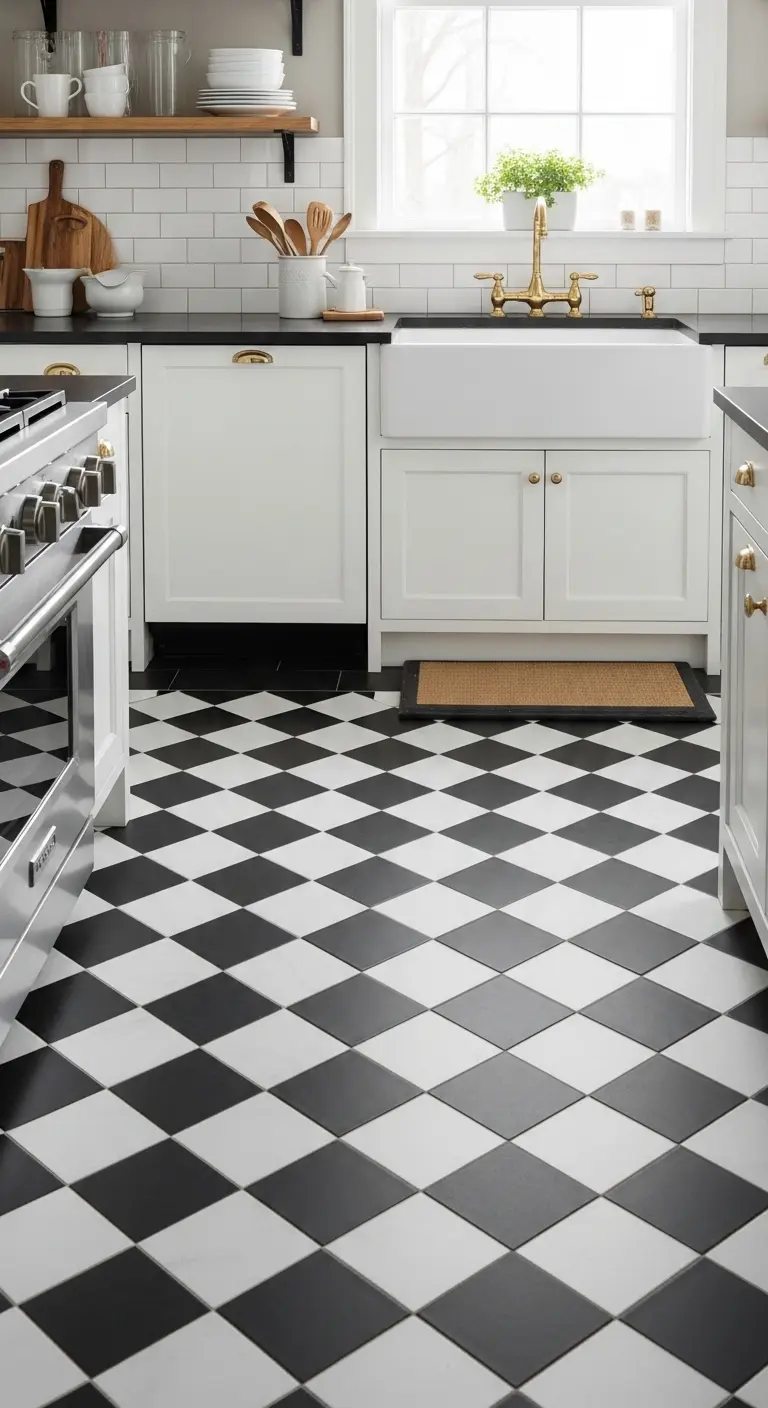
Black and white kitchen tile flooring creates a bold and visually striking contrast that enhances the overall design of the kitchen.
This classic combination works well in both contemporary and vintage-inspired interiors, offering timeless visual appeal.
Patterns such as checkerboard layouts add structure and rhythm, making the floor a central design feature.
This style pairs well with simple cabinetry and minimal décor, allowing the flooring to stand out effectively.
It also creates a sense of balance by combining light and dark elements within the same space.
This kitchen tile flooring idea is perfect for homeowners who want a dramatic yet classic design statement.
Eco-Friendly Kitchen Tile Flooring Options for Sustainable Living
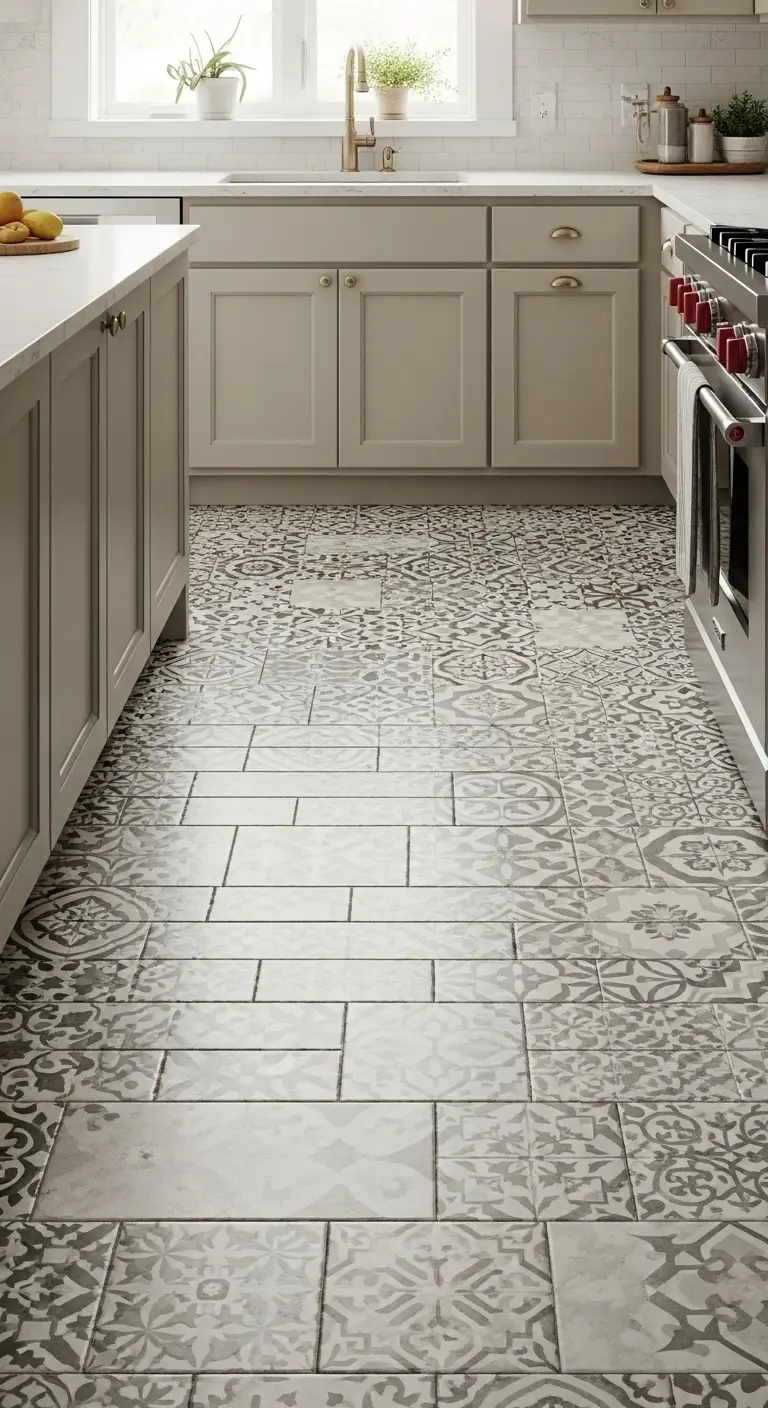
Eco-friendly kitchen tile flooring supports sustainable living by using responsibly sourced or recycled materials in modern kitchen designs.
These tiles help reduce environmental impact while still maintaining strong durability and long-lasting performance in daily use.
Manufacturers now design eco-friendly options in stylish patterns and colors, making them suitable for both modern and traditional kitchens.
Homeowners can choose these materials to support greener construction practices without sacrificing visual appeal or functionality.
These tiles often require less energy during production, which further contributes to a reduced environmental footprint overall.
This kitchen tile flooring option is ideal for individuals who value sustainability and want responsible design choices.
Stone Kitchen Tile Flooring for Natural Feel
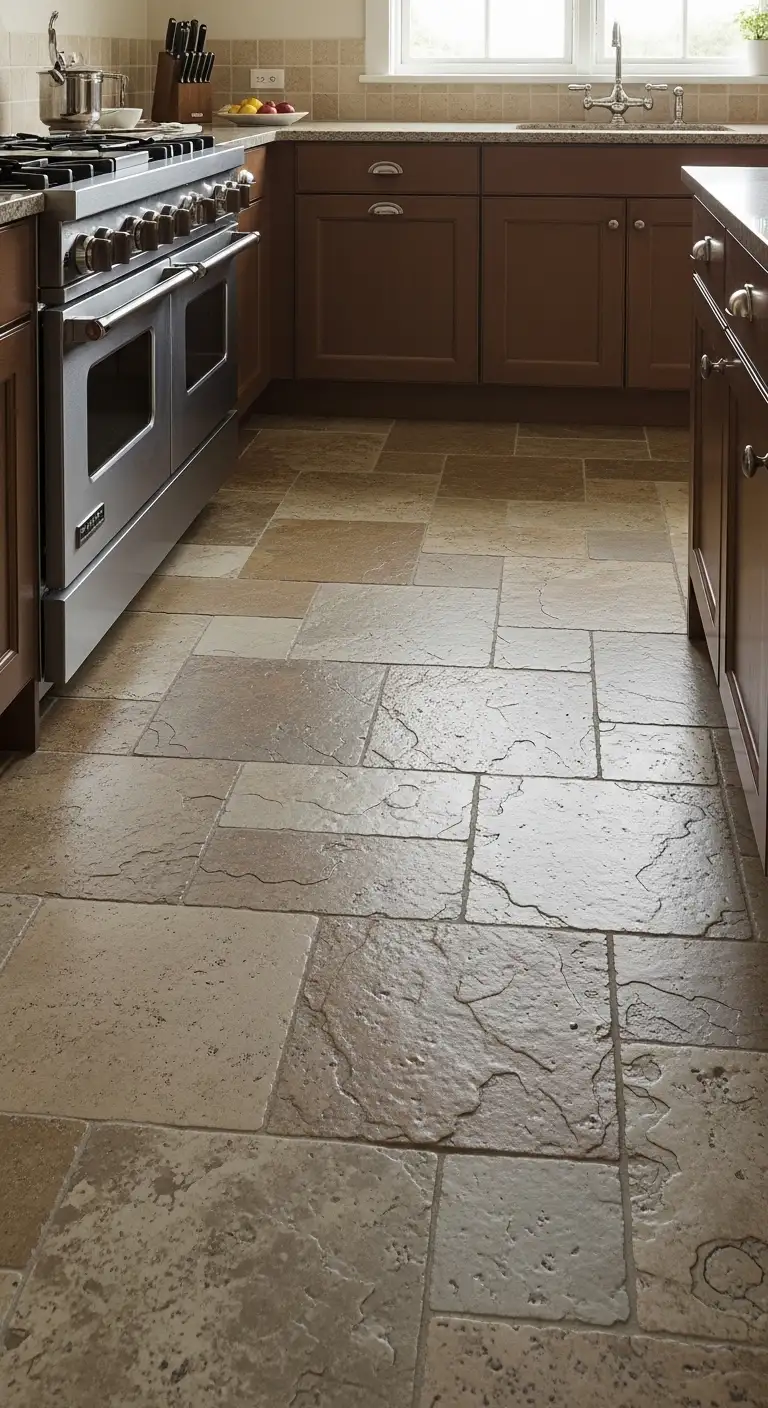
Stone kitchen tile flooring brings a natural and earthy atmosphere that enhances warmth and authenticity within kitchen spaces.
Materials such as slate, granite, and travertine offer unique textures that create a visually rich and organic appearance.
Each tile has natural variations, which ensures that no two kitchen floors look exactly the same in design.
Stone tiles are highly durable and can withstand heavy use, making them suitable for long-term kitchen installations.
However, they may require sealing to protect against stains and moisture absorption over time.
This flooring choice works best for homeowners who appreciate natural aesthetics combined with strong structural performance.
Geometric Kitchen Tile Flooring for Modern Style
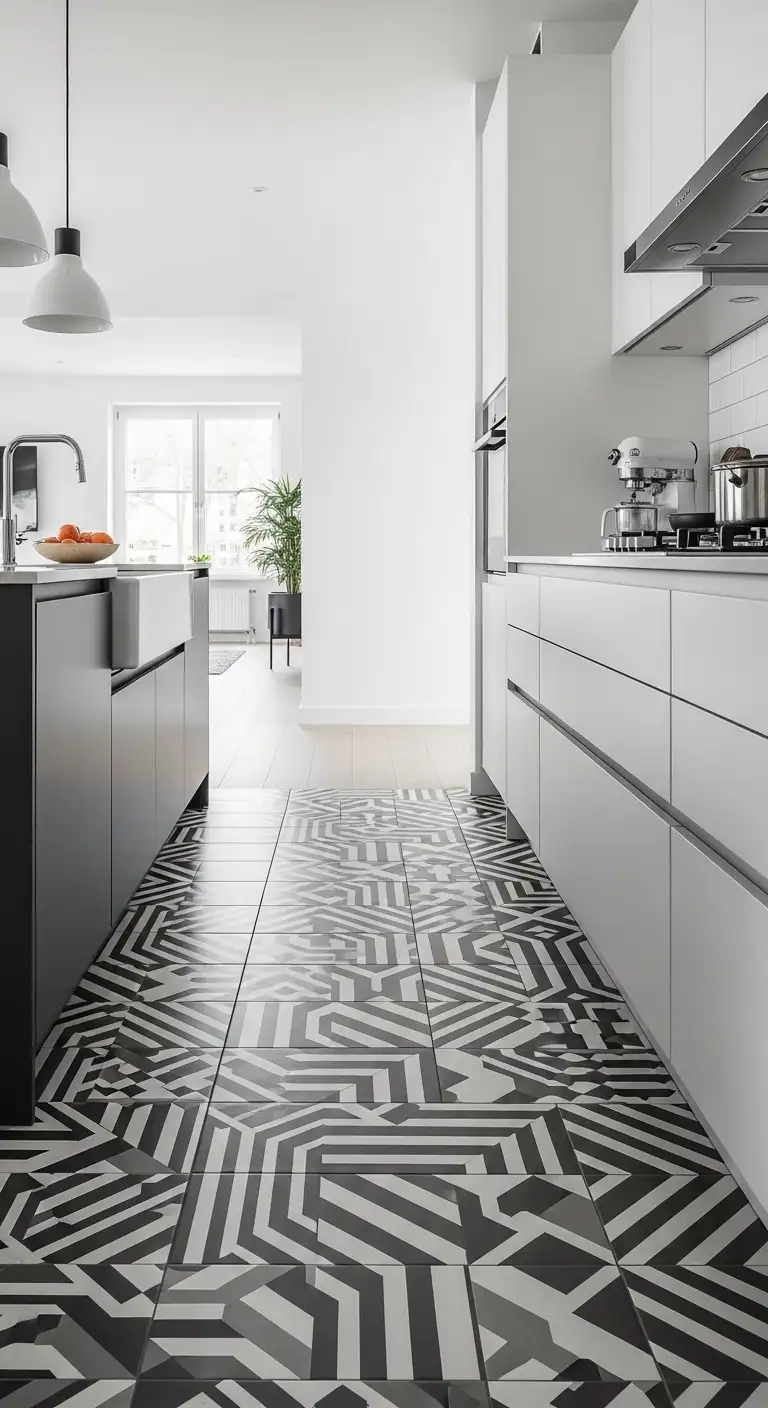
Geometric kitchen tile flooring introduces bold shapes and structured patterns that create a modern and dynamic kitchen environment.
These designs often use repeating lines, angles, and patterns that bring visual movement to the flooring surface.
They work especially well in minimalist kitchens where the floor becomes a key design highlight.
Geometric tiles can also help define different zones within an open kitchen layout, improving visual organization.
Their contemporary style pairs well with sleek cabinetry and modern appliances for a cohesive interior design.
This option suits homeowners who want a stylish and visually engaging kitchen tile flooring solution.
Maintenance Tips to Keep Kitchen Tile Flooring Looking New
Regular maintenance plays a key role in preserving the appearance and durability of kitchen tile flooring over time.
Homeowners should clean spills quickly to prevent stains from settling into grout lines or tile surfaces.
Using mild cleaning solutions helps protect the tile finish while maintaining its original color and texture.
Sealing grout lines periodically can prevent dirt buildup and improve long-term hygiene in busy kitchen areas.
Avoiding harsh chemicals also helps extend the life of both ceramic and natural stone flooring materials.
Consistent care ensures that kitchen tile flooring remains attractive, safe, and functional for many years.
Mistakes to Avoid When Choosing Kitchen Tile Flooring
Many homeowners focus only on appearance and ignore practical factors such as slip resistance and maintenance requirements.
Choosing overly glossy tiles for high-traffic kitchens can lead to frequent cleaning and potential safety concerns.
Ignoring durability levels may result in flooring that wears out quickly under heavy use or appliance weight.
Poor installation practices can also create uneven surfaces that reduce both comfort and long-term performance.
Failing to match tile type with kitchen usage often leads to dissatisfaction and unnecessary renovation costs later.
Careful planning helps avoid these mistakes and ensures better results from your kitchen tile flooring investment.
Final Wrap-Up
Kitchen tile flooring plays a major role in shaping both the beauty and functionality of modern kitchen spaces.
Different materials, patterns, and finishes allow homeowners to design kitchens that match their lifestyle and personal preferences.
From durable porcelain options to artistic mosaic layouts, each choice offers unique benefits and visual appeal.
Proper maintenance and thoughtful selection ensure long-lasting performance and consistent aesthetic value over time.
A well-planned flooring design transforms the kitchen into a practical and inviting space for daily living.
This makes kitchen tile flooring one of the most important decisions in any kitchen design project.