Acrylic vs Wood Organizers: Best Picks for Your Kitchen Style & Budget
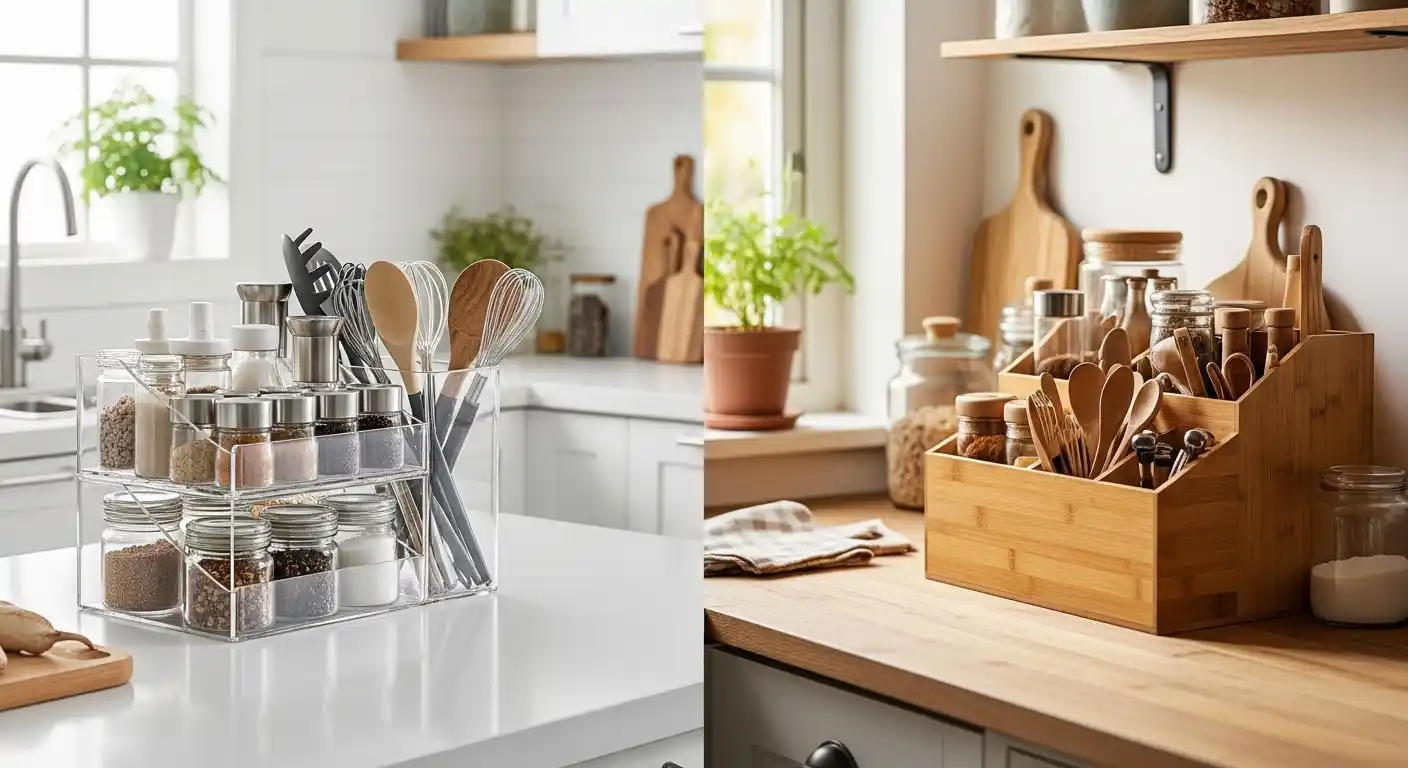
The satisfying “clack” of a solid wooden drawer divider feels like a permanent part of your home. Contrast that with the silent, sleek slide of a clear acrylic bin that lets you see every spice jar at a glance.
In 2026, the heart of the home is no longer just a place to boil water. It is a high-performance zone where “quiet luxury” meets “smart storage.”
You likely face a common frustration: your drawers are a mess, and you are torn between two worlds.
Do you go with the Pinterest-perfect transparency of acrylic, or do you follow the trending warmth of natural wood?
This choice matters because the wrong material can lead to cracked plastic or warped timber within a year.
This guide breaks down durability, maintenance, and the 2026 cost-to-value ratio to help you choose the right acrylic vs wood organizers for your specific kitchen style. We will look at how to master modern organization without wasting your hard-earned money.
Kitchen Material Matchmaker
Select a scenario below to find your perfect material match.
The Rise of Natural Textures: Why Wood is Leading 2026 Trends
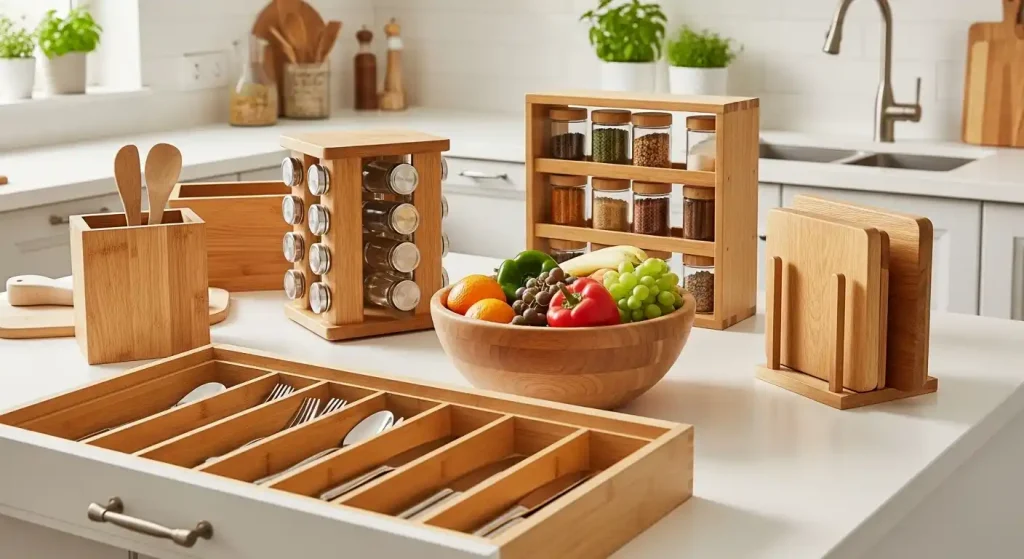
Wood has officially claimed the top spot in kitchen design this year. According to the 2026 Houzz Kitchen Trends Study, wood has surpassed white as the most popular kitchen finish, now holding a 29% market share.
This is a 6% jump from last year. But why are we all suddenly obsessed with timber?
It comes down to the “Biophilic Design” movement. This is a fancy way of saying we want to bring nature inside to help us feel less stressed.
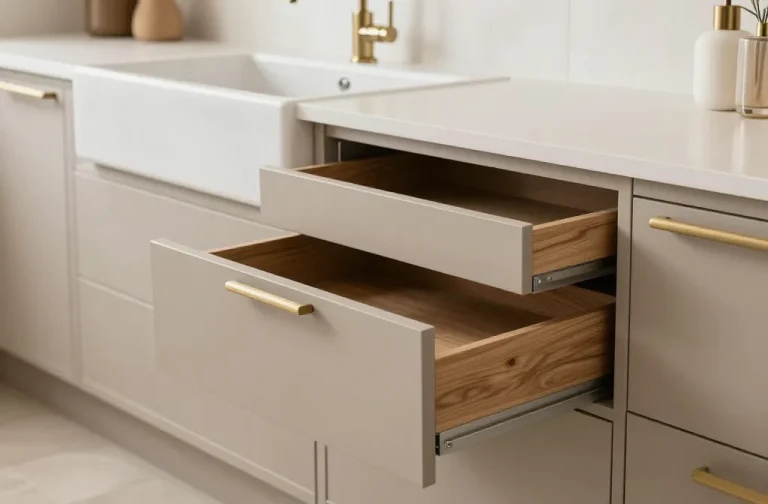
After years of cold, clinical-looking kitchens, people want the organic feel of natural wood organizers.
Sustainability is the other big driver. Wood is a renewable resource and is biodegradable.
If you care about the planet, bamboo drawer dividers are a great choice because bamboo grows incredibly fast and doesn’t require replanting.
Acrylic, on the other hand, is a petroleum-based plastic. While it lasts a long time, it doesn’t return to the earth easily.
Pro-Tip: If you want the wood look on a budget, choose acacia. It is water-resistant and cheaper than walnut or oak.
While wood brings the soul and warmth to your counters, acrylic brings a level of clarity that wood simply cannot match.
The Case for Acrylic: Visibility and Modern Precision
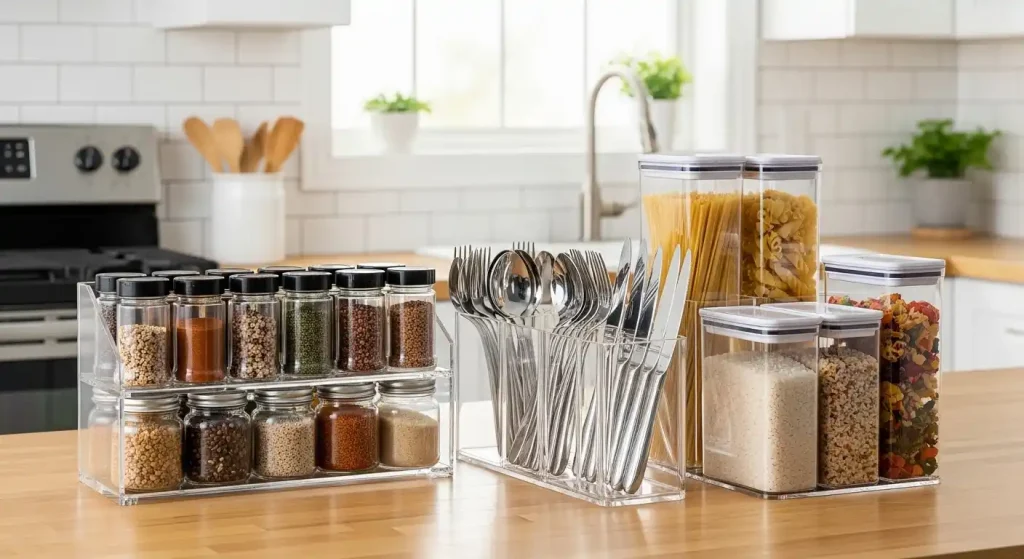
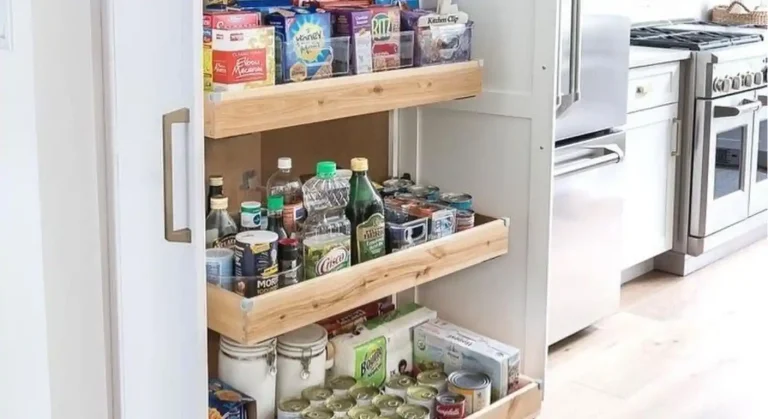
Small apartments and “micro-kitchens” are everywhere in 2026. This has birthed the “Invisible Storage” trend. When you use clear kitchen storage bins, the visual clutter disappears.
Your eyes see the back of the pantry instead of a wall of opaque boxes. This makes a small space feel much larger than it actually is.
There is also a hygiene factor to consider. Acrylic is non-porous. It does not absorb smells, oils, or moisture. This makes acrylic fridge organizers the king of the cold zone.
If a jar of pickles leaks, you just wipe it clean. You don’t have to worry about mold or permanent stains like you would with a wooden tray.
Is it durable? Yes. By 2026, high-quality acrylic is much better than the cheap plastic of the past.
Brands like iDesign Linus and OXO POP now use UV-treated materials that won’t turn yellow over time. Many are also scratch-resistant, so they stay looking like glass for years.
These transparent pantry bins are perfect for people who need to see their inventory to avoid overbuying groceries.
Pro-Tip: Stick to BPA-free acrylic for anything that touches food directly. It’s safer and usually more durable.
Acrylic is the champion of the pantry, but how do these two materials compare when you look at your bank account?
Price Comparison: Budget vs Investment
Your budget often dictates your style. Let’s look at what your money buys in 2026.
| Organizer Type | Entry-Level Price | Mid-Range Price | Luxury Investment |
| Acrylic Bins | $15 – $30 (Sets) | $40 – $60 (Shatterproof) | $200+ (Custom fit) |
| Wood/Bamboo | $20 – $40 (Bamboo) | $60 – $90 (Acacia) | $150+ (Solid Walnut) |
Affordable kitchen organizers are usually made of bamboo or standard acrylic. These work great for basic drawer sorting.
If you want a luxury storage investment, you are looking at solid Oak or Walnut inserts. According to 2026 data from Fixr, custom wood inserts can now cost between $300 and $800 per linear foot in high-end cabinetry.
The smartest move is the “Hybrid Strategy.” Use acrylic where you need to see things, like high pantry shelves or the fridge.
Save your money for one or two beautiful wood pieces for your countertop or “daily use” drawers. This gives you the high-end look without the massive price tag.
Pro-Tip: Check for “seconds” or outlet sales from major brands. A small scratch on an acrylic bin is invisible once it’s full of granola bars.
Spending money is easy, but keeping these items looking new is where the real work begins.
Maintenance and Longevity: Which One Lasts?
If you want your kitchen to stay beautiful, you have to know how to clean your tools. Wood is like a pair of leather boots; it needs love.
Because it is a natural material, it can dry out and crack. You should “condition” your wooden dividers with food-grade mineral oil every six months. This keeps the moisture out and the shine in.
Acrylic is easier but pickier. You must keep it out of the dishwasher.
The high heat of a dishwasher cycle causes “crazing,” which are tiny cracks that make the plastic look cloudy. Always hand-wash your bins with a soft cloth and mild soap.
A cool update for 2026 is the arrival of “Self-healing” acrylic. Some high-end brands now use a coating that allows small surface scratches to disappear when exposed to a bit of heat (like a hair dryer).
This solves the biggest complaint people had about plastic storage. When it comes to durable kitchen storage, wood wins for heavy items, but acrylic wins for wet environments.
Pro-Tip: Never use Windex or ammonia-based cleaners on acrylic. It will ruin the finish. Use plain soap and water.
Knowing the maintenance needs helps you decide, but how do you actually start organizing?
3 Ways to Organize Your Kitchen Right Now
Now that you know the materials, here is how to use them effectively.
- The Zone Method: Use wood for “dry” zones like the junk drawer or spice rack. Use acrylic for “wet” zones like under the sink or inside the fridge.
- The Eye-Level Rule: Put clear bins on high shelves. If you use wood up high, you won’t be able to see what is inside, and food will go to waste.
- The Stack Test: Only stack acrylic. Wood is often too heavy and can slide around. Acrylic bins usually have “feet” that lock into the bin below them.
Acrylic vs Wood
The Zone Method
Use Wood for “dry” zones like junk drawers. Use Acrylic for “wet” zones like the fridge or under-sink areas where spills happen.
The Eye-Level Rule
Prioritize Acrylic for high shelves. Transparency allows you to see contents from below, preventing forgotten food and waste.
The Stack Test
Only stack Acrylic. These bins feature “locking feet” to prevent sliding, whereas wood is often too heavy and unstable for safe vertical stacking.
Why Does This Keep Happening? (Common Mistakes)
Many people buy a whole set of one material and regret it. Why? Because a kitchen is diverse.
If you put wood in the fridge, it will likely mold from the humidity. If you put acrylic on a sunny countertop, cheaper versions might warp.
Avoid the “one-size-fits-all” trap. Think about the specific job each drawer has. A heavy drawer full of metal ladles and whisks will destroy a thin acrylic divider.
That drawer needs the strength of solid wood. However, your tea bag collection looks much better in a clear acrylic sorter where the colors can pop.
The 5-Minute Solution for a Messy Pantry
Don’t wait until you have a $500 budget.
- Empty one drawer. Just one.
- Decide if you need to see the items (Acrylic) or if you want them tucked away (Wood).
- Buy one multi-pack of clear kitchen storage bins or a set of bamboo drawer dividers.
- Group like with like.
- Feel the instant relief of a clean space.
Summary of Your Best Picks
When you choose between acrylic vs wood organizers, remember your goals. Wood wins for warmth, sustainability, and that high-end “built-in” feel.
It is best for countertops and display areas. Acrylic wins for visibility, moisture resistance, and making small spaces feel open. It is the best choice for fridges and deep pantries.
Modern kitchen organization 2026 is about being practical. Don’t buy for the life you want; buy for the life you have. If you have kids who drop things, shatterproof acrylic is your best friend. If you want a peaceful, eco-friendly sanctuary, go with wood.
Ready to fix your kitchen? Start by auditing your pantry today. Pick one drawer and choose your material. You will be surprised how much better you feel once the clutter is gone.